The Mineralogical and Aesthetic Maintenance of Citrine: A Comprehensive Overview
Drawing upon decades of professional experience within the international gemstone trade, specifically navigating the supply chains from the volcanic deposits of Brazil to the high-jewelry houses of Europe, I have conducted extensive qualitative observation of thousands of quartz specimens.
Citrine remains one of the most frequently misinterpreted minerals in the contemporary market. Frequently categorized as the "Merchant’s Stone" within historical context, it is prized for its warm, solar-adjacent aesthetic.
However, the maintenance protocols surrounding this gemstone—particularly the practice of charging citrine in the sun—are frequently misunderstood, often resulting in compromised structural integrity and aesthetic degradation. This analysis provides a methodological breakdown of the material realities and energetic mechanics required to cleanse and recharge your stone effectively.
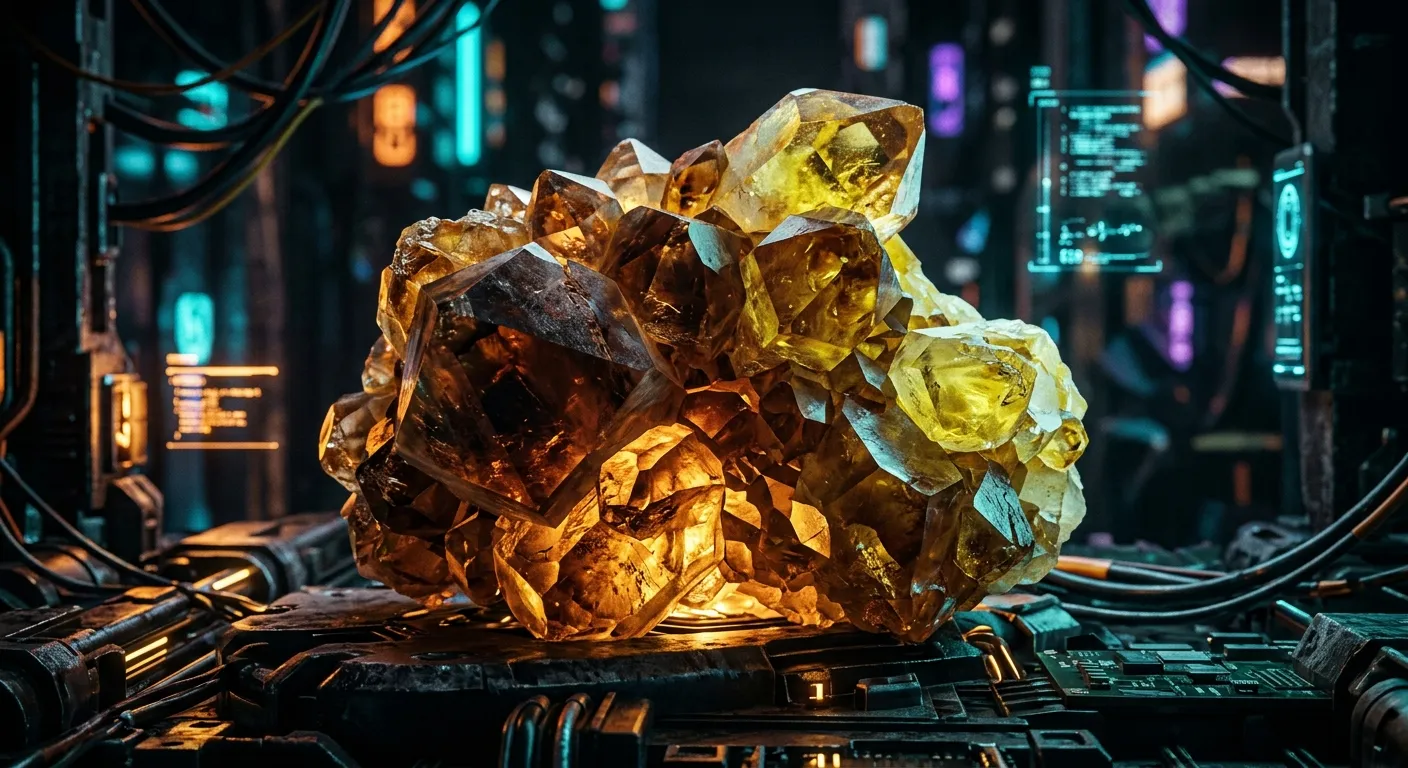
Figure 1.0Structural lattice of natural earth-born citrine exhibiting geothermal color integration.
1. Structural Parameters and Quality Benchmarks
Color Authenticity and Saturation
A rigorous thematic analysis of high-quality citrine reveals a specific color profile that distinguishes it from commercially altered quartz. Natural specimens typically exhibit a spectrum ranging from a translucent lemon to a deep, smoky amber.
This coloration is deeply integrated into the crystal lattice rather than being concentrated on the surface or at the terminations. When evaluating a specimen, the saturation should appear organic and consistent with geothermal formation processes.
Clarity and Transparency Metrics
The value-to-cost analysis of citrine is heavily influenced by its internal clarity. Premium specimens demonstrate exceptional transparency, allowing for unobstructed light transmission.
While minor internal characteristics—often described as the "fingerprints" of geological history—are acceptable for authentication purposes, excessive cloudiness typically suggests a lower grade of material. These internal features serve as essential markers for identifying natural citrine against synthetic or heavily treated counterparts.
Structural Integrity and Mohs Hardness
Registering a consistent 7 on the Mohs hardness scale, citrine possesses sufficient durability for various applications, including being safe for set jewelry. Nevertheless, its structural integrity is susceptible to thermal shock.
Rapid fluctuations in temperature can induce internal fracturing, which is a primary concern when considering outdoor maintenance methods. Understanding these physical parameters is essential for any long-term preservation strategy.
Core Protocol Definition
The Essential Difference Between Cleansing and Charging
A common oversight in gemstone maintenance is the failure to recognize the functional difference between cleansing and charging. Cleansing is technically an energetic reset, designed to purge the mineral of stagnant or dissonant vibrations accumulated through environmental exposure.
Conversely, charging involves replenishing the stone's inherent frequency by exposing it to a compatible power source. Effective maintenance requires that a stone be thoroughly cleansed before any attempt at charging is made, ensuring the crystal lattice is receptive to the intended frequency.
2. Geological Genesis and Market Variations
The Rarity of Earth-Born Citrine
Natural citrine is relatively rare due to the specific geological conditions required for its formation. The golden hue is the result of trace iron impurities within the silicon dioxide lattice being subjected to low-level geothermal heat over geological timescales.
Because these conditions are infrequently met in nature, the market has developed various methods to simulate this aesthetic, making the identification of authentic material a critical skill for collectors and practitioners alike.
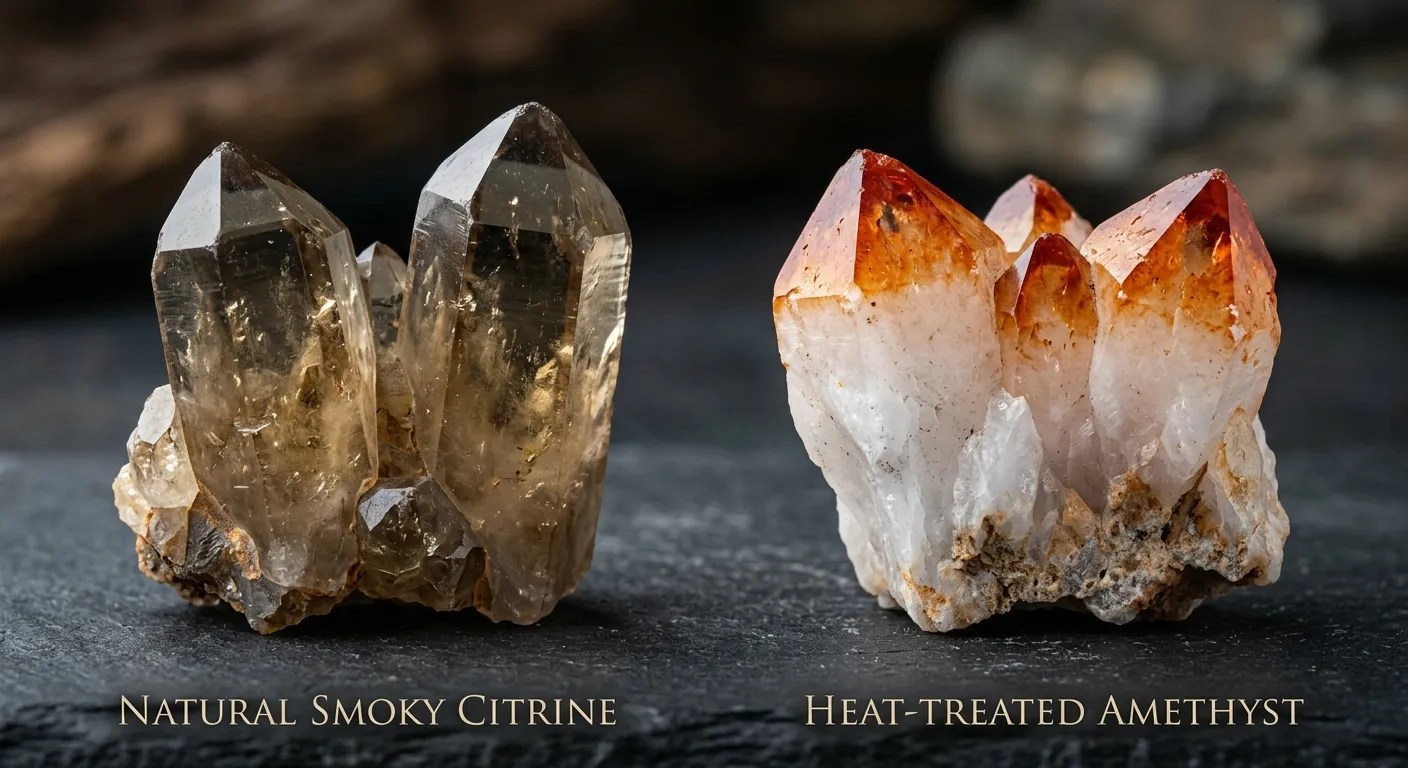
Visual analysis: Natural smoky citrine (left) vs. Heat-treated amethyst (right).
Identifying Fake Citrine and Heat-Treated Variants
The vast majority of commercially available "citrine" is actually amethyst or smoky quartz heat-treated in industrial kilns. When low-grade amethyst is heated to temperatures exceeding 400°C, the iron impurities oxidize, shifting the color from purple to a vibrant orange or yellow.
This heat treated amethyst often displays tell-tale signs, such as a stark white base and opaque, "burnt" orange tips. From a thematic analysis perspective, these stones retain the structural properties of quartz but lack the subtle pleochroism and stable frequency associated with earth-mined citrine.
The Risks of Color Fading in Citrine
A significant paradox within the gemstone community involves the practice of charging citrine in the sun. Given the stone's historical association with solar energy, many individuals place their specimens in direct sunlight for extended periods.
However, the reality of color fading in citrine is a well-documented gemological fact. Both natural and treated specimens are highly photosensitive. The iron-based color centers are unstable when exposed to intense ultraviolet radiation, leading the stone to fade with prolonged exposure.
Consequently, what was once a vibrant gem can become a dull, colorless quartz if subjected to the midday sun.
Alternative Maintenance Modalities
Given the risks associated with UV exposure, more sophisticated methods for maintaining high-quality citrine are recommended. Lunar exposure provides a reflective, low-intensity light source that allows one to cleanse and recharge your stone without the risk of photochemical damage.
Additionally, the method of earth grounding—placing the stone in dry, natural soil—allows for the discharge of accumulated energy back into the terrestrial environment. Sound-based clearing, utilizing the resonant frequencies of singing bowls, offers a non-invasive way to maintain the stone's energetic clarity while preserving its physical state.
3. Risk Mitigation and Professional Authentication
Case Study: The Impact of Improper Maintenance
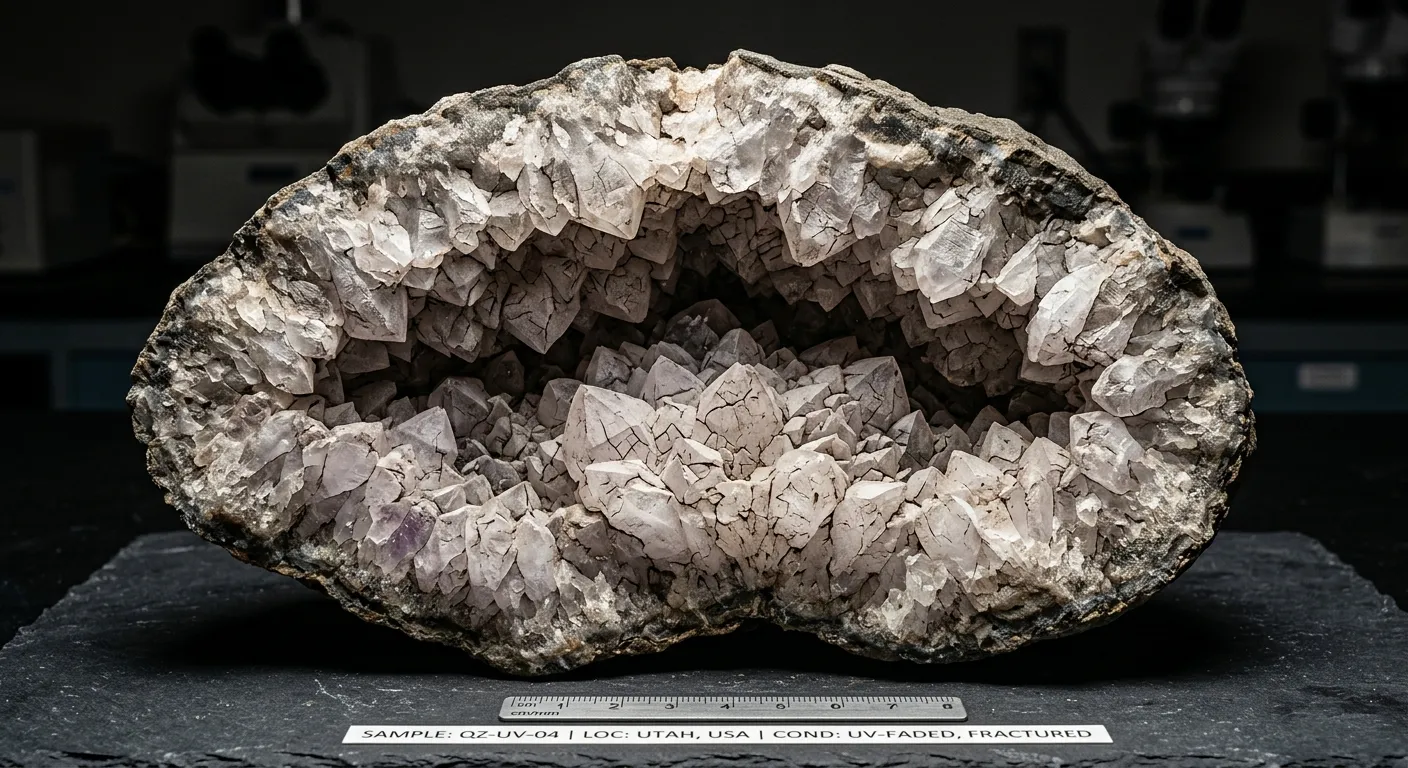
In one notable professional observation, a wellness facility acquired a large geode marketed as natural citrine for a significant investment. The specimen was placed in a south-facing window to facilitate continuous solar charging. Within several months, the specimen exhibited severe degradation.
The thermal stress caused micro-fractures, and the aggressive UV exposure resulted in significant color fading. Upon expert inspection, the specimen was identified as heat-treated amethyst, which is inherently more prone to such damage. This instance underscores the importance of identifying fake citrine before implementing a maintenance routine.
Data Visualization: UV Exposure Degradation Timeline
Figure 2.0Micro-fractures and structural compromise resulting from prolonged thermal stress.
The Authentication Framework
To successfully identify authentic material, one must look for a "smoky" or honey-like translucence. Natural citrine lacks the "crispy" or opaque white sections typical of baked amethyst.
Furthermore, natural specimens are rarely found in the large "cathedral" geode formations common to the amethyst mines of Uruguay and Brazil. By focusing on these qualitative indicators, a buyer can ensure their investment aligns with the intended use-case and value-to-cost expectations.
Physical Cleaning and Safety Standards
Beyond energetic considerations, citrine should be cleaned with warm soapy water and a soft brush to remove surface oils or debris. This mechanical cleaning is essential for maintaining the stone's luster.
While citrine is generally safe for set jewelry and can withstand ultrasonic cleaners, this is only true for natural, untreated stones. Specimens with significant inclusions or those that have undergone fracture-filling treatments should never be subjected to ultrasonic vibrations or harsh chemicals, as these can compromise the stone's internal stability.
4. Strategic Adaptation and Value-to-Cost Analysis
Maintenance for High-End Jewelry
For specimens integrated into fine jewelry, the primary objective is aesthetic preservation. Solar charging should be strictly avoided to prevent the fading of the gem and the potential weakening of metal prongs.
Instead, utilizing a selenite slab for overnight clearing is a safe and effective alternative. Because citrine is safe for set jewelry, it is ideal for daily wear, provided it is protected from extreme heat and chlorinated environments.
The Practitioner’s Approach to Energetic Utility
In the context of traditional lithotherapy, citrine is often utilized to absorb and neutralize negative energy. It is one of the few minerals historically believed to be self-cleansing.
For those using the stone in a professional or meditative capacity, a large natural point is the preferred tool. If solar charging is utilized to capture specific "solar" frequencies, it must be limited to the "golden hour" of early morning for no more than 30 minutes to mitigate the risk of color fading.
Corporate and Residential Placement
When placed in high-stress environments to manage the perceived "stagnation" of a space, the durability of citrine is its greatest asset. In these scenarios, a polished palm stone or freeform provides a high value-to-cost ratio.
Regular maintenance using smoke-based cleansing—such as cedar or sustainably sourced resins—ensures the stone remains effective at its intended task without requiring exposure to potentially damaging light or water.
Final Value Assessment
The true value of a citrine specimen is determined by its geological origin, its aesthetic saturation, and its structural integrity. Collectors seeking heirloom-quality pieces must prioritize unheated, natural material and accept the associated market premium.
Conversely, those seeking decorative impact may find heat-treated variants to be a practical choice, provided the purchase price reflects the commercial treatment. By adhering to these professional standards and understanding the nuances of cleansing and charging crystals, one ensures the longevity and vibrancy of this celebrated mineral.
Academic & Professional References
Gemological Institute of America(2024).Citrine Care and Cleaning.GIA.edu.Access Source →
Scientific Reports(2020).Study on the effect of heat treatment on amethyst color and the cause of coloration.Nature.Access Source →
Gemstones for Sale(2024).Citrine Crystal Care: How to Clean, Cleanse, and Charge Citrine.Gemstones for Sale.Access Source →