Evaluation • Scarcity • Provenance • Verification

The Evaluation Landscape: Scarcity, Provenance, and Geological Verification

Evaluating hard assets requires a rigorous understanding of geological commodities, particularly when analyzing the historical context of wealth storage mechanisms.

Providing a comprehensive overview of this sector reveals a distinct pivot toward tangible, geologically verified entities.

In an environment characterized by fluctuating fiat utility, institutional acquisition models increasingly target high-density, portable physical materials.

Within this macro-structural shift, the yellow-to-golden quartz variety has transitioned from a purely decorative element into a highly scrutinized acquisition target.

Navigating this terrain requires an industrial-grade comprehension of mineralogy, thermal manipulation, and supply-chain forensics.

The marketplace frequently circulates synthetics alongside thermally altered materials.

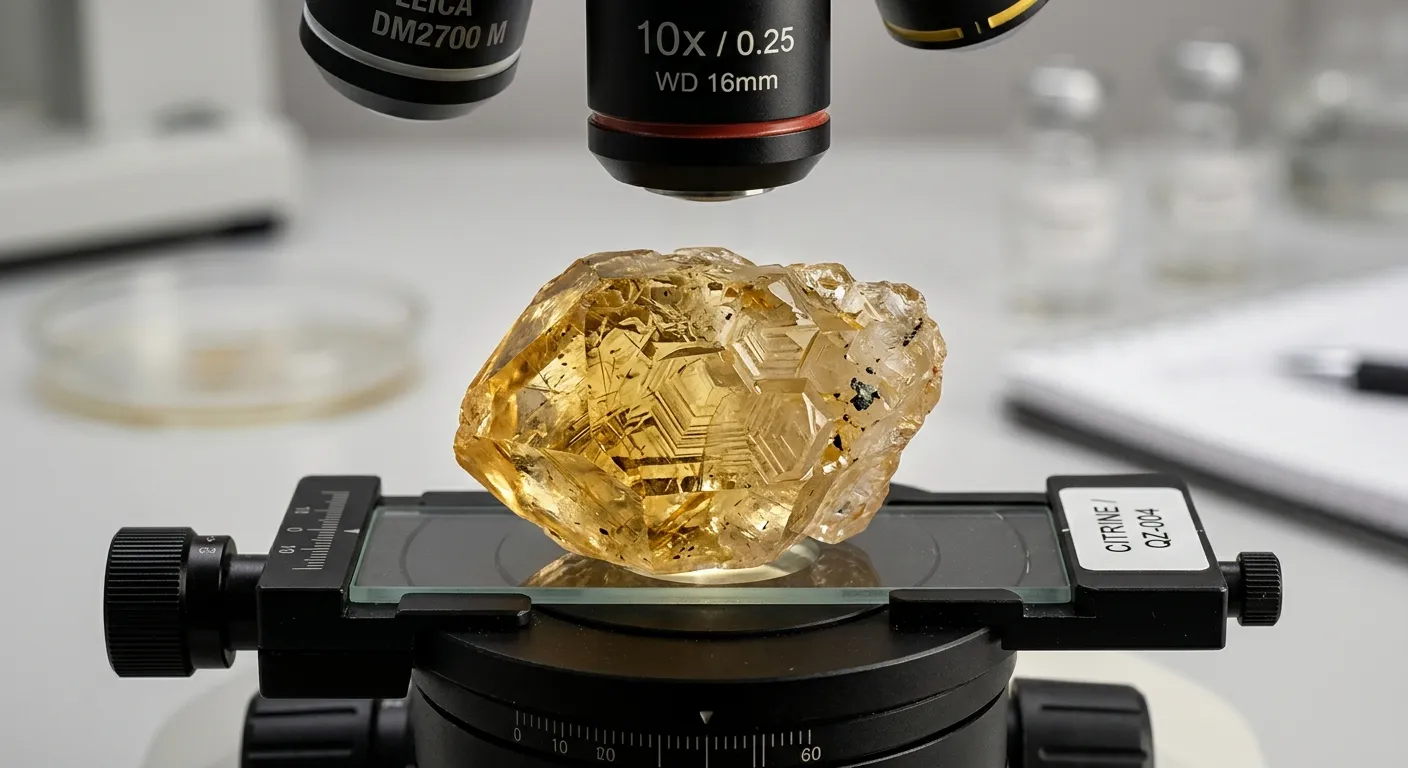
Capturing the authentic baseline requires evaluating these assets through a microscopic lens, prioritizing crystallographic parameters over aesthetic assumptions.

Microscopic geological inspection of a golden quartz specimen with crisp lattice details and laboratory lighting
A microscopic lens is essential when synthetics and thermally altered materials circulate alongside authentic specimens, because crystallographic parameters must outrank aesthetic assumptions.

Section 1

1. Precise Positioning & Core Metrics: The Geological Blueprint of Scarcity

The Macro-Financial Positioning Mechanics

Tangible asset hierarchies operate on strict principles of physical limitation.

Historically, investment-grade gemstones hold value primarily because their formation is permanently constrained by geological conditions.

Authentic specimens, forged over extensive epochs via the precise subterranean heating of iron-bearing quartz, represent a microscopic fraction of global extraction yields.

Major procurement entities increasingly recognize that unheated material functions as a structurally independent variable within broader material portfolios.


Refractive Index (RI) and Birefringence Parameters

Refractive Index

1.544–1.553

Genuine material must register a Refractive Index (RI) between 1.544 and 1.553.

Birefringence

0.009

Genuine material must be accompanied by a birefringence measurement of exactly 0.009.

Immediate Rejection Window

1.45–1.50

Deviations from this precise optical window, particularly readings dropping into the 1.45 to 1.50 spectrum, instantly classify the specimen as an amorphous glass substitute.

Separating top-tier specimens from commercial-grade silica requires strict adherence to empirical diagnostics.

Mohs Hardness and Specific Gravity Metrics

Non-negotiable hardness

Mohs 7.0

Physical durability dictates the generational viability of any hard asset.

Baseline density

2.65

A non-negotiable Mohs hardness of 7.0, combined with a specific gravity of 2.65, establishes the baseline for mechanical resilience.

Maintaining structural integrity remains the foundational prerequisite for any material subjected to long-term vault storage or bespoke mounting.

Chromophore Stability and Iron Dispersion

The fundamental value of Madeira Citrine relies entirely upon the natural, atomic-level dispersion of iron (Fe3+) within the silicon dioxide lattice.

This precise chemical integration must present visually, manifesting strictly as a subtle and even color distribution under microscopic review.

Artificial saturation attempts invariably disrupt this delicate atomic balance.

Yield Efficiency and Defect Ratios

Modern extraction methodologies, particularly those deployed across the primary pegmatites of Minas Gerais, utilize advanced multispectral sorting to achieve crystal recovery yields exceeding 85%.

Despite these technological operational efficiencies, securing flawless, eye-clean rough material exceeding the 10-carat threshold remains a statistical anomaly within the geological record.

Data Visualization Placeholder

Intended visualization: recovery yields exceeding 85% versus the rarity of flawless, eye-clean rough material exceeding the 10-carat threshold.

The Rarity Multiplier and Optical Anomalies

Standard crystallographic perfection establishes merely the baseline for elite procurement.

The true apex of this category manifests as the citrine star phenomenon.

This specific optical anomaly, scientifically categorized as asterism, emerges when microscopic, needle-like rutile inclusions align perfectly within the crystal lattice, reflecting a multi-rayed star under direct illumination.

Statistically, fewer than 0.1% of all extracted specimens exhibit this specific structural formation.

A golden quartz gemstone showing a multi-rayed star effect under a narrow beam of direct illumination, with subtle rutile inclusion structure
The citrine star phenomenon (asterism) emerges when needle-like rutile inclusions align within the lattice and reflect a multi-rayed star under direct illumination; fewer than 0.1% of extracted specimens show this formation.

Section 2

2. Deep Anatomy & Horizontal Comparison: Structural Integrity and Thermal Manipulation

The Mineralogical Foundation of Trace Elements

The absolute absence of human intervention dictates the premium classification of any geological specimen.

Authentic material achieves its golden hue through geothermal heating applied over extensive geological epochs.

Conversely, commercial operations frequently flood the supply chain with artificially heated amethyst.

While both materials classify as quartz, their divergent thermodynamic histories generate vastly different internal microstructures.

Color Zoning and Saturation Mechanics

Consequently, distinguishing genuine citrine from heat-treated amethyst constitutes the most critical diagnostic skill for any procurement specialist.

Authentic, unheated material integrates iron chromophores seamlessly into the lattice.

In stark contrast, thermally manipulated amethyst betrays its artificial genesis through aggressive color zoning.

Microscopic examination typically reveals intensely saturated orange tips that abruptly transition into an opaque, milky white base.

Structural Brittleness and Lattice Compromise

The rapid thermal shock required to bake amethyst into a golden hue frequently involves commercial ovens exceeding 400°C.

This aggressive intervention fundamentally compromises the crystal lattice.

Heat-treated stones exhibit notorious brittleness, making them highly susceptible to micro-fracturing along the pavilion facets during standard handling procedures.

Dichroism and Optical Properties

Natural quartz displays weak but distinct pleochroism, revealing varying color shades when observed along different crystallographic axes.

Thermally treated amethyst entirely lacks this specific optical property.

Observing the stone through a dichroscope provides an immediate, mechanical confirmation of its thermodynamic history.

The Glass Imposter and Amorphous Structures

Beyond treated quartz, synthetic glass heavily pollutes the secondary market.

Glass operates as an amorphous solid, entirely lacking a crystalline lattice.

Under 10x or 40x magnification, glass reveals its manufactured origin through perfectly spherical gas bubbles and internal swirl marks.

Furthermore, glass exhibits rapid thermal conductivity, feeling warm to the touch almost immediately, whereas natural quartz retains a distinct, measurable thermal inertia.

Close-up magnification view showing spherical gas bubbles and swirl marks typical of manufactured glass, presented as a clean laboratory comparison image
Under 10x or 40x magnification, glass reveals perfectly spherical gas bubbles and internal swirl marks, unlike natural quartz which retains measurable thermal inertia.

Valuation Asymmetry and Market Positioning

Historical market observations indicate a severe valuation asymmetry between unheated and manipulated specimens.

Analyzing the pricing chart of Madeira Citrine reveals that verified geological specimens maintain a distinct baseline, whereas exposed treated amethysts experience a precipitous drop in market positioning.

Such objective tracking underscores why verifying genuine untreated stones remains paramount for capital protection.

Data Visualization Placeholder

Intended visualization: baseline valuation for verified geological specimens versus the drop for exposed treated amethysts.

Section 3

3. Risk Mitigation & Verification: Navigating the Synthetic Minefield

The Illusion of Perfection in Diagnostic Testing

The illusion of perfection frequently serves as the first indicator of synthetic origin when identifying genuine citrine gemstones.

Natural geological formation is inherently chaotic; therefore, authentic specimens typically harbor microscopic internal signatures, such as liquid inclusions, negative crystals, or minor two-phase inclusions.

Accurate identification requires ignoring external marketing narratives and relying strictly upon spectroscopic analysis and refractive testing.

The Catastrophic Failure of Inadequate Due Diligence

A recent case study involving a prominent procurement firm illustrates the mechanical risks of bypassing verification protocols.

The entity acquired a high-volume parcel invoiced as natural material, relying solely upon internal supplier guarantees rather than independent laboratory certification.

Upon secondary liquidation, advanced diagnostics classified the material as Heat Treated Orangish Red Madeira Citrine, specifically identifying it as low-grade Brazilian amethyst subjected to extreme thermal manipulation.

Immersion Cell Failure Diagnostics

When technicians submerged the specimens in a liquid precisely matching their refractive index, the stones revealed aggressive, angular color banding.

This specific visual artifact serves as the definitive mechanical signature of artificial thermal manipulation, instantly voiding any claims of natural origin.

Micro-Abrasions and Stress Fractures

Microscopic analysis further revealed that the rapid heating process had generated severe stress fractures along the girdle of numerous specimens.

This extensive structural damage rendered the material mechanically unfit for high-end bespoke settings, fundamentally altering its utility profile.

Asset Devaluation and Tier Downgrades

The subsequent reappraisal resulted in a severe downward adjustment of the asset's tier, serving as a critical qualitative observation of what occurs when verification protocols fail.

The parcel transitioned from an investment-grade classification to a commercial liquidation tier, demonstrating the absolute necessity of rigorous laboratory auditing.

Spectroscopic and Refractive Verification Protocols

Institutional buyers must enforce strict, multi-layered verification protocols.

Standard refractometer tests must be corroborated with Fourier-transform infrared spectroscopy (FTIR) to detect the presence of water molecules and structural defects unique to natural growth cycles.

Additionally, polariscope testing must be deployed to confirm the optic character of the quartz, effectively eliminating singly refractive glass synthetics from the acquisition pipeline.

Operational Checklist

  • Standard refractometer tests must be corroborated with Fourier-transform infrared spectroscopy (FTIR).
  • FTIR is used to detect the presence of water molecules and structural defects unique to natural growth cycles.
  • Polariscope testing must be deployed to confirm the optic character of the quartz.
  • Polariscope testing eliminates singly refractive glass synthetics from the acquisition pipeline.

Cryptographic Chain of Custody Integration

The future of supply chain verification relies heavily upon technological integration.

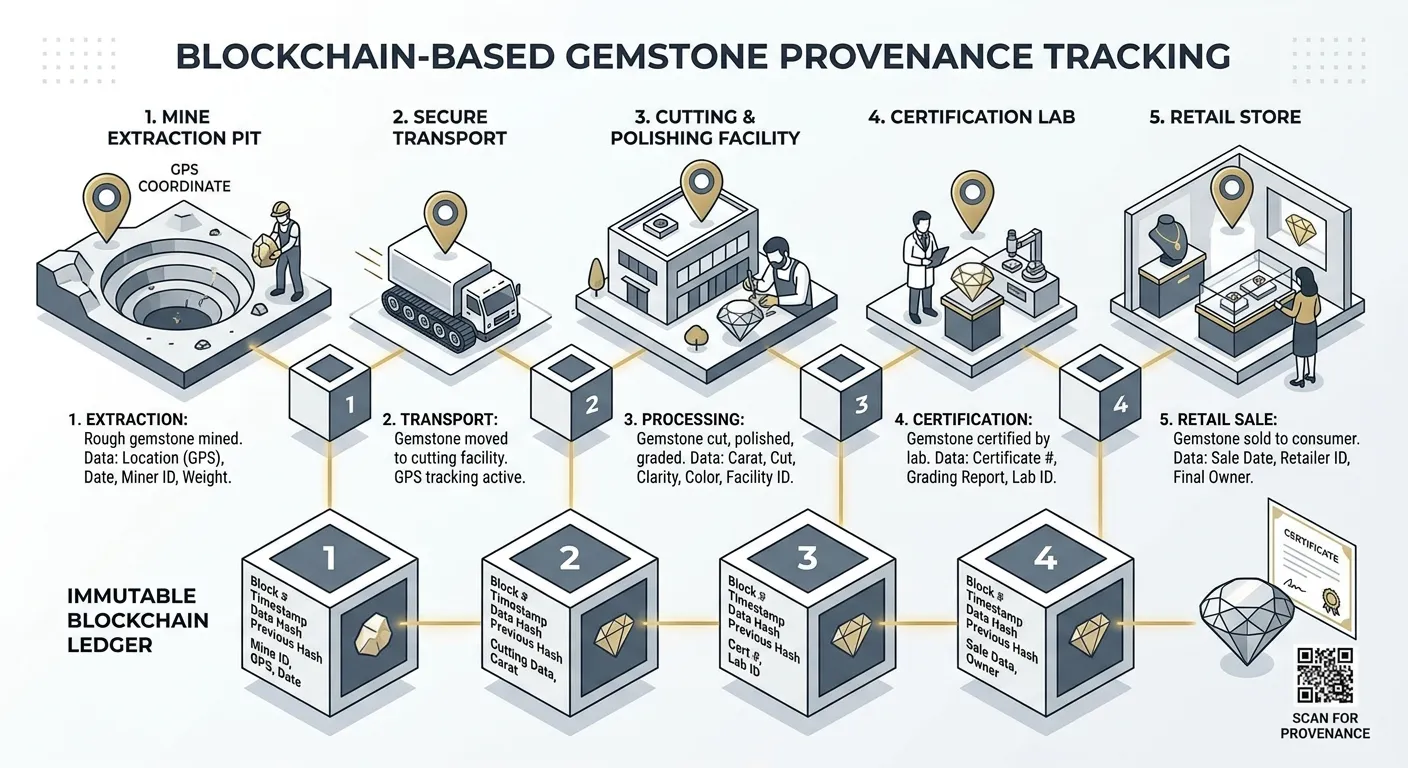
Top-tier extraction operations now integrate blockchain-based traceability platforms to record the specimen's journey.

These decentralized ledgers document exact GPS coordinates from the extraction pit through the cutting facility, establishing an immutable chain of custody.

Abstract visualization of a blockchain-based traceability ledger linking GPS coordinates from extraction pit to cutting facility, rendered as a clean technical infographic
Blockchain-based traceability platforms can document exact GPS coordinates from the extraction pit through the cutting facility, establishing an immutable chain of custody.

Section 4

4. Use-Case Adaptation & Value Assessment: Strategic Procurement Frameworks

The Institutional Vault Strategy

Procurement strategies must dynamically adapt to the specific operational objectives of the acquiring entity.

For organizations focused on generational holding, the operational objective aligns strictly with historical frameworks of long-term wealth preservation.

Liquidity considerations remain secondary to absolute physical scarcity and structural stability.

The directive requires targeting unheated material exceeding 15 carats, backed by origin reports from elite laboratories such as GIA or SSEF.

The High-Net-Worth Bespoke Collector

Private collectors and bespoke ateliers operate under a slightly modified acquisition framework, balancing aesthetic supremacy with ethical documentation.

The directive focuses on vivid, medium-dark specimens ranging from 5 to 10 carats, optimized for maximum light return.

Crucially, the buyer demands verifiable proof via cryptographic ledgers that the specimens are natural and responsibly sourced gemstones, entirely free from environmentally destructive extraction methods.

The Corporate Diversification and Tech Play

Conducting a thematic analysis of corporate procurement reveals an overlapping interest from the materials science sector.

Corporations involved in advanced materials tracking acquire diverse parcels of rough material from global pegmatites across Brazil, Zambia, and Madagascar.

The primary utility lies in mapping crystallographic data and isolating trace element signatures, prioritizing volume and data extraction over individual aesthetic perfection.

Data Visualization Placeholder

Intended visualization: sourcing distribution across Brazil, Zambia, and Madagascar for crystallographic and trace element mapping.

Base Geological Rarity Evaluation

Justifying capital allocation within this sector requires deploying a rigid assessment framework.

The baseline evaluation begins with geological rarity, determined strictly by physical carat weight, internal clarity, and the natural presence of trace iron dictating the baseline color saturation.

Treatment Penalty and Premium Calculations

Evaluating the structural delta between heat-treated Citrine vs real or natural Citrine dictates the final tier classification.

Natural, unheated specimens receive a significant qualitative premium within the assessment model, whereas thermally manipulated stones incur a severe mechanical penalty, drastically reducing their operational utility.

Provenance Multiplier Variables

Finally, historical provenance acts as a definitive multiplier within the evaluation matrix.

Specimens possessing an unbroken, verified chain of custody originating from premier, depleting historical pits receive elevated classification status.

Relying upon microscopic anatomy, rejecting thermal manipulation, and demanding cryptographic provenance ensures the acquisition of highly constrained physical assets.

Cinematic archival-style scene of a depleting historical mining pit transitioning into a modern lab chain-of-custody workflow, with warm light and precise technical detail
Historical provenance acts as a definitive multiplier: an unbroken chain of custody from premier, depleting historical pits elevates classification status when paired with microscopic anatomy and cryptographic provenance.

References

Selected Sources

GIA (2024). Citrine Quality Factors. GIA.

https://www.gia.edu/citrine-quality-factors

Gem-A (2024). Understanding And Testing For Rare Natural Citrine. Gem-A.

https://gem-a.com/gem-hub/testing-rare-natural-citrine/

The Natural Gemstone Company (2024). Pricing chart of Madeira Citrine. The Natural Gemstone Company.

https://naturalgemstones.com/education/pricing-chart-of-madeira-citrine/