The Analytical Framework of Smoky-Citrine Hybrids: Lithological Architecture and Atomic Defects
Throughout three decades of auditing, sourcing, and evaluating geological specimens for high-precision industrial sectors and elite lapidary houses, few materials have required the level of microscopic scrutiny demanded by the smoky-citrine hybrid.
This comprehensive overview bypasses the romanticized narratives often associated with mineralogy to focus on a rigorous thematic analysis of the lithological architecture, atomic-level defect centers, and the historical context of this specific yellow macrocrystalline quartz variety.
Distinguishing a museum-grade champagne hybrid from a laboratory-engineered substitute requires an understanding of structural integrity measured at the atomic scale. This guide establishes a hardcore analytical framework for the identification and comparative study of true aluminum-centered smoky-citrine hybrids.
Technical Positioning and Core Geological Metrics
Accurately positioning the smoky-citrine hybrid within the global commodities and gemological landscape necessitates stripping away commercial trade names to examine raw crystallographic data. This material occupies a specialized niche between piezoelectric industrial quartz and investment-grade lapidary rough, where value is dictated by structural perfection rather than mere aesthetics.
The Lithological Identity of the Hybrid
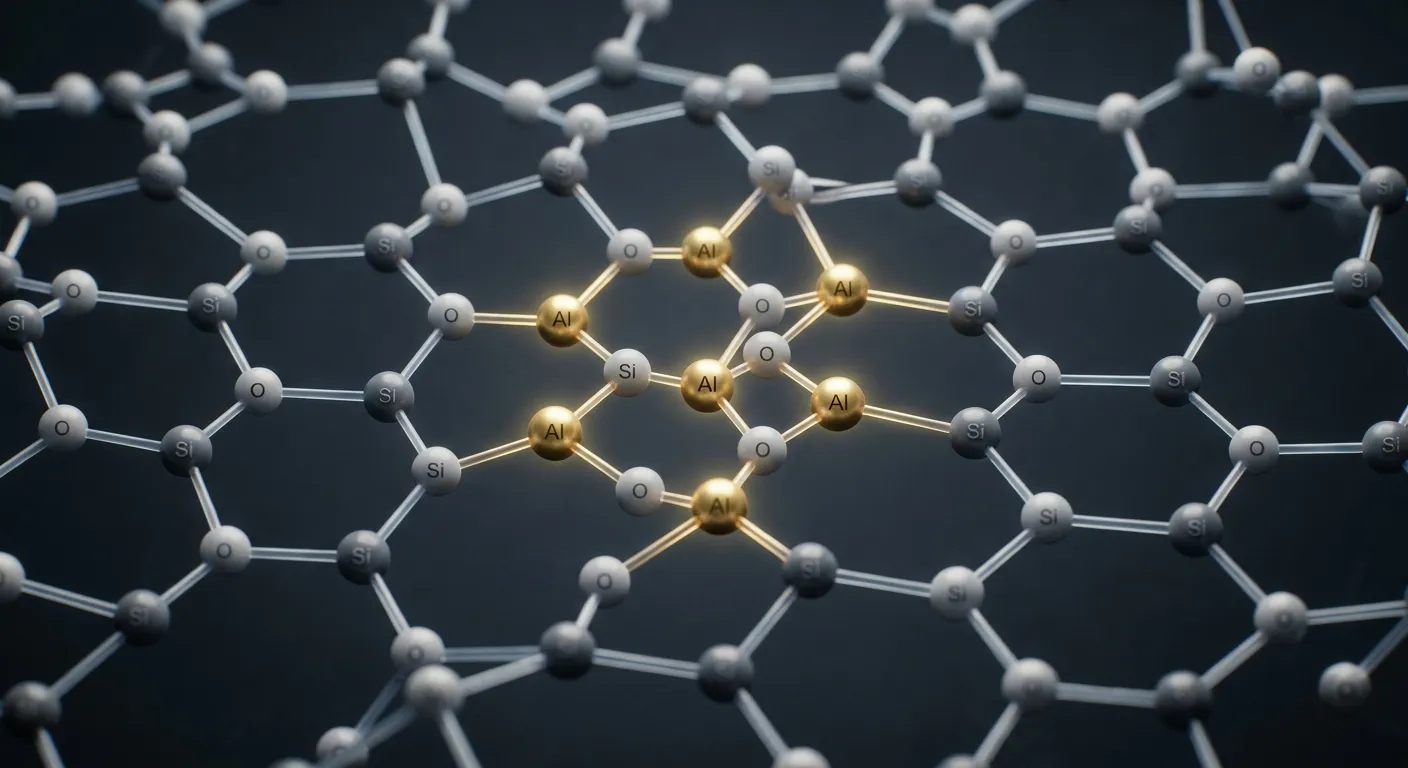
The smoky-citrine hybrid is defined by a highly specific atomic defect rather than external inclusions. Unlike standard ferruginous quartz, the champagne hue is an intrinsic structural phenomenon. This coloration is fundamentally driven by the presence of aluminum impurities substituting for silicon within the silicon dioxide (SiO2) lattice. These impurities are subsequently activated by precise doses of deep-crustal ionizing radiation over geological timescales. This delicate interplay creates a visible spectrum absorption that exists between the deep brown of morion and the pale yellow of standard citrine.
Hardness & Durability
Consistent 7 on Mohs Scale. High internal strain may cause localized micro-brittleness during precision faceting.
Refractive Index
Uniaxial positive; strictly bounded between 1.544 and 1.553. Birefringence measured at 0.009.
Trace Element Concentration
Aluminum (Al) 10-100 ppm. Interaction with Li and Na alkali compensators dictates final optical output.
Optical Anisotropy and Structural Integrity
Under a conoscope, a high-purity specimen must display a flawless 'bull's eye' interference figure. This confirms the macrocrystalline structural integrity of the lattice. The absence of this figure or the presence of anomalous distortion indicates either a polycrystalline structure or significant lattice strain, both of which reduce the technical value of the specimen in industrial and high-end lapidary applications.
Bulls-eye Figure Simulation
The Lithium-Aluminum Threshold
The ultimate determinant of the crystal’s final classification—whether it remains smoky quartz, becomes pure citrine, or achieves the coveted champagne hybrid status—is the ratio of aluminium and lithium within the lattice. Analytical data suggests that a Li:Al ratio approaching 1.0 typically yields a dark, opaque smoky variety. Conversely, a ratio below 0.3 often results in a pale yellow. The true champagne hybrid exists within a narrow margin where the ratio hovers around 0.5.
Historical Value-to-Cost Analysis
From a market perspective, the hybrid offers a dual-channel value proposition based on historical observations. Flawless sectors of these crystals are utilized as a high-purity specimen for industrial use, particularly in specialized oscillator manufacturing where synthetic alternatives may not meet specific thermal thresholds. In the gemological sector, the value-to-cost analysis is driven by the stability of the color center under ultraviolet exposure and the lack of aggressive color zoning, which historically commands a significant premium over standard commercial-grade citrine.
Structural Anatomy and Comparative Analysis: Natural vs. Synthetic
The global market frequently contains artificially altered quartz specimens. While a heat-treated amethyst or an irradiated clear quartz may superficially resemble a champagne hybrid, a microscopic examination of the atomic architecture reveals a different structural history.
Structural Anatomy of the Electron-Hole Colour Centre
The champagne coloration is not a pigment but an optical effect resulting from specific structural configurations. When the natural irradiation of quartz occurs over millions of years in pegmatitic environments, electrons are ejected from oxygen atoms adjacent to the aluminum impurities. This process creates an electron-hole colour centre. Light passing through the crystal is absorbed at specific wavelengths by these missing electrons, resulting in the transmission of the distinct champagne-yellow hue.
Horizontal Comparison with Cobalt-60 Gamma Radiation
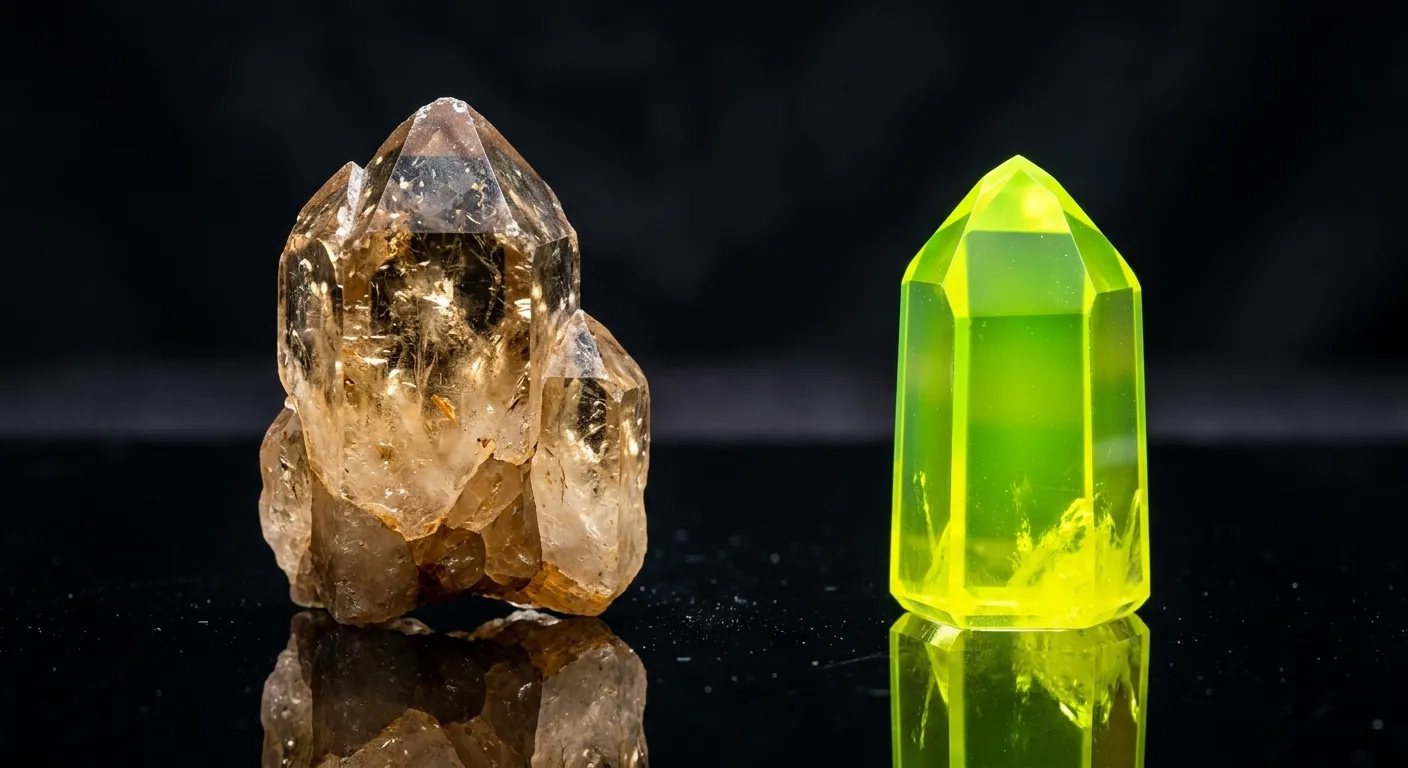
Suppliers may take low-value clear quartz and subject it to intense, rapid cobalt-60 gamma radiation to force a color change. Natural hybrids exhibit a smooth, continuous color tone with subtle earthy undertones. In contrast, stones treated with cobalt-60 gamma radiation often produce an aggressive neon-greenish-yellow hue. Furthermore, the dichroic behavior of the lab-irradiated stones is fundamentally different, often displaying anomalous pleochroism.
The Iron Anomaly and Charge Transfer Dynamics
It is necessary to compare the aluminum-based hybrid with iron-based natural citrines. In certain deposits, the yellow coloration is driven by finely distributed iron minerals and ionic interactions rather than aluminum defects. In these instances, the optical absorption is a result of the charge transfer between O2- and Fe3+ ions. While these iron-driven specimens are chemically distinct, they lack the smoky undertones characteristic of the aluminum-centered hybrids. Spectroscopic analysis differentiates the two, as iron-based varieties show distinct absorption bands in the ultraviolet region, whereas aluminum-hole centers show broad absorption peaking near 400 nm.
Morphological Markers and Artichoke Quartz Habit
Morphology serves as a critical diagnostic tool for authenticity. Genuine smoky-citrine hybrids from specific pegmatitic regions frequently exhibit the artichoke quartz habit, characterized by a complex growth structure where subsidiary crystals grow parallel to the main prism. Laboratory-grown or heavily treated specimens rarely replicate this multi-generational growth pattern. Additionally, natural hybrids often display subtle macromosaic suturing on the prism faces, which is a signature of natural tectonic stress absent in autoclave-grown synthetics.
Risk Mitigation and Verification Protocols
Procuring smoky-citrine hybrids involves navigating a supply chain contaminated with "burnt amethyst"—low-grade purple quartz that has been baked in industrial ovens to induce a color change. A strict verification protocol is required to mitigate the financial risks associated with these treated materials.
The Thermal Degradation Trap
When amethyst is heat-treated over 350 degrees Celsius, the iron impurities oxidize, shifting the color to a harsh orange. This thermal shock often damages the crystal lattice, making the stones brittle and prone to cleavage. These specimens typically exhibit severe color zoning, with opaque bases transitioning into aggressive orange tips. A genuine aluminum-centered hybrid will actually lose its coloration if subjected to such extreme temperatures, indicating that the thermal stability of a natural specimen is fundamentally different from that of baked amethyst.
Analysis of Market Anomalies and Procurement Failures
Historical case studies in the procurement sector highlight the risks of insufficient technical auditing. Instances have been documented where large parcels of "Champagne Citrine" were authorized based on macro-photography, only to be revealed as irradiated Brazilian quartz upon microscopic inspection. These stones often exhibit "tiger stripe" color concentrations and lack the required aluminum-hole centers. Because rapid radiation doses are often unstable, such stones may fade back to a murky gray when exposed to high-intensity light, leading to a total loss in specialized applications like horology.
Microscopic Verification of Brazil Law Twinning
To eliminate heat-treated amethyst from the supply chain, one must analyze internal growth structures. Amethyst typically grows via polysynthetic twinning according to the Brazil Law, which is an intergrowth of right- and left-handed quartz. True macrocrystalline smoky-citrine hybrids rarely exhibit this specific twinning pattern. Observing Brazil Law twinning planes through immersion in refractive index-matching fluid is a definitive indicator of heat-treated amethyst.
Optical Testing via Dichroism and Brewster's Fringe
Final verification involves the use of a polariscope. When viewed down the c-axis under cross-polarized light, heat-treated amethyst reveals symmetrical triangular patterns of dark bands known as Brewster's fringes. A genuine aluminum-centered hybrid does not display this optical anomaly. Furthermore, natural hybrids are weakly but distinctly dichroic, showing two different shades of champagne depending on the angle of polarization.
Value Assessment Framework and Application Scenarios
The valuation of a smoky-citrine hybrid is a calculation based on structural purity, color stability, and the intended end-use. Three primary scenarios define the procurement and valuation process.
Industrial Utilization
In applications such as specialized optical filters or high-temperature piezoelectric oscillators, the specimen must be free of micro-fractures and fluid inclusions. The Li:Al ratio must be uniform to ensure zero optical distortion.
Horology & Lapidary
For luxury watch dials and bespoke jewelry, color consistency is the primary requirement. The champagne hue must be distributed evenly without zoning. The material must possess the structural integrity to withstand CNC milling.
Investment-Grade
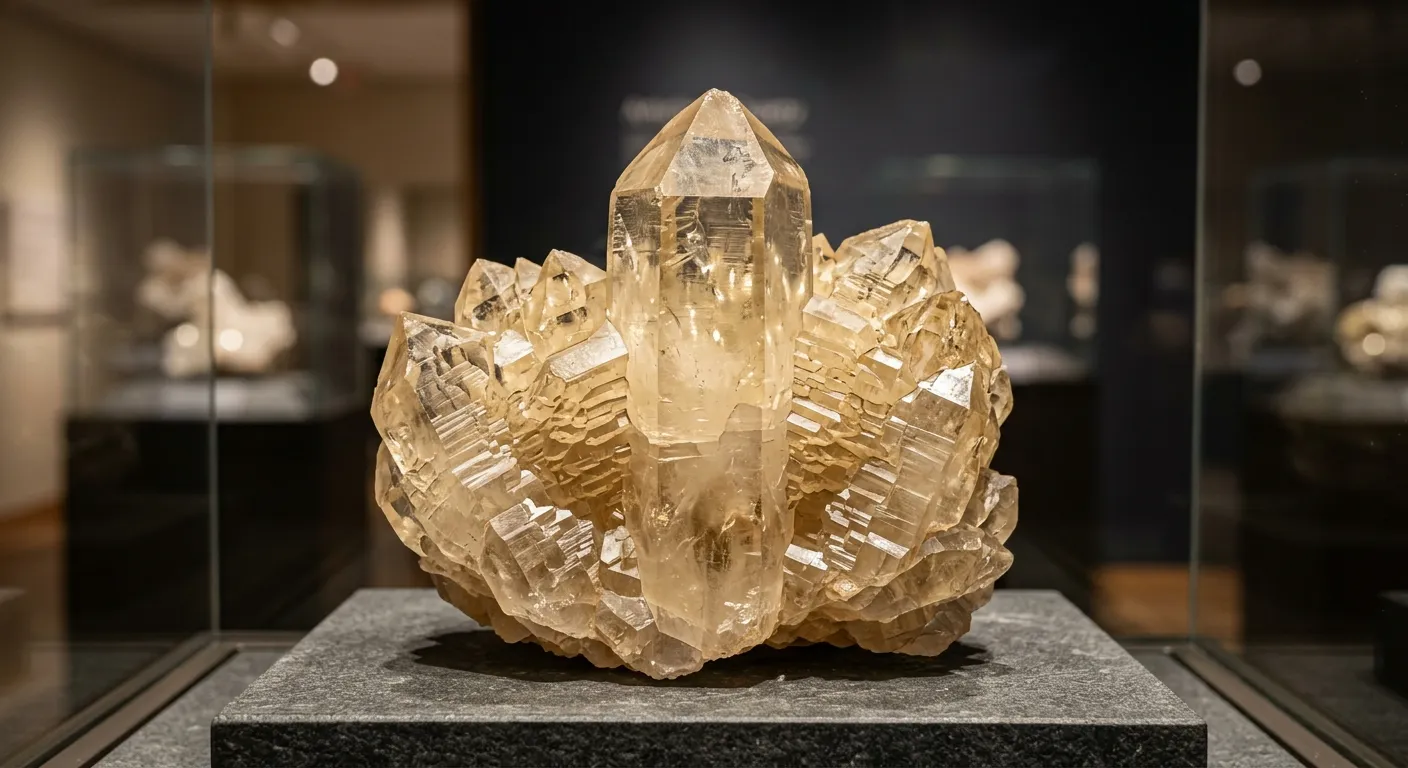
Museum acquisitions focus on raw, unpolished specimens that retain their natural crystal faces. The presence of rare accessorial faces, such as the dipyramidal s-face or the trapezoidal x-face, significantly increases valuation.
The Hybrid Valuation Multiplier Framework
To standardize the assessment process, a valuation multiplier is applied to the base market rate of natural quartz. This framework considers three primary factors:
- 1 Atomic Authenticity: Verified through spectroscopic confirmation of an aluminum-hole color center.
- 2 Optical Uniformity: Assessed through the absence of color zoning and the presence of natural dichroism.
- 3 Morphological Preservation: Applied for specimens retaining intact natural faces or exhibiting rare growth habits.
Securing these specimens requires an understanding that you are not merely purchasing a color, but a mathematically verifiable atomic structure. In high-stakes geological procurement, technical data is the only reliable metric for value.
References & Technical Literature
O'Brien, M. C. M. (1960)
Substitutional and interstitial aluminum impurity in quartz, structure and color center interrelationships
Journal of Physics and Chemistry of Solids →SciELO Brazil (2023)
The optical absorption of gamma irradiated and heat-treated natural quartz
Materials Research →Götze, J. (2004)
The role of aluminium and titanium in the point defects of gamma irradiated natural quartz
Physica Status Solidi (c) →