The Hidden Danger of Heat-Treated Amethyst in a 2026 Feng Shui Layout
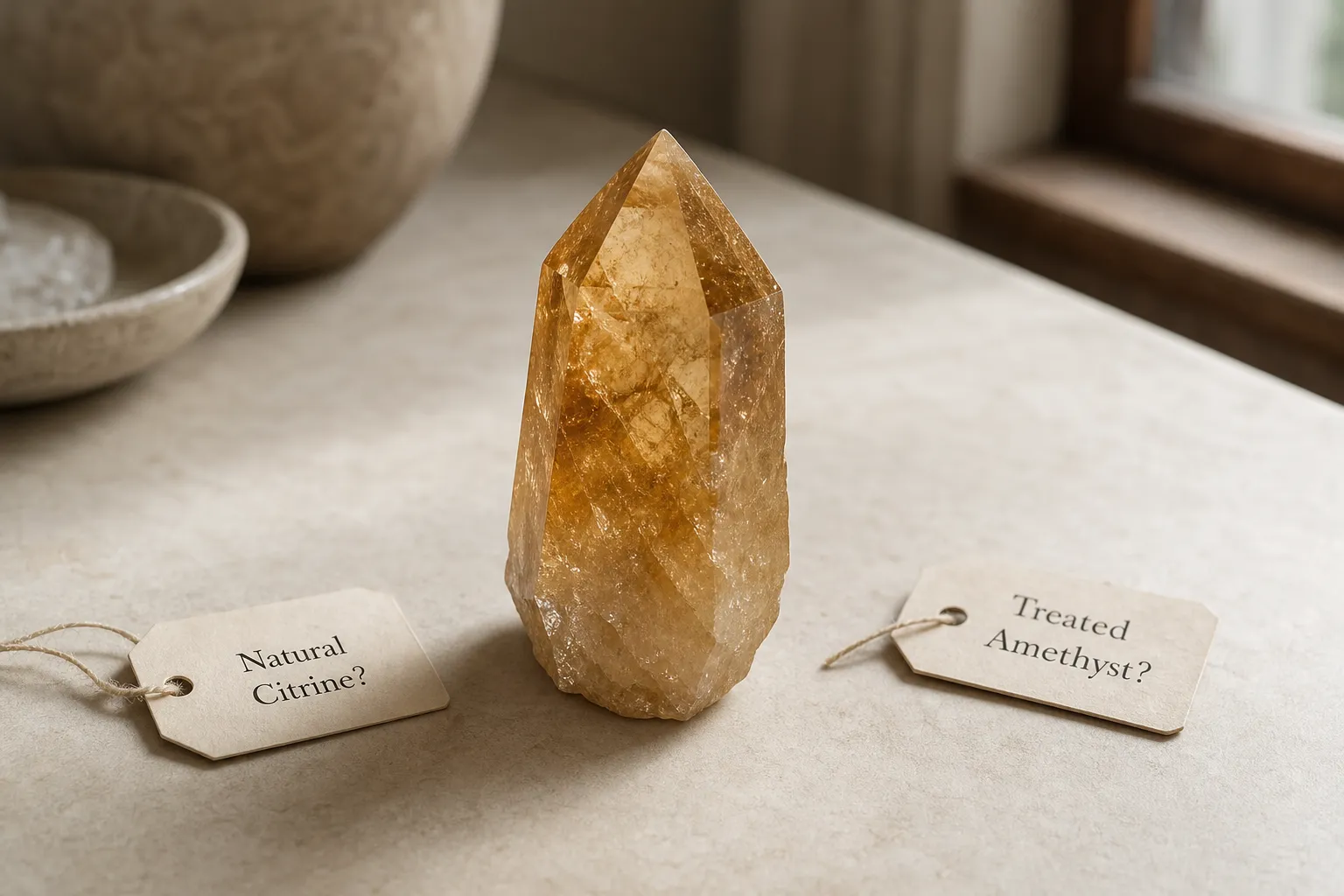
Heat-treated amethyst is not automatically a feng shui danger because it is sold as citrine or placed in a 2026 layout. The real risk is narrower: if your placement depends on natural citrine, clear material identity, or personal trust in the object, then a treated stone may no longer fit the meaning you gave it.
For readers searching for “Fake Citrine Feng Shui,” the useful answer is this: the hidden danger is not guaranteed bad luck, wealth loss, or “violent fire energy.” It is confusion—between what the stone is, how it was sold, and what your feng shui practice expects from it.
This article is general informational content. It is not professional feng shui, medical, financial, legal, or safety advice.
broader context
Start with the main citrine page
This narrower page works best after the broader citrine reference page.
What changes when amethyst is sold as citrine?
The key question is not “Is this stone dangerous?” It is “Was this stone described clearly?”
In the crystal market, “citrine” can be used loosely. Some listings point to natural yellow quartz. Others refer to treated quartz or to stones sold mainly by their golden color. Without stronger mineralogical and trade sources for this page, it would be irresponsible to make detailed claims about every treatment route, temperature range, crystal lattice change, or labeling rule.
Material question
Is the object materially what I thought I was buying?
Use question
Does that material story matter in my feng shui use?
Those questions should stay separate. A golden stone may still raise a trust issue if it was sold as something more specific than it is. A practitioner may also accept treated material for decoration but prefer natural citrine when the placement is meant to carry symbolic intention.
That is where “citrine versus heat-treated amethyst” becomes more than a shopping distinction. In a feng shui context, the label can affect how the object is understood. If the layout is built around clarity, abundance symbolism, or a particular elemental reading, then vague or inflated wording may feel misaligned even if there is no reliable evidence that the stone creates measurable harm.
The 2026 concern is symbolic, not certain
A 2026 feng shui layout may involve timing, direction, elemental language, and placement logic, depending on the school or practitioner. The available source set for this page does not include a reliable feng shui calendar source, practitioner source, or traditional text confirming a specific 2026 problem caused by heat-treated amethyst.
So the article should not claim that a treated stone will damage a sector, disturb a home, or reverse the intention of a layout.
A more careful answer is possible: if your 2026 arrangement is built around natural citrine, then a treated or ambiguously labeled stone may conflict with your own rule for that placement. The concern is internal consistency. You chose the material for a reason; if the material is not what you believed it was, the placement may no longer match the meaning you assigned to it.
A practical way to sort it
- If the stone is mainly decorative, the issue may be minor.
- If the stone is part of a symbolic placement, clear identity may matter more.
- If the seller called it natural citrine without support, the issue is trust and labeling.
- If your practice accepts treated stones, the treatment itself may not be a problem.
- If uncertainty keeps bothering you, replace the stone or relabel its role honestly.
The stone does not need to be framed as frightening for the concern to be valid.
Be careful with “frequency purity,” “violent fire energy,” and “crystal lattice”
Some readers describe heat-treated amethyst with phrases like “frequency purity,” “violent fire energy,” or disruption of the “crystal lattice.” Those phrases appear in spiritual and marketplace language, but they should not be treated as established facts here.
“Frequency purity”
“Frequency purity” is usually a belief-based way of saying a stone feels natural, clean, or aligned with an intended use. In this article’s evidence base, it is not a verified measurement that shows one citrine-like stone produces a better result than another.
“Violent fire energy”
“Violent fire energy” is stronger language. It may reflect discomfort with artificial heat, intense orange color, or the idea of forced transformation. But the current materials do not support saying that heat-treated amethyst creates harmful fire energy in a 2026 layout. If the phrase describes a practitioner’s personal boundary, keep it there: a symbolic preference, not a universal warning.
“Crystal lattice”
“Crystal lattice” sounds scientific, which makes it easy to overstate. Detailed claims about quartz structure, heat, color, and energetic effects would need reliable mineralogical sources. If a seller uses technical-sounding language to guarantee a spiritual effect, slow down and ask what is actually being verified.
The cleaner sentence is: some people prefer natural citrine for symbolic reasons, while others avoid treated stones because the treatment story feels inconsistent with their practice.
The real hidden danger is unclear labeling
For this page, “fake citrine” should be treated as market terminology, not a single technical verdict. People often use the phrase when they feel a stone was presented as natural, untreated, rare, high-value, or especially suitable for a symbolic purpose.
“Is this fake citrine?”
Was it sold as natural citrine, treated quartz, or just a yellow crystal?
“Will it ruin my feng shui?”
Does my practice require natural citrine for this placement?
“Is the fire energy too strong?”
Am I reacting to color, treatment story, or a practitioner rule?
“Did heat change the crystal lattice?”
Is there reliable material evidence for the specific claim being made?
“Should I remove it from the 2026 layout?”
Would clearer labeling or a different stone restore confidence?
Start with wording, not fear.
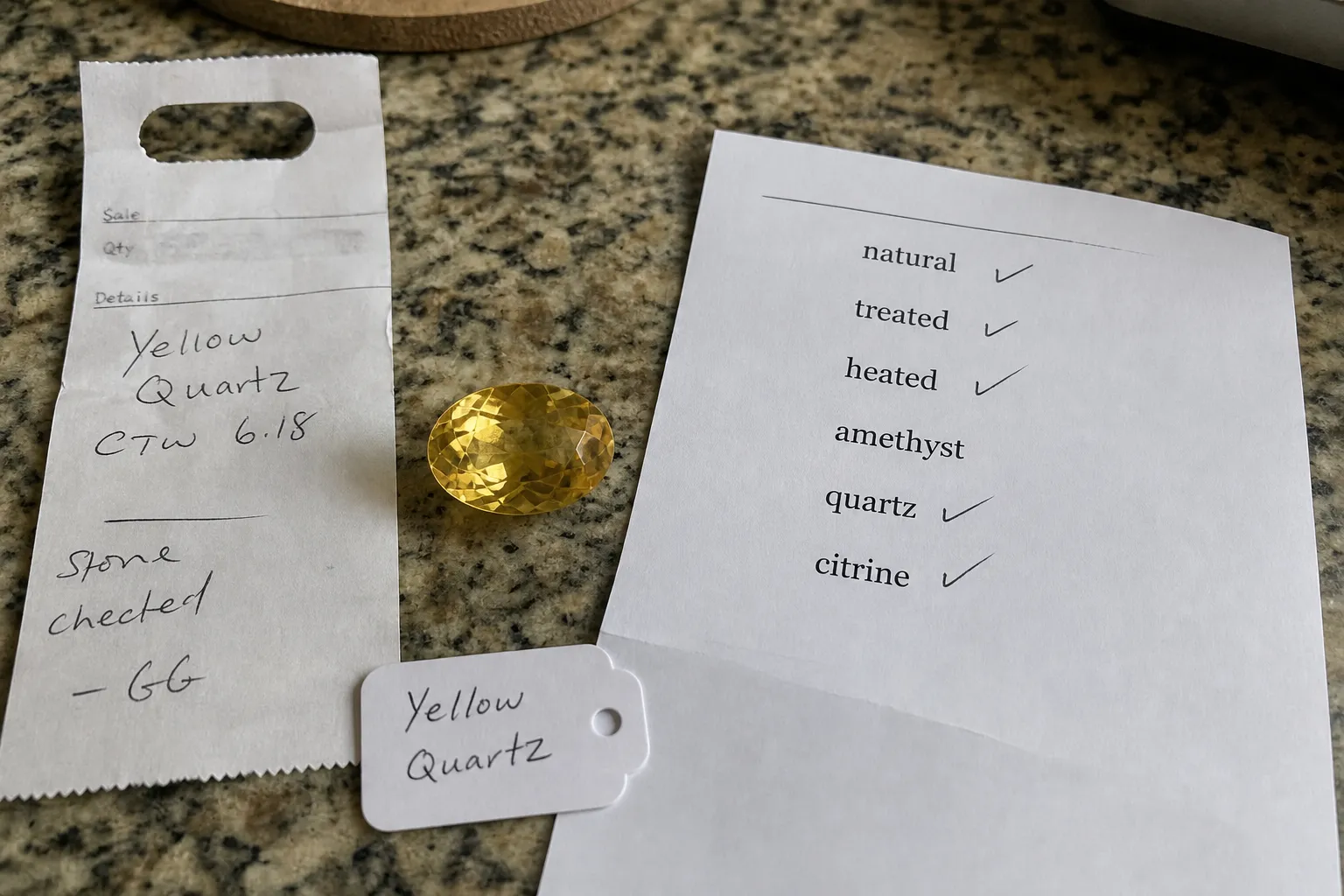
If you still have the receipt, listing, tag, or seller description, look for terms such as “natural,” “treated,” “heated,” “amethyst,” “quartz,” or “citrine.” If the description is vague, ask the seller what they mean. If they cannot answer clearly, you do not have to treat the stone as spiritually dangerous. You can simply treat it as uncertain.
In a 2026 layout, that may be enough to affect your choice. A feng shui object is not only a physical object; it is also a chosen symbol. If the symbol now feels compromised because the market language was unclear, replacing it is a clarity choice rather than proof that the stone caused a problem.
When heat-treated amethyst may still be acceptable
Heat-treated amethyst may be acceptable in a feng shui setting when you understand what it is and still want to use it. The key is informed choice, not purity performance.
It may be reasonable to keep it if
- You use the piece for color, beauty, or seasonal warmth.
- Your practice does not require untreated natural citrine.
- The seller described it as treated, and you were comfortable with that.
- The stone does not create doubt every time you see it.
- You are not relying on the object to guarantee an outcome.
It may be reasonable to replace it if
- The layout specifically calls for natural citrine in your chosen practice.
- The stone was sold with unclear or inflated authenticity language.
- The treatment story conflicts with the intention of the placement.
- You want a cleaner line between decorative crystals and symbolic tools.
- The uncertainty distracts from your confidence in the arrangement.
Neither list depends on panic. The decision is about fit. A stone can be beautiful and still not be the right symbolic object for a particular use. It can also be treated and still be acceptable if your practice allows that category.
A clean rule for a 2026 placement
Use this rule: if the 2026 feng shui placement depends on natural citrine as a specific material symbol, do not substitute heat-treated amethyst unless you knowingly accept that substitution. If the placement only needs a warm yellow or golden visual accent, the treatment history may matter less.
That rule separates three things that often get tangled together:
- Material identity: what the stone is and how it was represented.
- Market terminology: whether the label created fake citrine confusion.
- Feng shui interpretation: whether your practice gives meaning to naturalness, color, treatment, or intention.
Keeping those separate prevents two mistakes. One is dismissing the concern entirely, as if symbolic use never depends on material identity. For some practitioners and buyers, it does. The other is escalating the concern into a guaranteed energetic threat. The evidence here does not support that.
If you are unsure, you do not need a dramatic conclusion. Rename the stone honestly in your own notes: “golden heat-treated quartz,” “possible treated amethyst,” or “yellow crystal of uncertain origin.” Then decide whether that honest name still belongs in the layout. If the name weakens the purpose of the placement, choose a different object.
What this article cannot claim
Because the available source coverage for this page is limited, several claims should stay off the table unless stronger mineralogical, trade, or feng shui sources are added later.
This article cannot responsibly claim that heat-treated amethyst:
- Creates bad luck in a 2026 feng shui layout.
- Produces harmful or “violent” energy as a verified effect.
- Has a measured frequency purity problem.
- Changes crystal structure in a way that determines feng shui outcomes.
- Is always fake, worthless, or unusable.
- Must be removed from every home or placement.
It also cannot confirm detailed labeling rules, treatment mechanisms, or practitioner consensus from the current material.
The most useful conclusion is narrower: heat-treated amethyst is not a confirmed feng shui danger for 2026, but it can be the wrong choice when the layout depends on natural citrine, transparent labeling, or a personal standard of symbolic purity. The hidden danger is not the stone attacking the layout. It is letting a vague label carry more certainty than it deserves.