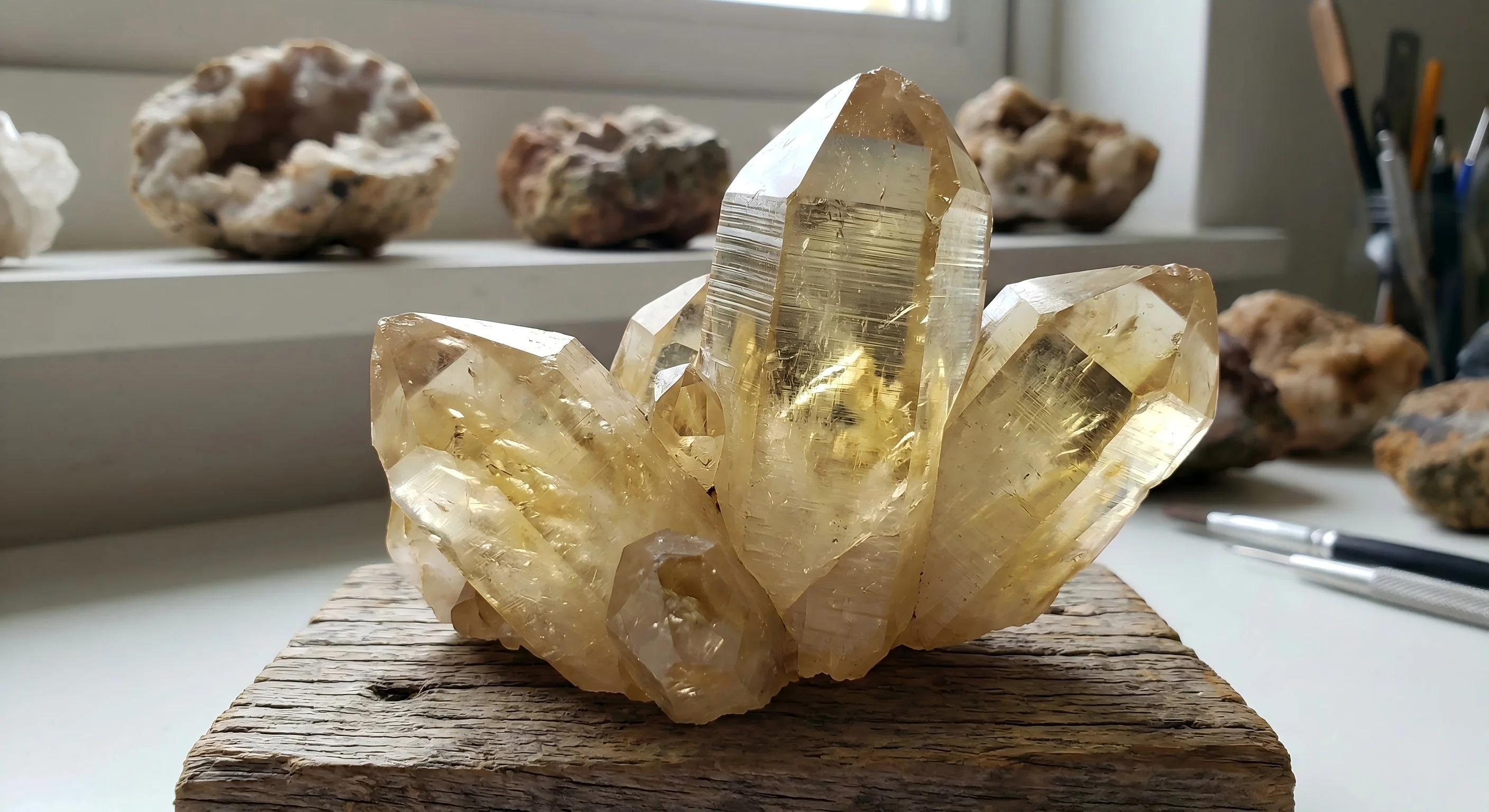
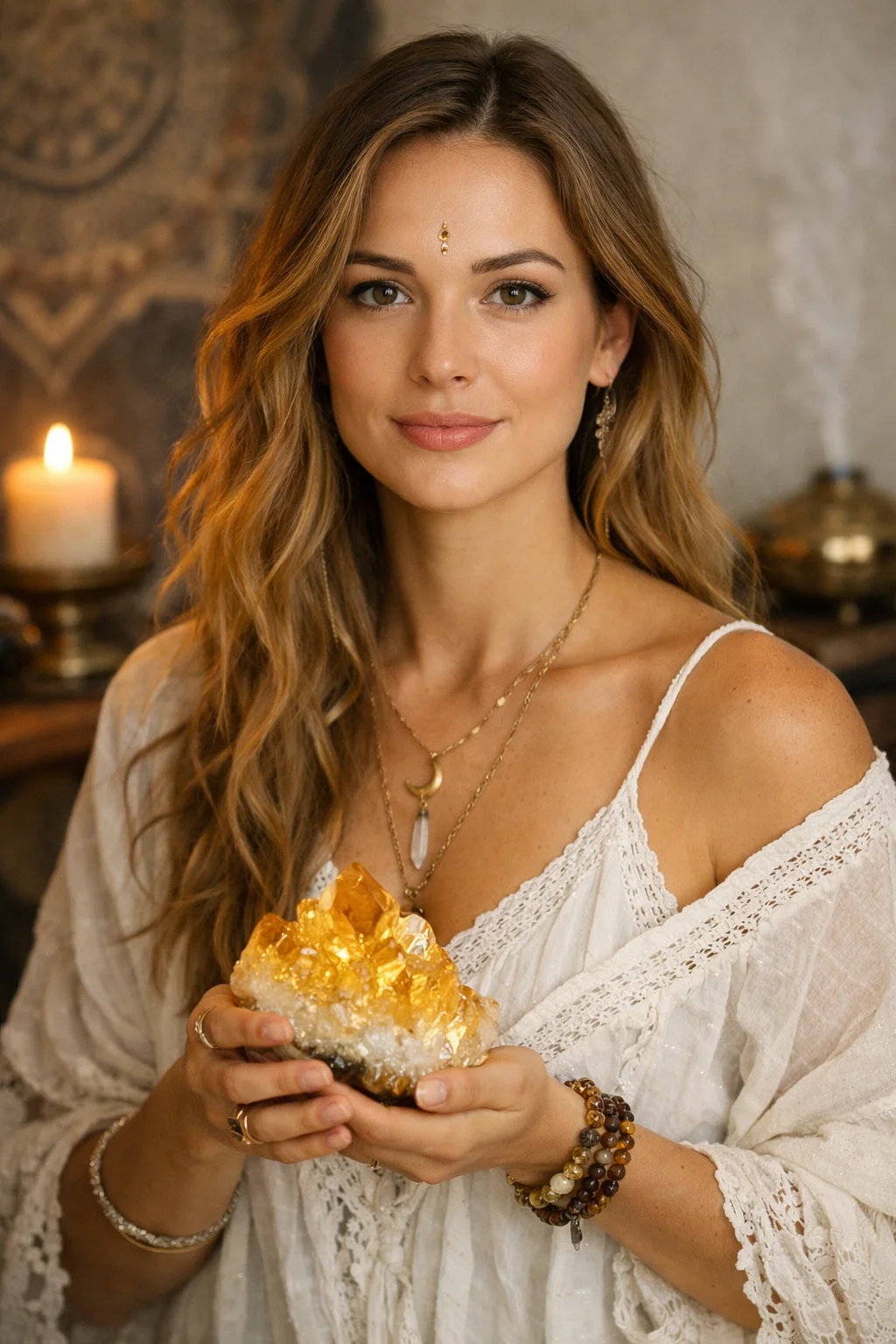
"The sharp, hollow clink of a gemstone knocking against a ceramic coffee mug. It is a sound that makes any jewelry lover involuntarily hold their breath."
I have spent over a decade inspecting everyday wear pieces under a 10x jeweler's loupe, watching the stories of people's lives etched into their favorite rings. We all love the sunset warmth of quartz-family stones, but the anxiety of wearing them can overshadow the joy. How do we keep them looking fresh while navigating subway turnstiles, heavy oak doors, and the depths of our canvas tote bags?
In this guide, we strip away the marketing fluff to cover:
- ✦ Architecture & Trade-offs: Exploring the physical realities of Scratch resistant settings and why we love chic Bezel set engagement rings.
- ✦ The Sun-Kissed Aesthetic: The truth about the "vintage fade" and practical methods for Protecting citrine from sun exposure.
- ✦ Tactile Rituals: Easy, science-backed Jewelry maintenance tips that will keep your pieces glowing for decades.
🎮 The Gemstone hardness scale: Sandbox Game
The Mohs scale is not a measure of how "indestructible" a stone is; it simply dictates what material can leave a tiny scuff on another. A Diamond at Mohs 10 does not mean it cannot chip if you drop it on tile (that is toughness, not hardness). It just means nothing else will easily scratch its surface. Let's play a game: see how your Citrine (Mohs 7) matches up against the kinetic hazards of your daily routine.
Deep Dive: The "Silica Dust" Reality Check ▼
The single biggest misconception I encounter at the bench is the belief that because a stone is "hard," it doesn't need babying. Let me introduce you to the invisible enemy: silica dust. Look closely at the air catching the sunlight in your living room. Those floating motes contain microscopic particles of quartz (silica), which registers at exactly Mohs 7 to 7.5.
When you breathe on your citrine ring and vigorously wipe it with the hem of your t-shirt to remove a fingerprint, you are often dragging these silica particles directly across the facet junctions. I have seen magnificent, large-carat citrines come into the studio looking like frosted sea glass. It wasn't one big impact that did it; it was five years of well-intentioned, dry wiping.
The Veteran Tip: Stop dry-wiping your jewelry. Start rinsing it under a gentle stream of tap water first. The water acts as a lubricant, washing away the abrasive silica dust before your polishing cloth ever makes contact with the stone's surface. It takes three extra seconds and adds decades to the crispness of your facet edges.
Style & Comfort: The Setting Scanner
Jewelry architecture is a game of visual trade-offs. The metal setting isn't just about holding a stone securely; it dictates how a ring distributes kinetic energy when you accidentally smack your hand against a car door. It also dictates how the piece interacts with your wardrobe. Let's scan the top structural choices for everyday wear, acknowledging that maximum security often comes at the cost of maximum brilliance.
Deep Dive: The Platinum vs. Gold Yield Strength Dilemma ▼
When designing Scratch resistant settings, the choice of metal is just as critical as the style. Many consumers default to 18k Yellow Gold for its rich color, assuming its high price tag equates to structural superiority. This is a flawed assumption.
18k gold is essentially an alloy containing 75% pure gold. Pure gold is incredibly malleable. When you snag an 18k gold prong on a car seatbelt, the metal bends. It yields to the pressure, eventually releasing your Mohs 7 gemstone onto the pavement.
Platinum, on the other hand, exhibits different metallurgical behavior. It is denser and possesses a phenomenon called "metal memory." While platinum will scratch and develop a frosted patina over time (which many collectors adore), it does not easily bend away from the stone under sudden kinetic stress. If you are setting a large, fragile citrine into an exposed prong design, opting for platinum prongs on a yellow gold band—a dual-metal strategy—is the pragmatic way to merge aesthetic warmth with mechanical security.
The Sun-Kissed Aesthetic: Protecting citrine from sun
Color stability in quartz is a fascinating chemical balancing act. Did you know that prolonged sunbathing can actually alter the internal ionic charge of your gemstone? Over time, strong UV rays can soften a deep honey-colored stone into a lovely, pale pastel lemon.
Some jewelry lovers intentionally leave their pieces on sunlit windowsills to achieve this "vintage fade." It softens the look, making the piece feel antique.
Photochemical degradation is permanent. If you want to maintain that original, saturated amber pop you fell in love with at the boutique, you must curate its light exposure. Tuck it away in a dark pouch when heading to the beach.
Deep Dive: The Heat-Treated Amethyst Secret ▼
Let's address the industry elephant in the room regarding color fading. Natural citrine—where the yellow color is produced by geological heat and radiation over millions of years—is relatively rare. The vast majority of commercially available, highly affordable "citrine" is actually pale purple amethyst that has been baked in a laboratory oven at around 470°C to 560°C.
This thermal process alters the oxidation state of the iron impurities within the crystal lattice, shifting the color from purple to orange-yellow. There is absolutely nothing wrong with exploring these heat-treated stones; they offer beautiful color at a fraction of the cost. However, because their color state was artificially forced via heat, they are inherently less stable when exposed to intense ultraviolet radiation compared to their natural counterparts.
If your stone has a distinct reddish-orange or slightly brownish tint, it is almost certainly heated amethyst. Treat it with the understanding that its rich color is a delicate chemical suspension, not an immutable property.
Spa Day! Jewelry maintenance tips Quiz
Your ring is looking incredibly cloudy. It has lost its refractive snap, choked by a film of hand lotion, SPF, and natural skin oils. What is the absolute best way to give your Mohs 7 crystal a refreshing glow-up without risking its structural integrity?
References & Further Exploration
- Gemological Institute of America (GIA): Quartz Quality Factors and Treatments - Detailed analysis of heat-treated variations and color stability.
- Mindat.org (Hudson Institute of Mineralogy): Citrine Mineral Data - Comprehensive crystallographic data, including Mohs hardness and specific gravity metrics.
- International Gem Society (IGS): Understanding Gemstone Cleavage and Fracture - An academic look into why hardness does not equate to toughness in daily wear scenarios.
Part of our Core Guide