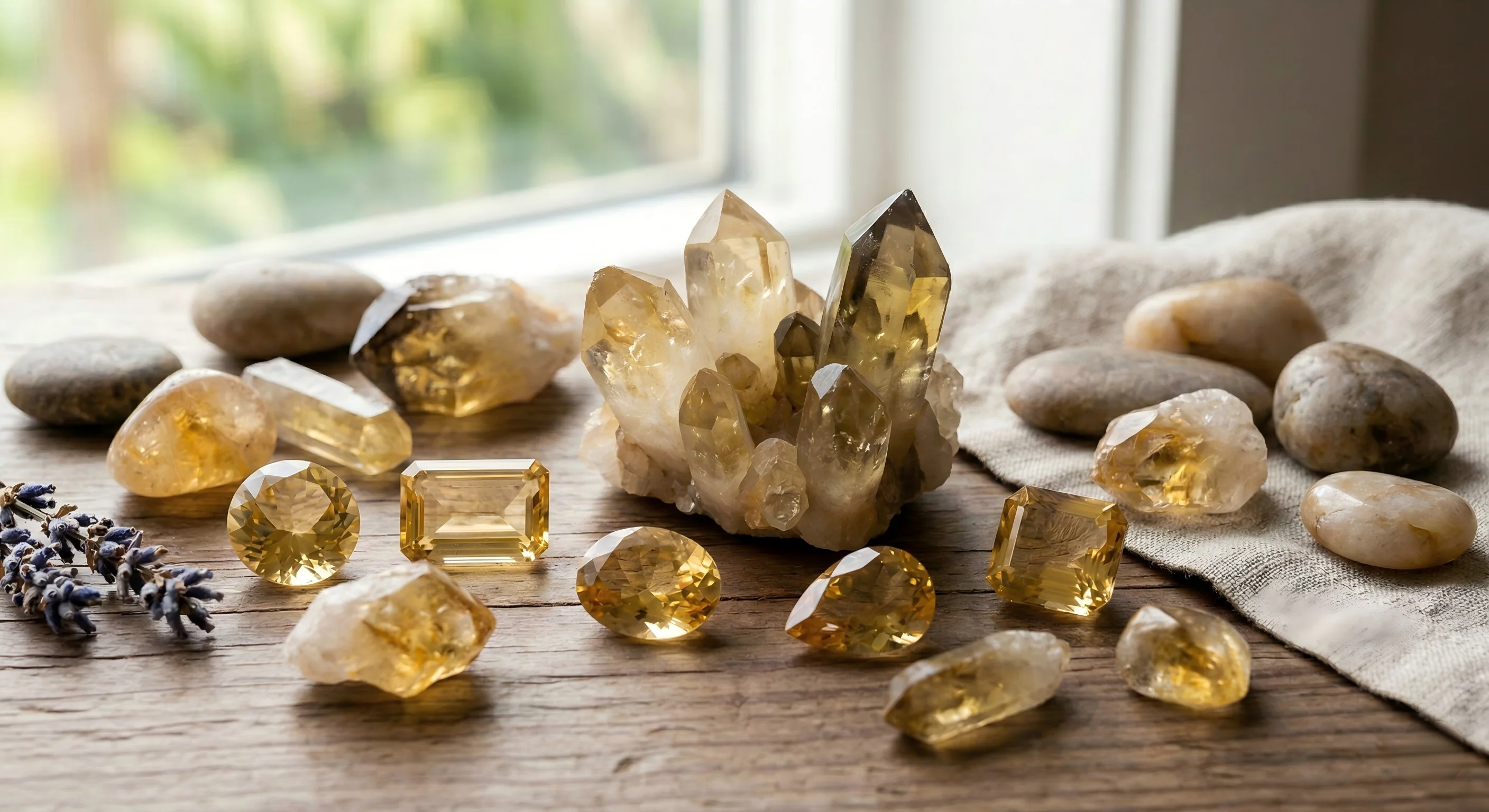
Let us dismantle the mechanics of Crystal Grids for Wealth. I regularly see meticulously designed setups that completely ignore the physical characteristics of the materials. The most common error? Using heat-treated amethyst instead of natural, unheated citrine for the center anchor.
The trade-off is seductive: heat-treated amethyst is visually striking, readily available, and incredibly cheap. But physically, it has been baked at extreme temperatures, artificially stressing its crystalline lattice. It lacks the dense, coherent structural integrity required to ground a long-term project. When you invest in genuine, earth-formed citrine, you feel the difference in your hand—a colder, heavier, uncompromised geometry.
Now, consider the Citrine and Pyrite Pairing. Pyrite is iron sulfide. It is brutally heavy. It oxidizes. It smells faintly of metal and earth. Stop treating these stones as magical talismans that will print money; treat them as sensory anchors. When I place raw pyrite at the perimeter of a workspace, its dense metallic nature acts as a psychological barricade. It sits there, heavy and immovable, physically reminding me to guard my focus against digital intrusion.
We build these grids not to cast a spell on the market, but to engineer an atmosphere of profound discipline within ourselves. The materials matter because their physical weight and structure mandate respect.