Bounded physiology note

Vagus Nerve Stimulation: The Biological Switch for Core Stability

Vagus Nerve Stimulation is used in two very different ways.

In medicine, it means electrical stimulation of the vagus nerve through a regulated device, usually with professional evaluation, programming, and follow-up. In everyday nervous-system language, people often use the phrase more loosely for practices that feel calming, grounding, or supportive of regulation.

Those meanings should stay separate.

The vagus nerve is biologically relevant to parasympathetic activation, digestion, heart-rate signaling, and the gut-brain connection. But it is not a literal on/off switch for confidence, posture, anxiety, digestion, or “core stability.”

A cleaner reading is this: clinical VNS is a medical neuromodulation approach. Popular “vagus nerve activation” language is usually a metaphor for helping the body move toward steadier regulation.
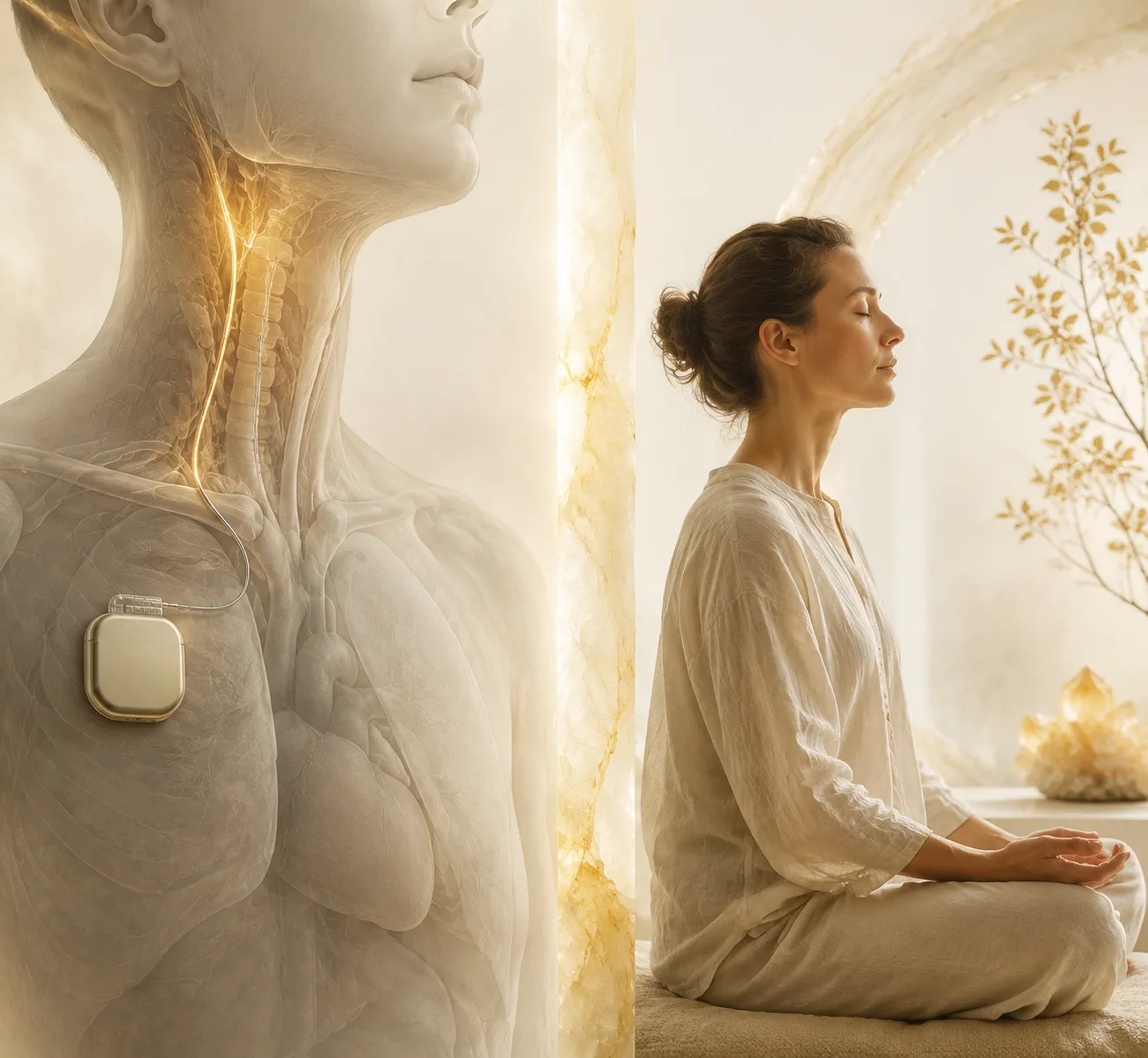
A restrained visual comparison between regulated medical vagus nerve stimulation and everyday calming practices
The central distinction is not whether the vagus nerve matters, but whether the term refers to regulated device-based stimulation or looser regulation-supportive language.

What Vagus Nerve Stimulation Actually Means

The vagus nerve is the tenth cranial nerve and one of the body’s major communication routes between the brainstem and organs in the chest and abdomen. It is involved in autonomic nervous system signaling, including parasympathetic pathways related to heart rate, breathing patterns, digestion, and internal body sensing.

Much of the vagus nerve carries information upward from the body toward the brain. That is one reason it appears so often in discussions of the gut-brain axis.

Clinical Vagus Nerve Stimulation, however, is not simply “doing something relaxing.” It refers to stimulation delivered through a medical device.

The best-known form is implantable VNS: a pulse generator is placed under the skin of the chest and connected by a lead wire to the vagus nerve in the neck, commonly on the left side. The left side is usually emphasized because the right vagus nerve has closer cardiac relevance in many clinical discussions.

There are also noninvasive VNS approaches, including devices that stimulate through the neck or areas of the ear associated with vagal pathways. These are still device-based interventions, not casual exercises. Regulatory status and medical use depend on the specific device and the specific context.

That distinction matters because the phrase has migrated. Someone searching for vagus nerve stimulation at home may be thinking about breathing, humming, cold exposure, meditation, posture work, or relaxation routines. Those practices may be discussed as body-awareness or regulation-supportive practices. They should not be described as the same thing as clinical VNS.

Why the “Biological Switch” Metaphor Has Limits

The phrase “biological switch” works only as a metaphor.

The vagus nerve participates in the body’s ability to move between higher-alert states and more settled parasympathetic states. That is why it is commonly linked with calm, digestion, breath, social ease, and a felt sense of internal steadiness.

But the body does not work like a wall switch. Parasympathetic activation is not one button, and the vagus nerve is not the whole regulation system. Autonomic state is shaped by sleep, pain, blood sugar, stress load, illness, medication, trauma history, breathing mechanics, movement, environment, and social context.

Where “core stability” needs careful language

In fitness, core stability usually means muscular control around the trunk and pelvis. In embodied nervous-system language, it may mean something broader: feeling centered, less braced, more able to breathe, digest, orient, and respond.

A cautious connection can be made between vagal pathways, autonomic regulation, and gut-brain signaling. A much stronger claim — that VNS directly creates confidence, perfect posture, emotional certainty, or a stronger physical core — is not a fair use of the evidence.

A more grounded interpretation is this: when the nervous system is less threat-dominant, a person may experience the body as steadier. That felt steadiness can be described metaphorically as “core stability,” but it should not be presented as a guaranteed outcome of vagus nerve stimulation.

How Parasympathetic Activation and the Gut-Brain Connection Fit In

The vagus nerve is central to many explanations of parasympathetic signaling. Parasympathetic activity is often associated with rest, digestion, and recovery-oriented functions.

The vagus nerve also helps carry sensory information from internal organs toward the brain. That is why it appears in research and education around the gut-brain connection.

Still, not every gut sensation, mood shift, or calming practice can be reduced to “the vagus nerve.” The gut-brain axis also includes immune signaling, hormones, the enteric nervous system, microbiome-related research, stress physiology, and brain networks. The vagus nerve is one important route, not the entire map.

This is where many online claims become too broad. Saying that the vagus nerve helps connect body and brain is reasonable. Saying that a home routine will reliably change gut health, inflammation, anxiety, or mood through vagus nerve stimulation goes beyond what a general physiology explanation can support.

The safest wording is modest: practices that slow breathing, reduce strain, encourage body awareness, or support regular recovery may be discussed as part of a regulation-friendly lifestyle. They should not be renamed as medical VNS, and they should not replace qualified evaluation when symptoms are significant.

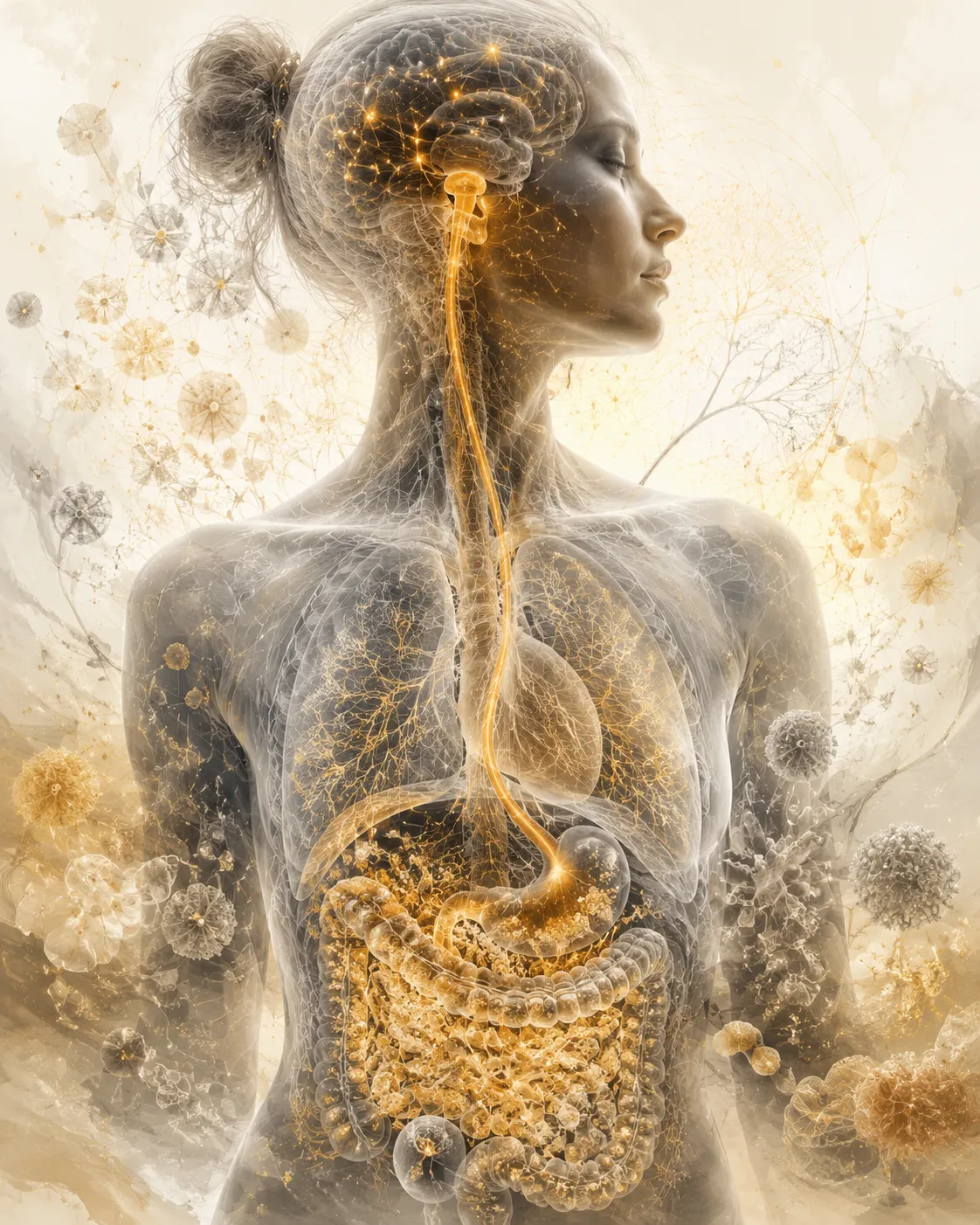
A conceptual map showing the vagus nerve as one route within the broader gut-brain axis and autonomic regulation system
The vagus nerve is one important route in body-brain communication, not the entire map of mood, digestion, inflammation, stress physiology, or recovery.

What Changes the Meaning: Device, Context, and Evidence Level

Whether “vagus nerve stimulation” means a medical intervention or a casual self-regulation idea depends on three things.

First, is there a device?

Clinical VNS involves electrical stimulation delivered through an implanted or noninvasive device. Implantable VNS includes hardware, programming, follow-up, and medical oversight. Noninvasive VNS devices also have defined designs and intended uses. A breathing drill or humming practice is not the same category.

Second, what is the purpose?

Medical VNS has been used in specific clinical contexts, including certain seizure disorders, some depression-related care pathways, post-stroke upper-limb rehabilitation paired with therapy, and some headache-related device uses. These examples explain why VNS is taken seriously in clinical settings. They do not turn it into a general wellness tool for confidence or core strength.

Third, what level of evidence is being claimed?

Mechanism evidence can explain why a pathway is plausible. It cannot automatically confirm a desired result. The fact that the vagus nerve participates in autonomic regulation does not mean a consumer device, ear clip, TENS-style experiment, or exercise sequence will produce a specific health outcome.

The main boundary is simple: the body pathway is real; many popular promises are larger than the evidence behind them.

Common Confusion Around “Vagus Nerve Exercises”

Searches for vagus nerve stimulation often lead to phrases like “vagus nerve exercises,” “vagus nerve stimulation naturally,” “vagus nerve stimulation for anxiety,” “vagus nerve stimulation ear,” or “vagus nerve stimulation with TENS unit.”

Those searches reveal a real reader need. People want language for calming the body, settling digestion, and feeling more internally stable.

The confusion begins when the same term is used for both clinical neuromodulation and ordinary self-care. A relaxation practice may feel meaningful. It may help someone notice breath, jaw tension, posture, or abdominal bracing. But subjective calm is not the same as targeted electrical stimulation of the vagus nerve through a regulated medical device.

The same caution applies to online personal reports and product claims around at-home devices. Personal accounts can be interesting, but they do not establish safety, mechanism, or expected results.

The ear is another common source of confusion. Some noninvasive VNS research and devices focus on regions of the outer ear associated with auricular vagal pathways. That does not mean any ear massage, clip, or electrical device is equivalent to studied transcutaneous auricular VNS.

Safety and Side-Effect Boundaries

Clinical VNS is a medical topic because stimulation of the vagus nerve can affect important systems.

Implantable VNS may involve procedure-related risks such as incision pain, infection, difficulty swallowing, and vocal cord problems. Stimulation-related side effects may include voice changes, hoarseness, throat discomfort, coughing, headache, shortness of breath, tingling, sleep problems, and worsening sleep apnea.

People with seizure disorders, depression-related concerns, stroke history, sleep apnea, heart conditions, implanted devices, pregnancy concerns, neurological symptoms, severe anxiety symptoms, or interest in a VNS device should discuss the topic with a qualified healthcare professional.

For a general reader, the practical takeaway is not complicated: if the phrase means a device, it belongs in a medical conversation. If the phrase means a calming practice, it is more accurate to call it breath work, relaxation, body awareness, or nervous-system support rather than clinical VNS.

A Cleaner Way to Think About Core Stability

The most useful interpretation is not “stimulate the vagus nerve to become confident.”

It is more precise to say that the vagus nerve helps explain why internal state can influence steadiness, digestion, breath, and emotional tone.

Core stability, in this broader sense, is not only abdominal strength. It is the feeling that the body can organize itself without constant bracing. Parasympathetic activation, gut-brain signaling, and autonomic regulation are relevant to that experience, but they do not create a guaranteed formula.

So the phrase “Vagus Nerve Stimulation” is best handled through three lenses:

  • Medical lens: VNS is device-based neuromodulation with specific clinical uses, risks, programming, and follow-up.
  • Embodied lens: vagal and parasympathetic language can help describe why calm, digestion, breath, and internal steadiness feel connected.
  • Boundary lens: ordinary practices may support awareness or relaxation, but they are not clinical VNS and should not be treated as medical substitutes.

The biological switch is not a magic switch. It is shorthand for a living regulation system — real, complex, and easy to oversell when medical vocabulary is borrowed for everyday promises.

Sources

Sources and further reading

Reference links are limited to sources considered suitable for public citation in this page.

Vagus Nerve StimulationAuthoritative U.S. government medical overview for defining clinical Vagus Nerve Stimulation and separating device-based treatment from broad wellness uses of the phrase.government medical overviewVagus nerve as modulator of the brain–gut axis in psychiatric and inflammatory disordersPeer-reviewed review useful for cautious mechanism background on vagal pathways, parasympathetic signaling, psychiatric and inflammatory research, and the brain-gut axis.Peer-reviewed studyVagus Nerve Stimulator - StatPearls - NCBI BookshelfMedical textbook-style clinical summary covering VNS mechanisms, indications, contraindication/safety considerations, and adverse effects.medical textbook / clinical summaryVagus nerve stimulation - Mayo ClinicMajor medical institution patient-education page that explains device-based VNS, procedure basics, FDA-approved contexts, risks, side effects, and outcome limits in accessible language.major medical institution patient educationVagus Nerve: What It Is, Function, Location & ConditionsReputable medical-center anatomy page useful for explaining the vagus nerve’s general role in body functions without over-medicalizing the article.major medical institution anatomy overviewVagus Nerve Stimulation (VNS): What It Is, Uses & Side EffectsReputable patient-education source that reinforces the distinction between clinical VNS therapy, indications, procedure context, and side effects.major medical institution patient education