Diagnostic Protocol • Gemology

The "White Base" Protocol: A 5-Second Visual Inspection for Identifying Imitation Citrine

Pay attention to the physical characteristics of your specimens. Industry observations routinely highlight a massive influx of baked amethyst masquerading as premium citrine.

Holding a specimen resembling a scorched marshmallow or a dark shard often indicates a manufactured piece. Genuine citrine remains incredibly scarce in natural geological formations, yet retail shelves overflow with it.

Market data suggests a vast majority of these stones consist of heat-treated amethyst (HTA) or tinted glass.

As a diagnostics technician, I will walk you through the "White Base" protocol. This framework functions as a strict physical evaluation method.

Execute this step-by-step guide to visually filter out fabricated pieces in seconds without laboratory equipment. We will examine crystal lattice behaviors, dichroic physics, and the specific structural anomalies generated by commercial kilns.
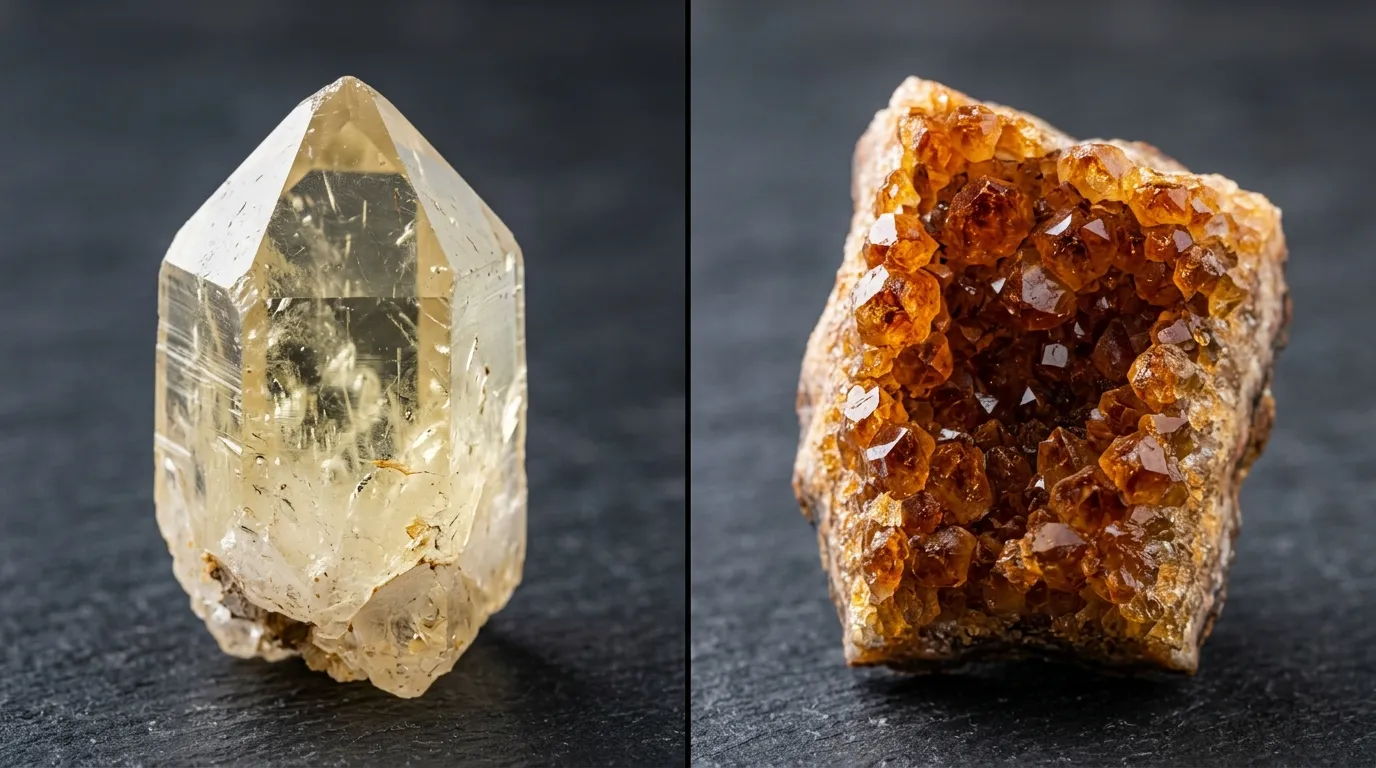
Visual comparison between genuine natural citrine and heat-treated amethyst
Figure 1: Visual comparison between genuine natural citrine and heat-treated amethyst

1. The Core Issue & Structural Evaluation

A widespread absence of geological awareness drives retail confusion.

Vendors frequently pass along "Citrine-by-Trade-Name" without realizing this industry term translates directly to amethyst baked in commercial furnaces at 900 degrees Fahrenheit.

The Diagnosis

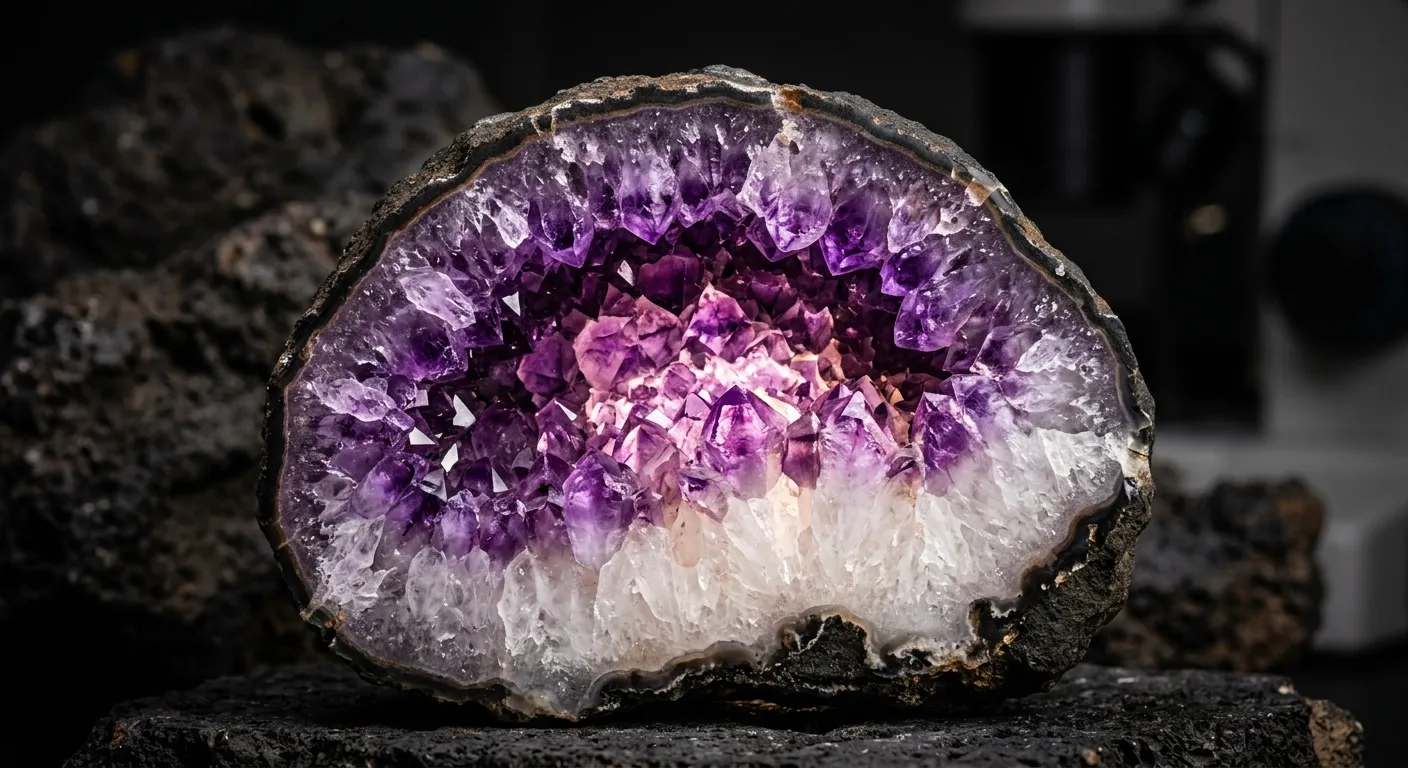
Grasp the anatomy of a geode to comprehend the mechanics behind this visual check. Amethyst develops inside volcanic vugs.

The basal root of an amethyst point anchors to a matrix composed of opaque white quartz or chalcedony.

Subjecting that amethyst to extreme temperatures alters the purple top to orange, but that dense white root retains its original structural color.

Conversely, natural citrine typically emerges in pegmatite pockets or hydrothermal veins as isolated points or distinct clusters, completely lacking that dense, popcorn-like white bottom.

Cross-section of an amethyst geode showing the opaque white basal root
Geode Anatomy & Basal Root
Market Distribution Analysis
Interactive Data Visualization: Market data suggests a vast majority of these stones consist of HTA

Initial Screening Dimensions:

1

Saturation vs. Hue

Evaluate the visual output for neon or scorched aesthetics. Authentic citrine displays a bright sunny yellow through amber, frequently exhibiting a faint greenish or smoky modifier. Manufactured counterparts routinely present as a dark tobaccoey brown or a harsh, burnt orange.

2

Geometric Origin

Inspect the formation structure. Natural citrine avoids forming in the tightly packed, jagged "hedgehog" formations heavily associated with Brazilian amethyst geodes.

3

Color Distribution

Map the saturation points. HTA processing forces the color change primarily at the terminal points, abandoning the basal root to remain white.

2. Workspace Setup & Diagnostic Alternatives

Bypass expensive spectrometers. Secure a high-CRI light source and a completely neutral background.

List of tools required

  • A Pure White Base: Position a standard sheet of 20lb white printer paper or a bright ceramic tile flat on your table. You need this to accurately gauge color projection.
  • Ordinary Daylight: Avoid warm incandescent bulbs. Source 5000K-6500K illumination (ambient light from a North-facing window provides optimal conditions).
  • A Blank Monitor Screen: Boot up your laptop or desktop display to generate a localized polarized light field.
  • 10x Loupe: Deploy this magnification hardware for internal matrix scanning.

Alternative Options (Low Cost)

01

The "White Napkin" Hack

Improvise at trade shows by stacking plain white napkins. Rest the specimen on the stack. HTA typically casts a harsh, opaque white crust reflection onto the paper.

02

The Smartphone Flashlight

Center the stone directly against your mobile device's LED flash. Authentic pieces transmit a consistent golden glow. Fabricated HTA reveals a cloudy white base contrasting heavily with a baked orange tip.

Diagnostic Phase

Step 1: The White Base Visual Check

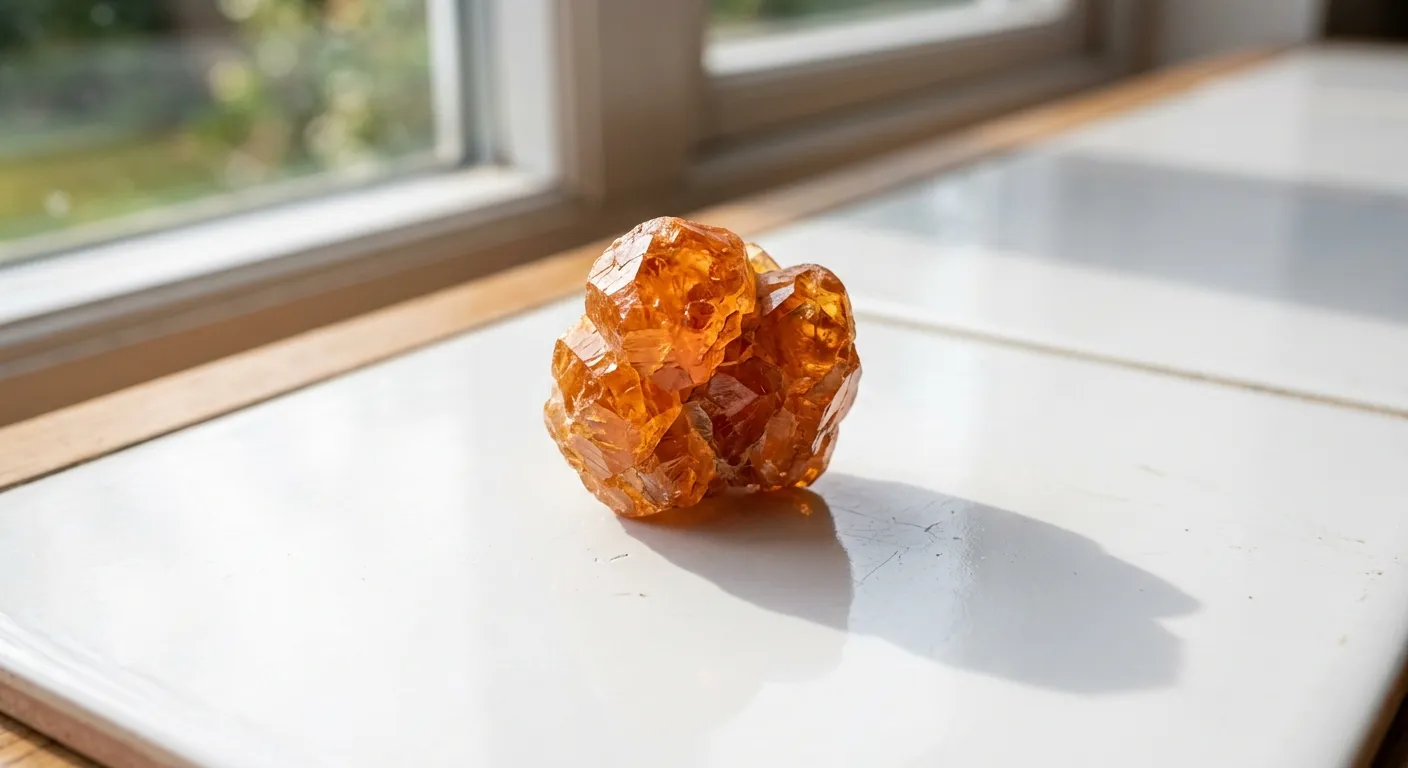
Set your specimen flat onto the white paper under bright direct light. You must hold the stone at different angles to track the exact boundaries of the color zones.

The Action:

Focus your attention strictly on the basal detachment point where the crystal separated from its host rock. Evaluations of HTA overwhelmingly reveal a harsh, milky-white, opaque foundation.

This specific zone represents the original amethyst root resisting thermal alteration during factory processing.

Authentic citrine maintains structural consistency at its base. Even pale natural bases exhibit translucency rather than dense, opaque whiteness. Spotting a base resembling popped corn serves as a primary indicator of thermal manipulation.

A crystal specimen placed on a pure white paper base under bright daylight
Visual Check: Opaque Foundation Analysis
Pro Tip

Inspect tumbled stones for stark white phantoms. These manifest as dense, snowy clouds trapped inside the matrix. Natural citrine derives its hue from atomic-level iron integration and structurally rejects these opaque white internal masses.

Troubleshooting

Wash heavily soiled stones with mild soap and warm water prior to inspection. Heavy iron staining of the surface frequently mimics internal yellow saturation. Surface-level iron oxide acts as an external crust and behaves entirely differently under light than true internal color centers.

Diagnostic Phase

Step 2: Color Gradient and "Pooling" Analysis

Lift the specimen and view in ordinary daylight. Map the distribution of the hue across the entire crystal lattice.

The Action:

Compare the terminal points against the main body. HTA pushes the heaviest color concentrations to the tips, leaving the midsection pale or entirely colorless.

Additionally, look for color pooling along cracks. Dyed specimens (frequently marketed under the "Lemon Citrine" moniker) trap liquid colorants inside internal fractures, generating high-contrast, unnatural yellow fault lines.

Authentic pieces present uniform or geometrically zoned color. Natural zoning aligns strictly with the structural growth planes of the crystal, manifesting as faint, linear phantoms rather than aggressive, splotchy ink drops at the tips.

Pro Tip

Scan for a subtle smoky modifier. Untreated material sourced from the Congo or Russia routinely carries a faint greyish-smoky shadow. Flawless, hyper-saturated orange aesthetics usually point toward synthetic glass or aggressive thermal treatment.

Troubleshooting

Differentiate "Golden Healer" quartz from actual citrine. Golden Healer consists of clear quartz coated in a thin layer of iron oxide. Detect peeling yellow layers or color restricted entirely to surface fissures to immediately rule out citrine.

Diagnostic Phase

Step 3: Internal Inclusion Scanning

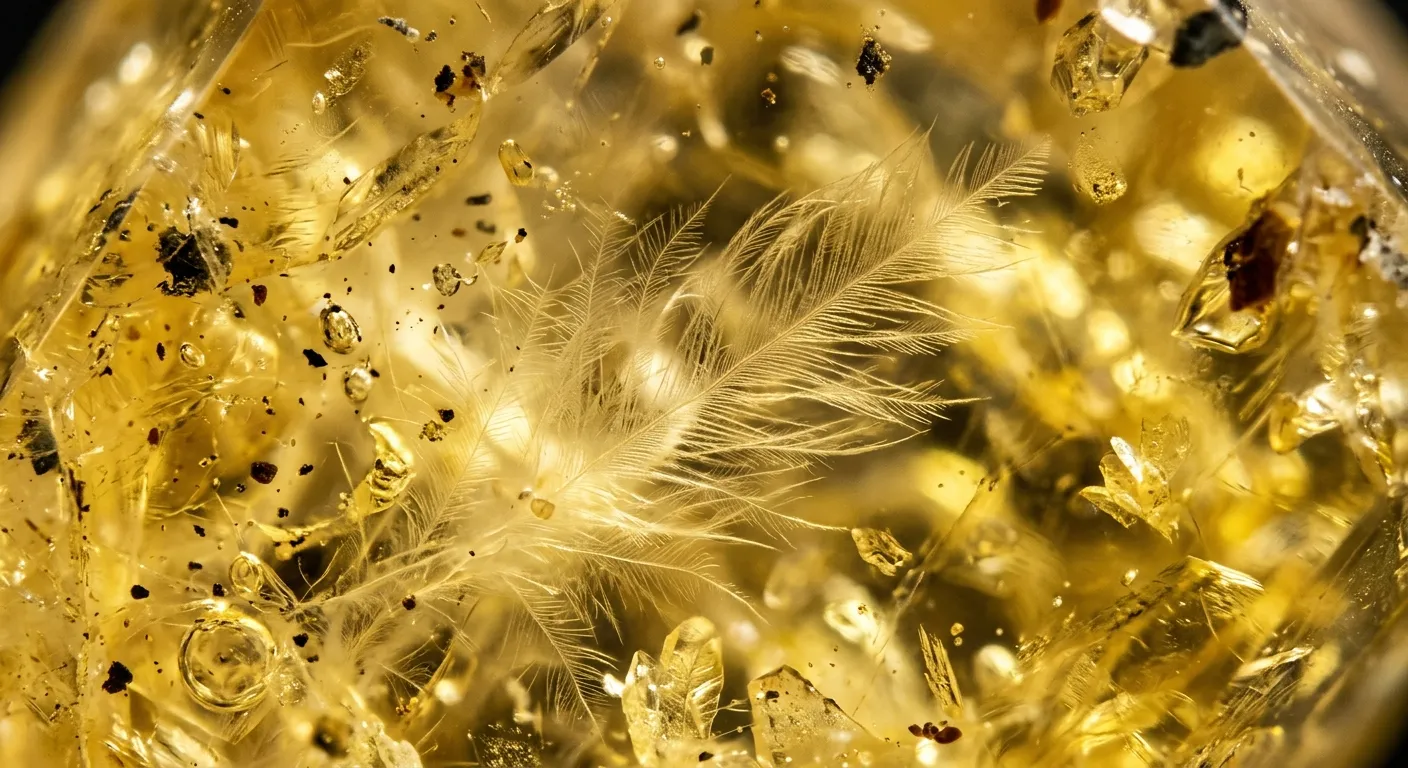
Microscopic view of internal crystal inclusions showing wispy veils
Microscopic Matrix Scanning

Equip your 10x loupe or activate your smartphone's macro camera setting to look within the crystal for impurities.

The Action:

Scan the interior for gas pockets. Sighting perfectly spherical bubbles instantly identifies the material as lead glass. Natural quartz structures physically cannot form perfectly round air spheres. Instead, search for wispy, feather-like veils or two-phase inclusions (microscopic liquid cavities containing a mobile gas bubble).

Simultaneously, scan the matrix for uniform perfectly flat flakes. This visual signature exposes "Goldstone" or "Aventurine glass" fabrications. Metallic glitter forming perfect microscopic squares or triangles confirms the presence of man-made copper filings suspended in glass.

Pro Tip

Authentic material frequently hosts microscopic needles of rutile or goethite. Spotting fine, hair-like golden threads suspended inside the matrix strongly suggests a genuine, unaltered specimen.

Troubleshooting

Separate natural healed fractures from factory glass bubbles. Healed fractures resemble organic fingerprints and indicate natural geological growth, whereas perfect spheres dictate industrial manufacturing.

Diagnostic Phase

Step 4: The Polarized Screen Test (Dichroism)

Deploy this optical mechanic for definitive identification. Authentic citrine possesses dichroic properties, meaning the crystal lattice transmits two distinct colors (or varying shades of one color) when intersected by polarized light at varying angles.

Thermally manipulated amethyst completely lacks this optical trait.

The Action:
  1. Launch a blank white text document or a plain search engine page on your computer display. This digital screen functions as your polarized light emitter.
  2. Grip the specimen and position it between your eye and the glowing display.
  3. Rotate the mineral slowly on a 90 to 180-degree axis.
  4. Monitor the saturation levels intently.
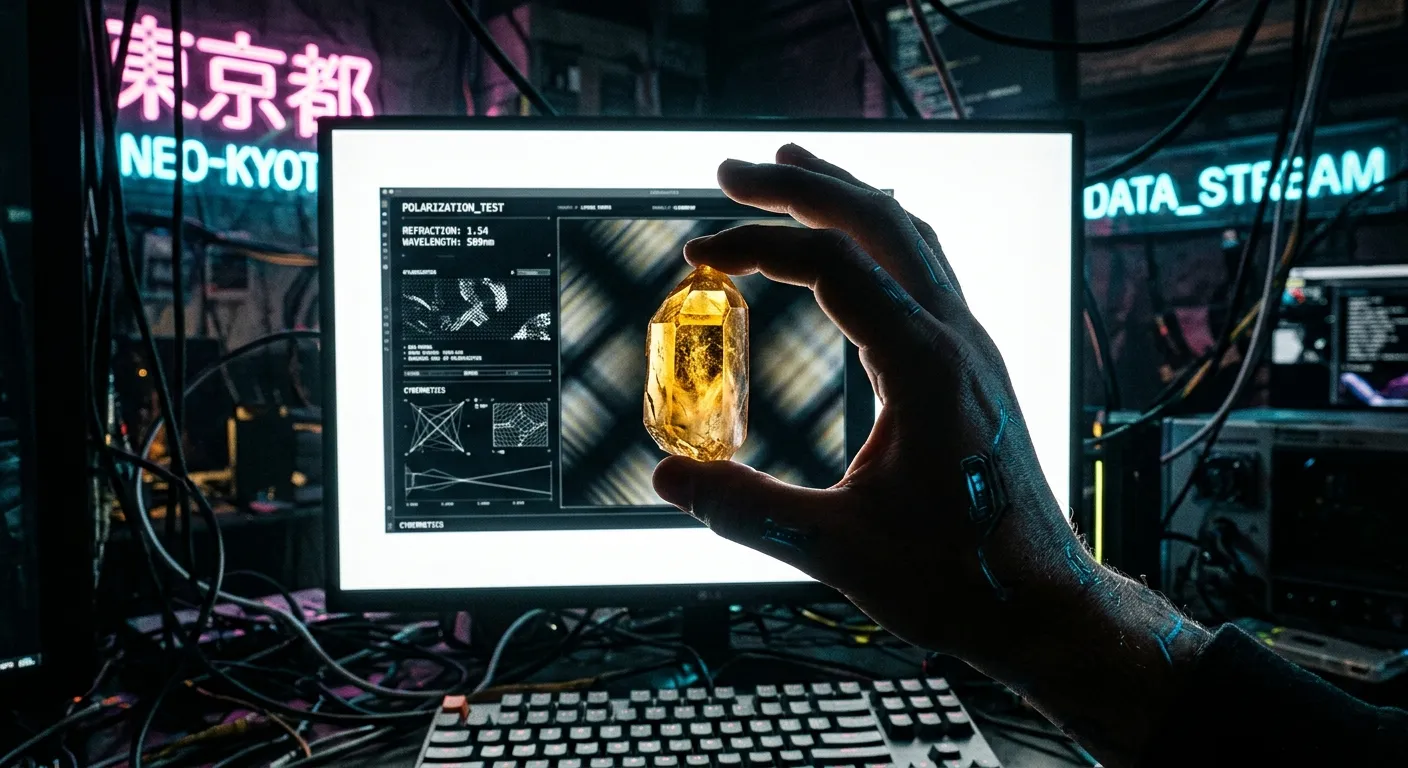
Observing a genuine piece reveals a distinct optical shift. The visual output transitions from a pale yellow to a highly saturated golden tone. Testing a fabricated HTA or glass unit yields zero optical variance; the hue remains entirely static regardless of the rotation angle.
A crystal held against a glowing digital monitor screen to test for dichroism
Dichroic Optical Shift Demonstration
Pro Tip

Upgrade this diagnostic setup by putting on a pair of polarized sunglasses while you use a blank monitor screen as your primary light source. Rotating the mineral under these stacked polarized filters amplifies the visual density shift significantly.

Troubleshooting

Darker specimens (like smoky citrine) obscure the dichroic shift. Press the stone closer to the digital display and focus your observation strictly on the thinnest, most translucent edges of the crystal structure to allow maximum light penetration.

4. Critical Mistakes You Must avoid

Trusting the "Geode" Shape

Sighting a hollow, cave-like "citrine geode" immediately confirms the piece as 100% heat-treated amethyst. Natural formations strictly avoid developing into massive, cathedral-style cavern structures. If the specimen resembles a hollow cave, it is a fabricated piece. Industry reports indicate buyers frequently misallocate vast amounts of capital on these common mineral formations due to this specific misunderstanding.

Confusing "Lemon Quartz" with Citrine

Lemon quartz typically originates as irradiated or thermally altered smoky quartz. While technically a natural quartz base, it fails to classify as natural citrine. It projects a highly specific, neon greenish-yellow signature. Categorize any electric or neon visual outputs as treated material.

The "Price is Right" Fallacy

Authentic material commands premium market valuation. Encountering a massive, fist-sized cluster priced at a fraction of standard market rates strongly indicates HTA. Genuine specimens of substantial size and clarity require significant capital acquisition costs. Extreme discounts almost always point to baked amethyst.

5. Quick FAQ

Q: Can I execute a fix to reverse the heat treatment on a fabricated stone?

A:

No. Thermal processing permanently alters the oxidation state of the iron impurities trapped within the quartz lattice. Once the material transitions to orange, the chemical state locks in. No known fix exists to revert the matrix back to its original purple amethyst state.

Q: Is heat-treated amethyst technically "fake" if it utilizes real quartz?

A:

The industry classifies it as a misrepresented mineral. Both stones share the exact same chemical formula (SiO2), but they represent entirely different mineralogical varieties. Mislabeling the stone equates to painting a standard sedan red and marketing it as a factory-built supercar.

Q: Does natural citrine ever feature a white base?

A:

Extremely rarely. Authentic formations generally develop as isolated floater crystals or anchor themselves to grey/brown host rock matrices. Spotting a harsh, popcorn-white detachment zone strongly suggests the piece was fractured off the interior wall of a Brazilian amethyst geode.

Q: Can a dichroscope replace the digital monitor method?

A:

Yes. looking into the dichroscope represents the standard gemological protocol for this evaluation. The instrument splits the transmitted light, displaying the two distinct pleochroic colors side-by-side. However, the digital display technique provides a highly effective, zero-cost alternative for field diagnostics.

Q: Why do certain specimens appear so dark they resemble tobacco?

A:

Commercial facilities frequently over-process low-grade amethyst. Pushing stones with high iron concentrations through extended thermal cycles generates a severely scorched aesthetic. Authentic material practically never achieves that muddy, dense brown saturation unless it heavily crosses into the smoky quartz classification.

Academic References & Literature