Bounded Spatial Reading
Rethinking Feng Shui: Adjusting Your Space for High-Velocity Energy
A grounded way to read Feng Shui Cures 2026 is not as a promise that a room can force luck, wealth, protection, productivity, romance, or health outcomes. Read it as a careful shorthand for changing how a space feels, how attention moves, and how daily routines settle.
“High-velocity energy” is best understood as modern pressure: crowded thresholds, constant devices, visual noise, harsh light, interruptive sound, and rooms that never quite give the body a place to pause. That language can be useful. It is not proof of a measurable force.
The evidence boundary matters. The material available for this page did not include public, authoritative sources for 2026-specific Feng Shui systems, traditional lineage claims, scientific mechanisms, or expert validation. So the clean answer is narrower: use modern Feng Shui-style adjustments as practical spatial adjustments and symbolic anchors, not as guaranteed results.
broader context
Start with the main citrine page
This narrower page works best after the broader citrine reference page.
What the phrase can do
It can name the felt pressure of a room: cluttered entries, interruptive devices, glare, noise, and restless visual attention.
What it cannot prove
It does not prove a measurable force, a guaranteed result, a verified annual system, or a validated spiritual mechanism.
How to use it
Use it as a modest review of placement, visibility, rhythm, light, airflow, noise, and symbolic focus.
What “High-Velocity Energy” Means in a Room
In a practical room, high-velocity energy can describe the feeling of being pulled in too many directions at once. A door opens into clutter. A desk faces interruption. A chair sits under glare. A phone charges where the eye keeps returning. Nothing here needs mystical certainty to be worth noticing.
The better question is not “Which object guarantees the outcome?” It is: where does this room push attention, movement, sound, or visual focus too quickly?
That is where micro-environmental control can be useful, if kept modest. It means small, observable choices: how light reaches a work surface, whether air moves through a room, whether a threshold feels blocked, whether a seat has a steadier view, and whether one visual anchor gives the eye a place to rest. These choices do not prove spiritual causation. They give the reader concrete levers to review.
The same caution applies to spatial energy. As experiential language, it can describe how a room feels. As a promise of guaranteed change, it goes beyond what this page can support.
Rethinking “Cures” as Adjustments
The word “cures” can mislead when it is used as retail or trend language. It can make a placement, mirror, plant, bowl, or crystal sound as if it automatically corrects money, relationships, protection, productivity, or well-being. This page does not support that reading.
A cleaner interpretation is to treat a “cure” as an adjustment: a change in placement, visibility, rhythm, or symbolic focus that makes a room easier to inhabit with intention.
For this article, “2026” should also stay restrained. No sourced 2026-specific Feng Shui system was available in the material for this page. Here, 2026 works better as the reader’s current planning horizon: the year in which someone wants calmer spaces, clearer routines, and less visual speed.
That shift keeps the idea usable without inflating it. A mirror is not proof of a changed future. A plant is not an authoritative intervention. A crystal, including citrine, should not be treated as automatically powerful because market language says so. If citrine is used in a room, the honest claim is that it can serve as a visual anchor or personal reminder. Questions of citrine authenticity, treated material, synthetic material, and seller disclosure remain separate from symbolic use.
A symbolic object can be meaningful without becoming evidence. A room can feel more intentional without proving that a traditional Feng Shui result has occurred.
A Practical Reading of Feng Shui Cures 2026
Start with the parts of the room that create the most friction. This is not a full Feng Shui system, and it should not be presented as traditional Feng Shui instruction. It is a careful way to translate spatial energy framing into ordinary room decisions.
Begin at the entrance
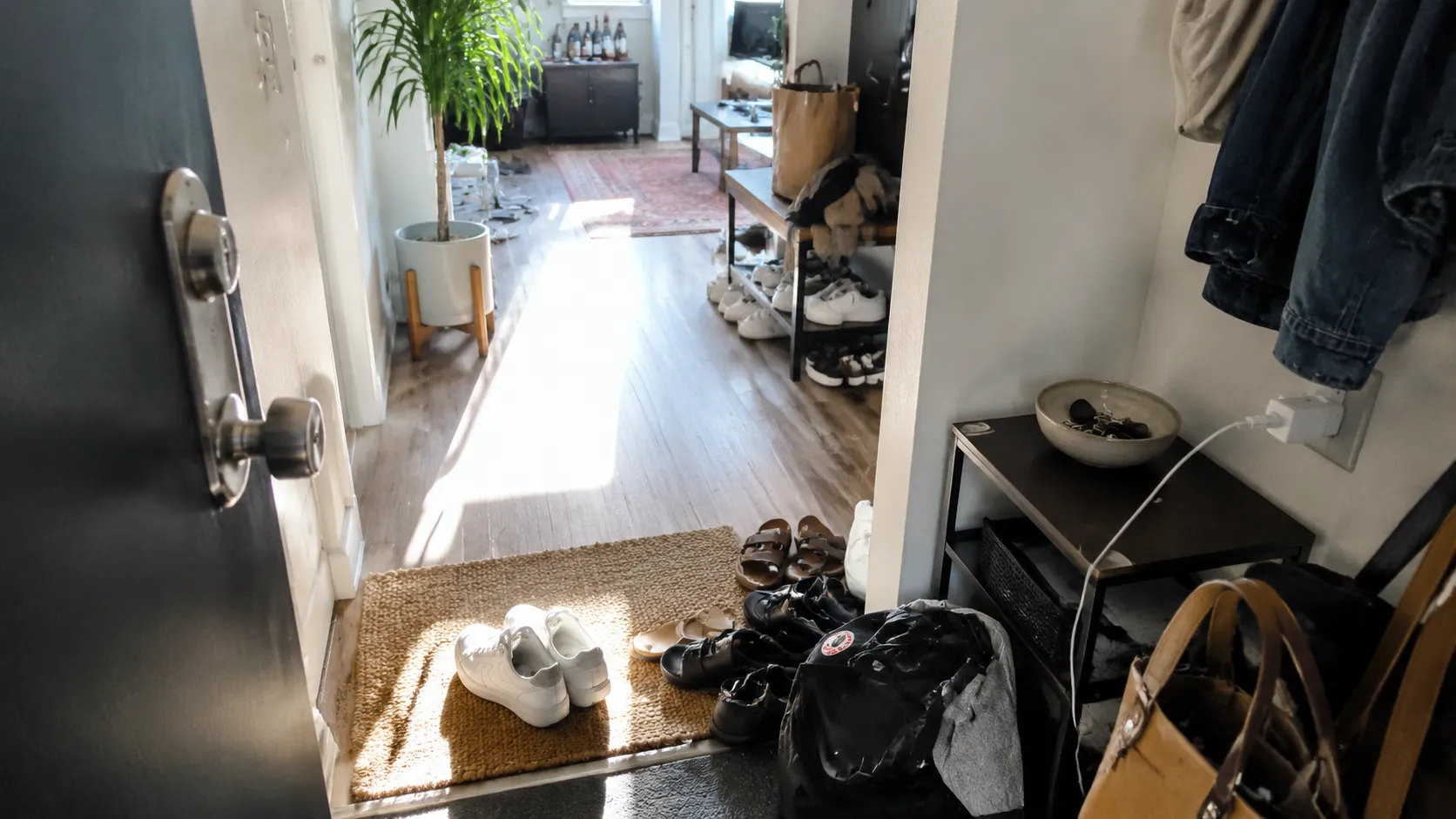
A threshold shapes the first few seconds of entering a room. If shoes, bags, cords, mail, and storage spill into the entry, the space can feel crowded before anyone has chosen how to use it. A practical adjustment might be clearing the path, reducing visible piles, or placing one deliberate object where the eye lands. The point is not that a doorway controls fortune. The point is that entry can feel less chaotic.
Then look at the main seat
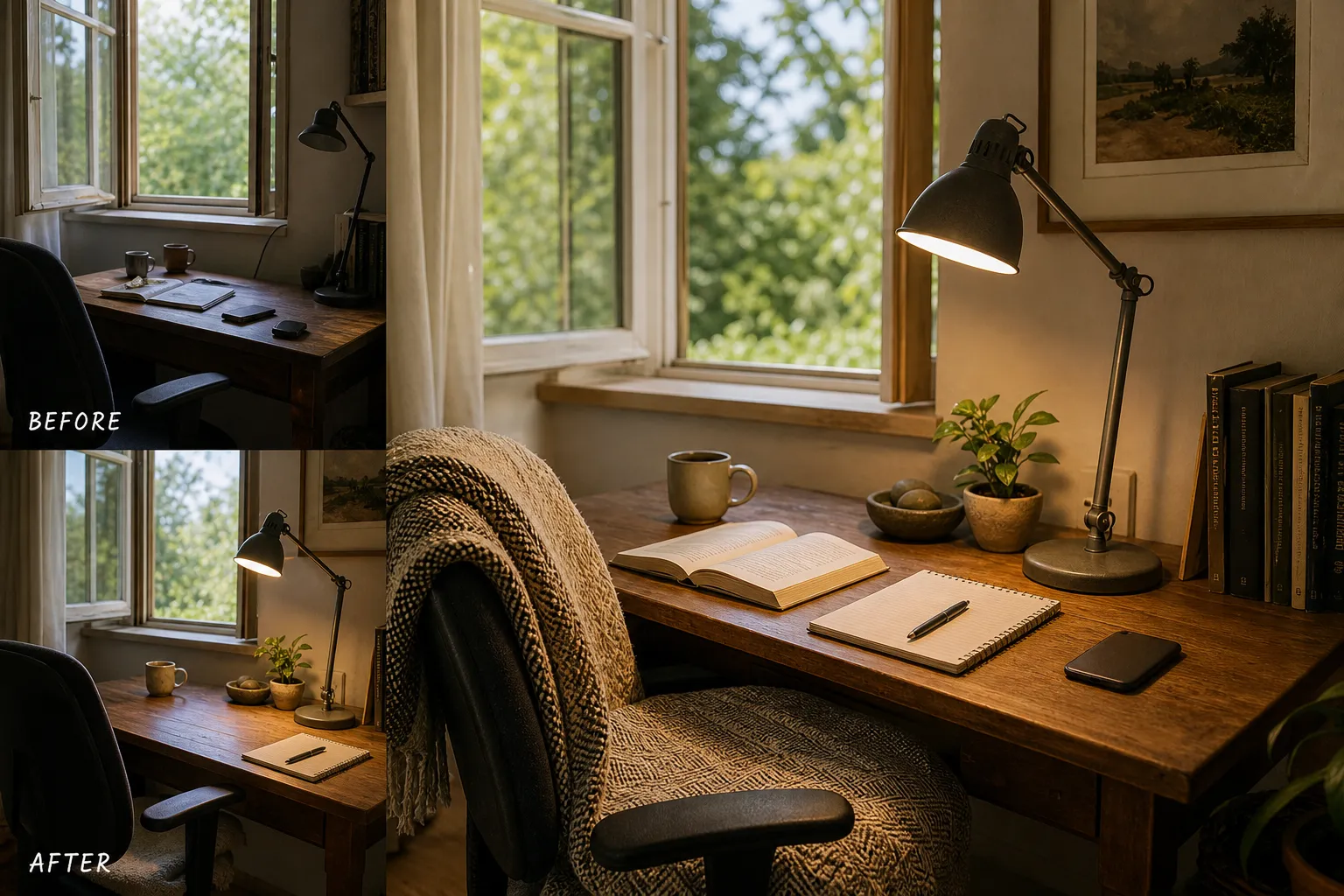
A desk chair, reading chair, or dining seat often holds the body for long stretches. If that seat faces glare, a busy hallway, or an awkward blind spot, the room may feel faster than it needs to. A practical adjustment could be changing the angle, softening the view, or creating a steadier visual field. Feng Shui-inspired language may call this improving spatial energy. Plainly, it is a seating and attention choice.
Review light, airflow, noise, and rhythm
A dim corner, stale air, or sharp contrast between screen light and room light can change how a room is perceived. Without claiming a health result, a reader can still ask whether the room supports the activity expected from it, and whether the space feels too exposed, too heavy, or too restless at certain times of day.
A room near appliances, traffic, notifications, or repeated interruptions may feel as if it never settles. The adjustment might be moving a work surface, closing a visual gap, adding a soft surface, or choosing where devices rest. These are micro-environmental choices, not certified remedies.
Use visual anchors modestly
A visual anchor can be a framed image, lamp, bowl, stone, textile, or plant. Its role here is not to guarantee a spiritual result. It gives attention somewhere stable to return. If the anchor is citrine, the site’s usual evidence-first caution still applies: symbolic meaning comes after material facts. Seller language about natural citrine, treated material, or value should not be accepted simply because the object is being used decoratively.
Where Traditional Feng Shui Framing Needs Caution
Traditional Feng Shui is not a casual styling trend, and this page does not have the source base to explain its schools, historical development, annual calculations, or 2026-specific practice claims. That absence is a limit of this page, not proof that stronger sources do not exist.
Careful wording helps. It is reasonable to say that some readers use traditional Feng Shui framing to think about placement, flow, and symbolism. It is not reasonable here to define a lineage, prescribe formal annual placements, or claim that a 2026 adjustment has been externally validated.
This distinction protects both the reader and the subject. A reader seeking cultural accuracy should look for qualified, attributable sources before treating any annual placement list as traditional instruction. A reader seeking a calmer home can still make practical spatial adjustments without pretending those choices carry verified traditional or scientific status.
The same applies to psychological anchors. A symbolic object may remind someone to pause before entering, keep a desk clear, reduce visual overload, or mark a room as restorative. That is a reflective use. It should not be converted into a claim about mental health, sleep, productivity, relationships, safety, or financial outcomes.
What Can Change the Answer
The answer changes if better evidence is added. Authoritative sources on traditional Feng Shui, documented 2026 annual practices, environmental psychology, ritual behavior, spatial design, or micro-environmental mechanisms could support a stronger article. This page does not currently have that support.
The answer also changes by reader intent. Someone seeking cultural practice needs source-backed tradition, not a light design metaphor. Someone seeking a wellness result needs appropriate professional guidance, not a room adjustment framed as certainty. Someone shopping for citrine needs gemological verification and seller disclosure, not symbolic language about abundance.
For this leaf-level question, the practical use is narrower
- Notice where the room feels rushed, crowded, blocked, or visually loud.
- Adjust thresholds, seating, light, airflow, noise, and visual anchors before buying symbolic objects.
- Treat “energy” as experiential language, not proof of causation.
- Use symbolic items as reminders, not guaranteed interventions.
- Keep gemstone value, authenticity, and treatment questions separate from room meaning.
That is enough. This page does not need to become a complete Feng Shui manual.
Common Confusion Around Feng Shui Cures 2026
Confusing 2026 with confirmed authority
One common confusion is assuming that “2026” automatically means a fixed set of annual placements with confirmed authority. This page cannot support that. In this context, 2026 is better treated as a current-year planning frame for calmer spaces, not as a verified calendar system.
Forcing spatial energy into extremes
Another confusion is treating “spatial energy” as either completely literal or completely useless. A more careful middle lane is available. The phrase can describe how a room feels and how attention moves through it. It becomes risky only when it is used to promise outcomes the evidence does not support.
Letting objects carry automatic authority
A bowl, mirror, lamp, plant, or crystal can be part of an intentional space. But the object does not carry automatic authority. For citrine especially, the material question remains separate: natural citrine, treated material, synthetic material, color, disclosure, and value context are not resolved by decorative placement.
A Bounded Way to Use This Page
Use Feng Shui Cures 2026 as a language of attention, not a system of certainty. If a room feels too fast, begin with what can be seen, moved, softened, cleared, or reoriented. If a symbolic object helps you remember the purpose of a space, use that meaning honestly and modestly.
The limit is part of the answer. This page does not verify traditional Feng Shui instructions, 2026 annual placements, scientific mechanisms, or guaranteed spiritual outcomes. It supports a smaller practice: practical spatial adjustments, symbolic anchors, and micro-environmental choices used with restraint.
A calmer room may begin with less pressure at the threshold, fewer visual interruptions, steadier light, or one object chosen with care. That is a spatial decision. Anything beyond that needs stronger evidence than this page currently has.