Raw vs. Polished: Why Uncut Minerals Carry Better Grounding Weight This Year
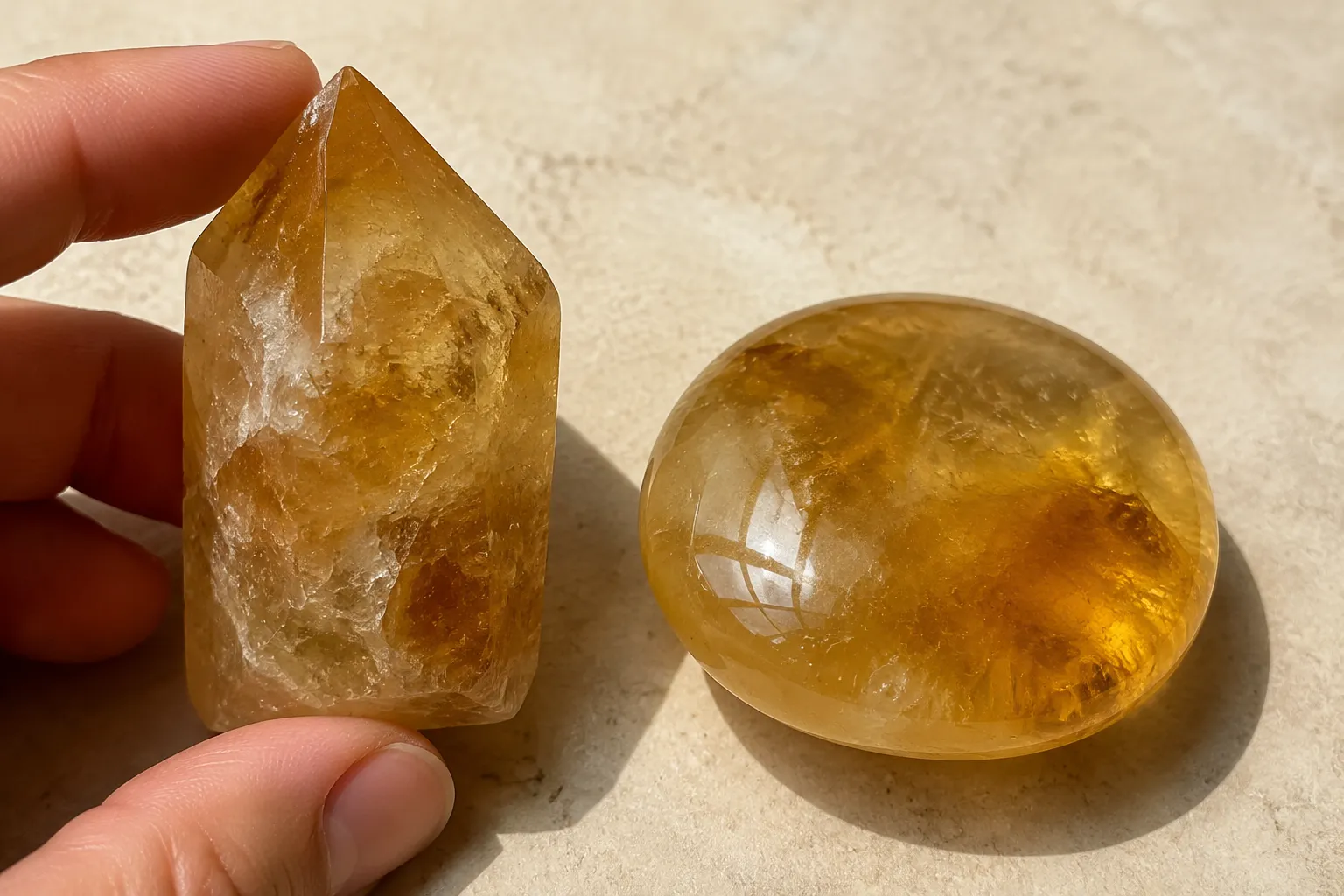
A rough citrine point or broken quartz cluster can feel more grounded than a smooth palm stone because the surface gives the eye and hand more to work with. That is the direct answer: uncut minerals often carry stronger perceived grounding weight because rough textures, visible irregularity, and a less processed appearance make the object feel closer to its material state. This is a sensory and symbolic reading, not evidence of measurable earth vibrations or better outcomes.
For Raw Crystal Authenticity, the cleaner phrasing is simple: raw minerals may look and feel more materially direct. Many collectors read that as earthy, immediate, and less edited. Polished stones can still be real minerals. A glossy finish does not make a stone fake, less meaningful, or spiritually lower as a factual matter.
broader context
Citrine verification note
This narrower page works best after the broader citrine reference page.
Why Raw Minerals Feel Heavier in the Hand and in the Story
Raw versus polished crystals are compared by more than shape. A raw face may show chips, growth lines, attached matrix, cloudy zones, color zoning, fractures, or uneven edges. Those details can make the stone feel less designed. For a reader drawn to grounding language, that lack of smoothing becomes part of the meaning.
“Grounding weight” works best as perception language. It describes how an unpolished mineral can feel visually dense, tactile, and less decorative. Rough textures slow down handling; a jagged edge, granular surface, or natural-looking termination asks for more attention than a polished oval. In a personal or ritual setting, that attention may be interpreted as grounding.
That does not make grounding a technical property. The current source set does not support claims that raw stones produce measurable earth vibrations or predictable effects. Earth vibrations language can describe how people talk about their relationship with minerals; it should not be treated as measurement.
Polishing changes the surface. It does not automatically change the mineral into something false. A polished citrine, quartz, jasper, or agate may still be a real stone, just shaped and finished for touch, display, jewelry, or pocket carry. Raw material foregrounds irregularity; polished material foregrounds color, luster, symmetry, and ease of handling.
What Changes the Answer
Visible Texture
The raw piece carries more perceived grounding weight only under certain conditions. The first is visible texture. If a mineral shows uneven skin, attached host rock, a broken-looking surface, or clear structure, it may support the less processed reading. If it is simply dull, damaged, or poorly described, roughness alone does not make it more compelling.
Purpose
For display, collection, meditation language, or a symbolic altar arrangement, unpolished minerals may fit the desired mood better. Their tactile mineral texture can make them feel like objects taken from the earth rather than objects redesigned for the hand. For jewelry, daily carrying, or clean visual uniformity, polished stones may fit better. Smoothness can be comfortable, durable in ordinary handling, and easier to compare by color and shape.
Disclosure
Seller words such as pristine, untouched, raw, or natural-looking are attractive, but they do not verify origin, treatment history, or identity. A raw appearance can make a stone feel less manufactured; it does not settle citrine authenticity or prove whether a material is natural, treated, synthetic, dyed, coated, or mislabeled. Surface style and gemological verification are different lanes.
The Mineral Itself
Some minerals are often sold as tumbled stones, beads, carvings, slabs, clusters, or points; others are more often appreciated as rough specimens. Without stronger mineral-specific references for this page, it would be overreach to assign broad rules by species or claim that one finish is generally superior. The safer comparison is practical: raw pieces emphasize irregular formation cues, while polished pieces emphasize finish, color clarity, and touch.
A simple decision frame holds up: choose raw when you want the uneven surface to be part of the experience. Choose polished when comfort, portability, shine, or visual refinement matters more. Neither choice proves deeper authenticity by itself.
The Authenticity Trap Around Rough Texture
The common mistake is treating roughness as evidence. Rough texture can look honest. It can also be staged, altered, broken from larger material, or simply left unfinished. On the other side, polish can look commercial without being deceptive. A smooth stone may be accurately described, and a raw stone may still come with weak disclosure.
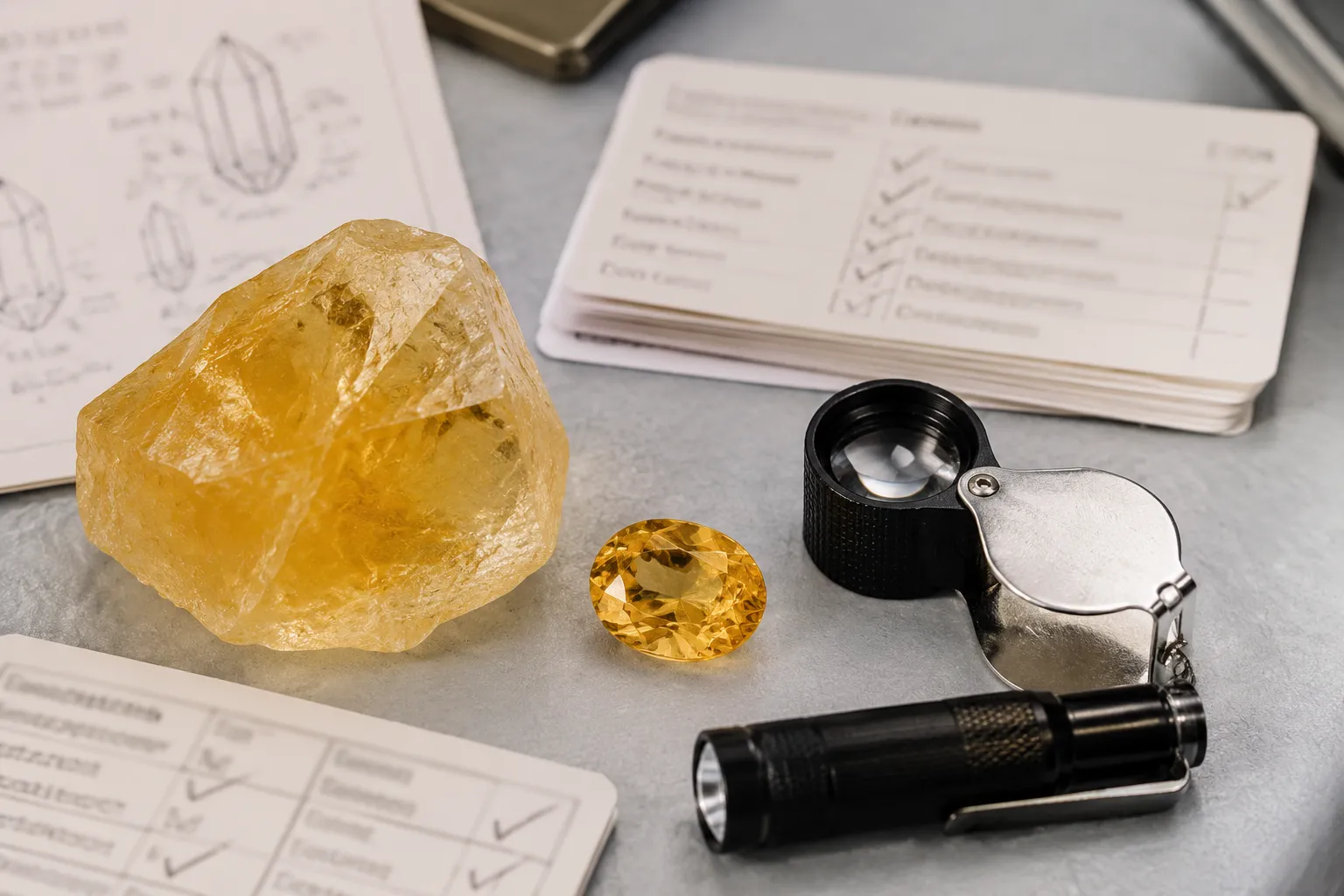
For citrine readers, this distinction matters because market language often leans on appearance. A golden rough point may be presented as earthy, uncut, or powerful, but those words do not answer whether the color is natural citrine, treated material, synthetic material, or another quartz variety sold under loose retail language. This article does not have lab criteria to offer identification rules. It can only separate visual impression from proof.
Raw Crystal Authenticity is therefore a reader-language concern more than a technical category here. It asks, “Does this crystal look less processed and more materially direct?” That is a valid aesthetic question. It is not the same as, “Has this mineral been independently verified?” For buying decisions, the more useful question is what the seller discloses about material identity, treatment, origin language, and supporting documentation. If that information is absent, roughness should not carry the whole burden.
The same caution applies to pristine elements. A stone may look closer to a natural form, but pristine is not a verification standard. It can suggest untouched purity in retail language while hiding the ordinary reality that minerals are extracted, sorted, cleaned, trimmed, transported, photographed, and sold. Even a raw specimen has passed through human selection.
Why Polished Stones Still Belong in the Comparison
Polished stones are sometimes dismissed too quickly in grounding conversations. That weakens the comparison. A polished stone can feel steady because it is simple to hold, easy to carry, and visually calm. Its smoothness may reduce distraction rather than reduce meaning. For some people, that regularity is exactly what supports a quiet desk object or personal ritual.
Polish can also reveal color and pattern that rough surfaces obscure. In banded stones, translucent quartz, or pieces with internal zoning, the finished surface may make visual structure easier to see. That does not make it more authentic; it makes it differently legible. Raw pieces show exterior irregularity. Polished pieces often show interior color, clarity, and composition more cleanly.
A polished stones comparison prevents a false purity ladder. Raw does not sit above polished as a universal category. The better question is fit. A rough cluster may feel more grounded on a shelf because it looks anchored, irregular, and visually heavy. A polished palm stone may feel more grounded in use because it fits the hand and does not snag fabric or skin. Meaning comes from the relationship between object, finish, setting, and intention.
This is where belief-based language needs clean edges. It is reasonable to say that some collectors prefer the ritual symbolism of raw crystals because irregular surfaces feel closer to earth, stone, and formation. It is not supported here to say that raw stones work better, carry proven forces, or change outcomes. The first statement describes preference and interpretation. The second turns preference into an unsupported claim.
Cleaner Wording for Grounding Language
If you are describing a raw mineral, choose words that keep the claim honest. “This piece has a rougher, more earth-facing presence” is cleaner than saying it has stronger energy. “The unpolished surface gives it more perceived grounding weight” is cleaner than presenting earth vibrations as measurable. “The irregular texture makes it feel less processed” is cleaner than saying rawness proves authenticity.
This language still gives crystal readers useful vocabulary. It leaves room for touch, symbolism, display, and personal meaning. It also keeps market literacy intact. A seller or collector can admire unpolished minerals without turning texture into a certificate, a health-outcome claim, or a guarantee.
For citrine specifically, the same boundary is useful. A raw golden specimen may look more immediate than a polished yellow stone, but appearance cannot settle natural-vs-treated discernment on its own. Treated material can still be attractive. Natural citrine can still be cut, polished, or set. Synthetic material and mislabeling require verification beyond a rough-looking surface.
The honest article answer stays narrow: raw minerals can carry stronger perceived grounding weight, especially when texture and irregularity are central to the reader’s symbolic frame.
Quick Checks Before You Prefer Raw Over Polished
Use this short check when the choice starts to feel like a claim rather than a preference:
- If you mean feel, say feel: rough surfaces can feel more tactile, earthy, or visually grounded.
- If you mean identity, ask for disclosure: finish does not prove what the material is.
- If you mean symbolism, keep it symbolic: grounding language is personal or ritual language here, not a measured property.
- If you mean value, do not let rawness do all the work: treatment history, material identity, quality, and disclosure matter, but this page does not provide pricing or appraisal rules.
- If you mean use, choose the finish that fits: raw pieces suit display and texture-led rituals; polished pieces may suit carrying, handling, or clean visual comparison.
That check keeps the comparison useful without flattening it. Raw minerals are not better in every sense. They are better for a particular kind of reader who wants texture, irregularity, and a less finished appearance to carry part of the meaning.
FAQ
Are raw crystals more authentic than polished crystals?
Not automatically. Raw crystals may look less processed, which can support an authentic crystal appearance for many collectors. But finish does not verify identity, treatment history, origin, or labeling accuracy.
Do unpolished minerals have stronger grounding energy?
This page can support perceived grounding, not measurable force. Unpolished minerals may feel more grounded because of rough texture, visual weight, and symbolic earthiness. That is different from claiming a predictable effect.
Is a polished stone less natural?
No. Polishing is a surface finish. A polished stone can still be natural material, treated material, synthetic material, or mislabeled material; the finish alone does not answer that question.
When is raw the better choice?
Raw is the better choice when the uneven surface, attached matrix, broken edge, or mineral irregularity is part of what you want to see and handle. Polished is often better when comfort, portability, smooth touch, or visible internal pattern matters more.
The Bounded Answer
Uncut minerals carry better perceived grounding weight this year because many crystal-focused readers are responding to surfaces that look less smoothed, less decorative, and closer to visible mineral irregularity. Rough textures can make a stone feel more present. They can support a language of earthiness, weight, and raw crystal authenticity when that language is framed as perception.
The limit matters. Rawness does not prove authenticity, geological superiority, stronger earth vibrations, safer use, health effects, or higher value. Polishing does not make a mineral fake or empty. The durable comparison is simpler: raw stones often carry stronger symbolic and tactile grounding for people who value irregular material presence; polished stones have their own strengths when comfort, clarity, and finish are part of the purpose.