Bounded spatial practice
Aligning Your Solar Plexus With the East Sector’s Energy Architecture
A yellow citrine near an east-facing window can read as a room accent, a meditation object, or a reminder to steady your attention. Those meanings are personal. Citrine authenticity, treatment history, and seller disclosure belong in a separate evidence lane; Solar Plexus Spatial Alignment, as used here, is a reflective body-space practice, not a verified energy system.
The direct answer: align your solar plexus with the east sector’s “energy architecture” by using the east-facing or eastern area of a room as a symbolic orientation cue, then bringing gentle attention to posture, breath, and the area between the lower ribs and upper abdomen. Treat it as meditation language. Do not treat it as medical guidance, architectural authority, or proof that a direction changes the body.
broader context
Broader citrine reference
This narrower page works best after the broader citrine reference page.
What Solar Plexus Spatial Alignment Means Here
In this bounded use, Solar Plexus Spatial Alignment has three layers: body, room, and symbolic direction.
Body
Sit or stand in a way that lets the torso feel supported.
Room
Notice the wall, window, doorway, floor line, furniture, light, and open space around you.
Symbolic direction
Use the east sector as a cue for beginning, clarity, or orientation if that meaning feels useful.
That is a framing choice, not a proven mechanism. The available material for this page does not support claims that the east sector has measurable effects on the solar plexus, mood, digestion, vitality, or decision-making. It also does not validate “energy architecture” as a technical architectural, medical, scientific, feng shui, or chakra term. The phrase can still work as a metaphor: the room has structure, your body has posture, and your attention can move between them.
If citrine is part of the scene, keep its role clean. Natural citrine, treated material sold as citrine, or another yellow stone can all function as a visual focus in meditation, but symbolic use does not settle authenticity or value. For that question, seller disclosure, treatment language, origin claims, and appropriate gemological evidence matter more than how well the stone fits the ritual.
A Bounded East Sector Meditation Method
Choose a place in the room that you understand as east-facing or eastern. If you know the direction, use it. If you do not, avoid turning the practice into a precision exercise; choose the side associated with morning light, a window, or a simple directional marker. The purpose is not to prove a spatial force. The purpose is to create a consistent meditation cue.
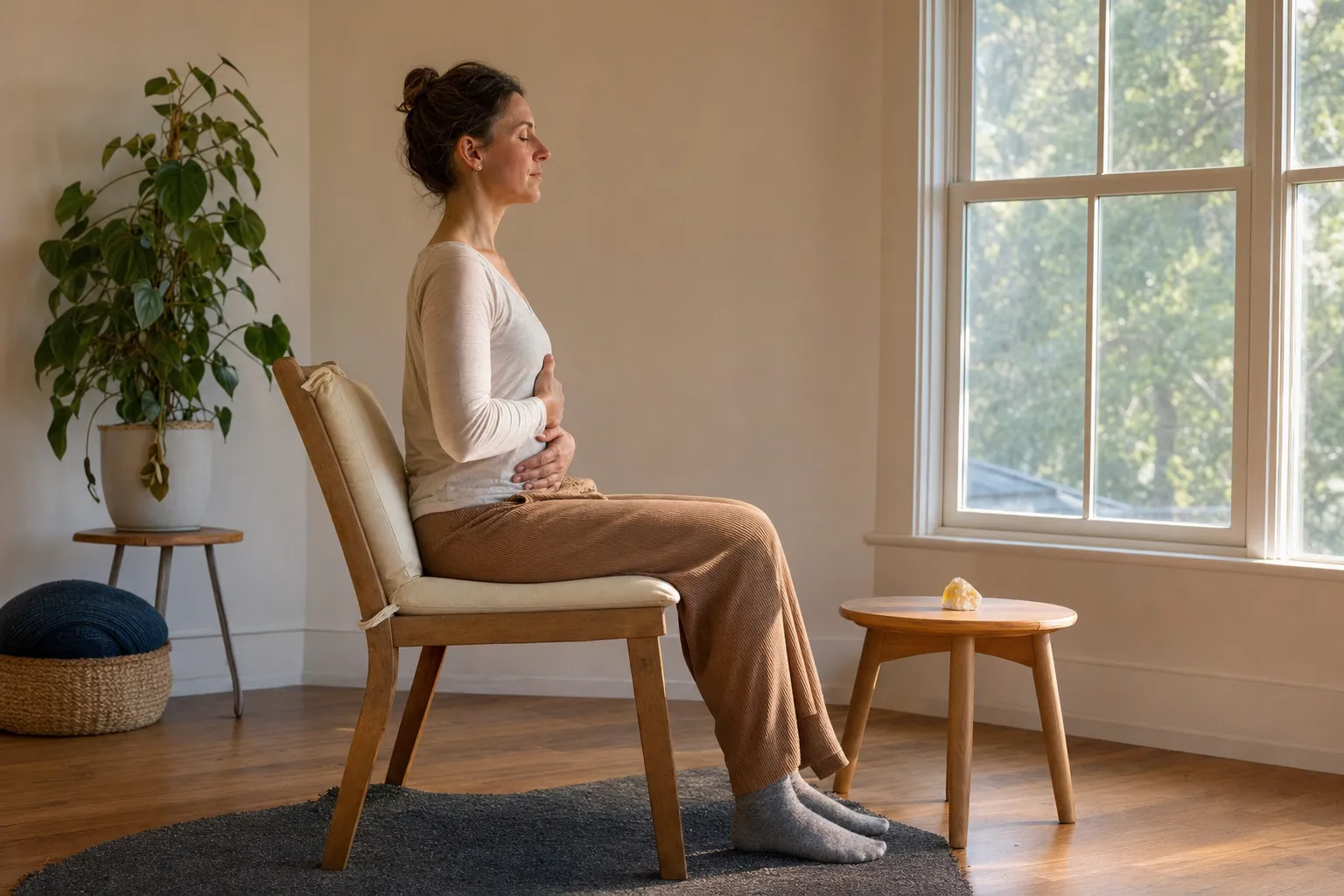
Sit with your feet grounded or your legs comfortably arranged. Let the spine rise without forcing a rigid shape. Notice the solar plexus area as a body landmark: the upper abdomen below the breastbone. Do not interpret sensation there as a diagnosis, correction, blockage, or outcome. If discomfort, pain, persistent anxiety, digestive concern, trauma symptoms, or another health concern is present, use appropriate professional support rather than relying on this reflective exercise.
Once settled, look gently toward the east sector, or close your eyes while knowing where it is. Breathe at a natural pace. You might silently name three observations:
- Room structure: wall, window, doorway, floor, ceiling, or furniture.
- Body structure: seat, spine, shoulders, ribs, abdomen, hands.
- Attention structure: where the mind returns when it wanders.
This is the practical center of the exercise. Breath and room awareness slow the pace of noticing; they do not promise transformation. If a citrine is present, place it where it does not strain your posture or dominate the room. Let it be a color point, reminder, or symbolic object, not evidence for health, energy, or authenticity claims.
A short sequence may look like this:
- Face or acknowledge the east side of the room.
- Sit in a supported posture with the torso relaxed but awake.
- Notice the solar plexus area without forcing sensation.
- Take several natural breaths while observing the room’s lines and openings.
- Ask one reflective question: “What kind of direction am I giving my attention today?”
- End by naming one ordinary action you can take after the practice.
That last step keeps the practice grounded. A bounded meditative practice should return you to real-world choices: how you speak, what you check, what you postpone, what you buy, or what you verify. It should not replace evidence.
What Changes the Practice
The answer changes when the east sector is physically awkward. If facing east makes you twist your neck, sit in glare, crowd your knees against furniture, or feel unsafe in the room, adjust the position. Posture and room awareness come before symbolic orientation. A practice built around alignment should not require an uncomfortable body.
It also changes when cultural claims enter the language. Some readers may associate east-facing space with directional symbolism. Others may hear “solar plexus” through chakra language. Those associations can be personally meaningful, but this page has no supplied cultural or historical sources that would allow it to explain those systems with authority. Cleaner wording is: “I am using the east sector as a personal meditation cue,” not “the east sector objectively governs my solar plexus.”
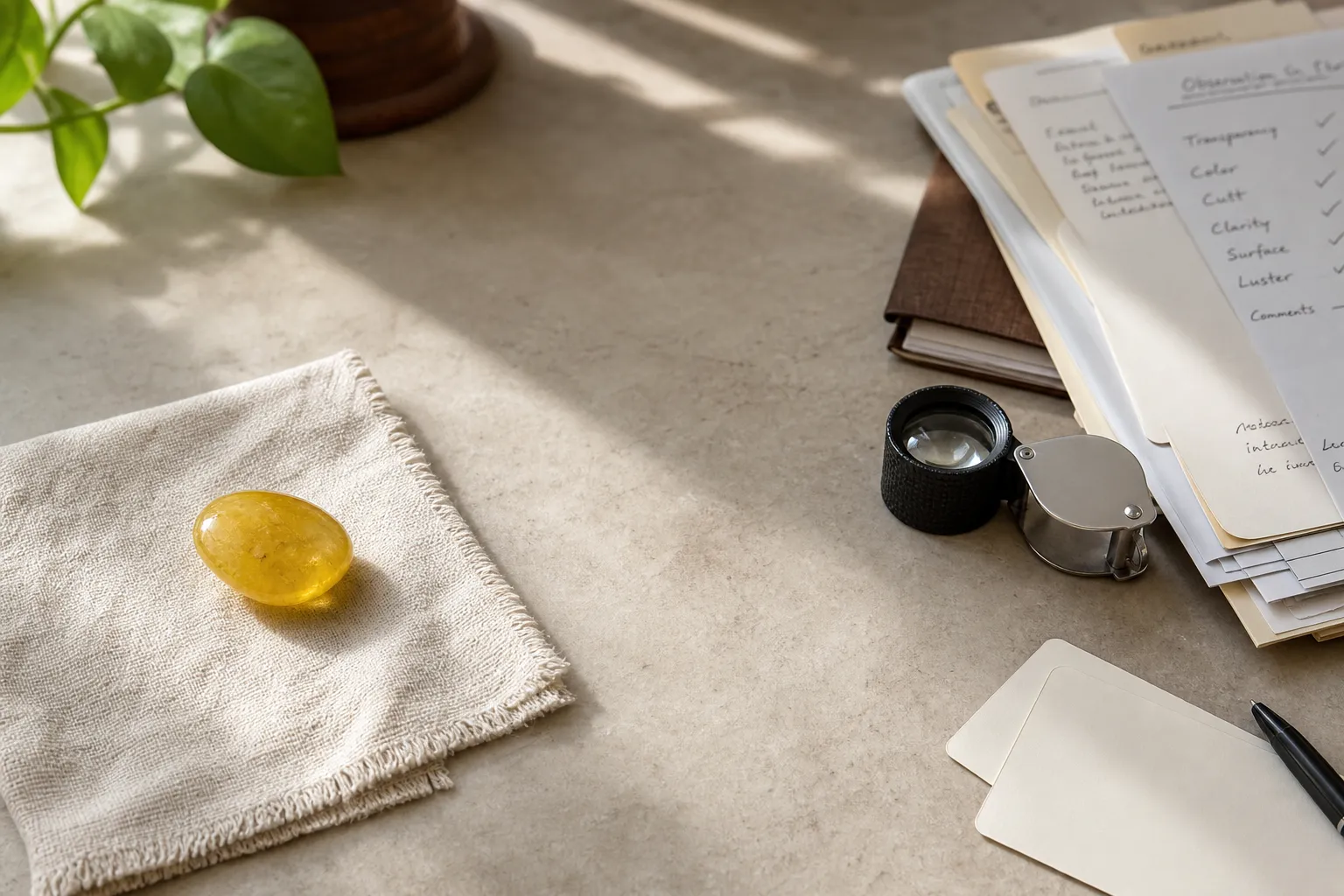
The practice changes again when a gemstone becomes part of the scene. Citrine’s warm yellow range is easy to connect with solar imagery, but visual association is not gemological verification. A seller’s label, a meditation use, or a pleasing color does not confirm natural citrine. If authenticity, treatment status, or value matters, look for disclosure and appropriate evidence rather than relying on symbolic fit.
Room design can influence comfort in ordinary ways: clutter may distract, glare may bother the eyes, and an unsupported seat may make stillness harder. That is different from saying a room layout produces a specific energetic result. Architectural structure awareness, in this article, means noticing how the built environment frames your attention. It does not mean the room has been assessed by architectural, engineering, or environmental psychology standards.
Common Confusion Around East, Energy, and the Solar Plexus
Metaphor is not mechanism
“Energy architecture” sounds precise, but without strong sources it should stay metaphorical. You can say the east side of the room helps you organize a ritual. You cannot fairly claim, from the supplied material, that the east sector sends measurable energy to the solar plexus.
Bodily focus is not a health statement
Attention to the upper abdomen may help someone notice posture or breathing rhythm in a personal way, but this page does not support claims about physical conditions, mental health outcomes, or internal systems. If the practice brings up distress, pain, dizziness, or persistent concern, stop and use ordinary care pathways rather than symbolic interpretation.
Gemstone placement is not identification
Citrine may be used as a focus object, but placement does not answer whether it is natural citrine, heat-treated quartz material, glass, or something else. The market question remains separate: what is disclosed, what can be verified, and what language is being used to sell the object?
Adjacent traditions need their own support
Words associated with chakras, feng shui, vastu, meditation lineages, or design theory carry histories and frameworks. Without sources for those frameworks, this article can only acknowledge that readers may use adjacent language. It should not present those traditions as proof for the practice.
Cleaner Wording for the Practice
If you want the practice to stay meaningful without overclaiming, use language that makes the boundary visible:
- “I use the east sector as a symbolic orientation point.”
- “I bring solar plexus attention into a posture and breath exercise.”
- “This is a reflective spatial exercise, not a medical or architectural method.”
- “The citrine is a visual cue; its authenticity is a separate verification question.”
- “The room arrangement supports attention for me, but I am not claiming measurable energy effects.”
This wording protects the value of the ritual. It lets the practice remain personal without turning it into evidence it does not have. It also fits a more honest approach to citrine: meaning can be layered onto a stone, but authenticity and value still depend on material facts.
For a small personal ritual, place a citrine or yellow object on a stable surface in the eastern area of the room, sit where your posture feels easy, and let the object mark the start of a five-minute pause. Notice the body. Notice the room. Notice the impulse to make the practice prove more than it can. Then return to one grounded next step: open the window, clear the table, write a question, check a seller disclosure, or simply end the session.
That modest ending is not a failure of the practice. It is the discipline of keeping symbolic meaning in its proper lane.
When Not to Push the Alignment
Do not push Solar Plexus Spatial Alignment when the setting creates strain, fear, or confusion. Do not use it to interpret symptoms, override medical advice, make a purchase decision, or validate a seller’s claims about a stone. Do not let directional language become a reason to ignore the simpler evidence in front of you: posture, comfort, lighting, disclosure, and the limits of what is known.
The east sector can be a useful meditation cue if it helps you begin with steadier attention. The solar plexus can be a useful focus point if you treat it as a body landmark rather than a diagnostic center. Architectural structure can be a useful metaphor if it keeps you aware of the room’s real lines, surfaces, and constraints.
The page evidence supports a bounded symbolic practice: orient, breathe, notice, reflect, and stop before making larger claims. It does not support medical, scientific, cultural, architectural, or gemological certainty. Keep those lanes separate, and the exercise stays clearer.