The 2026 Citrine Investment Playbook: Price Per Carat Breakdown
For 2026, the safest way to read Citrine price per carat is as a quality-and-disclosure check, not as a fixed investment number. A higher asking price is easier to understand when the stone has desirable color, eye-clean clarity, competent cutting, useful size, clear treatment disclosure, and credible documentation. A low price is not automatically a red flag either; citrine is a quartz variety, and many commercial stones are affordable.
The real warning sign is mismatch: terms such as “investment-grade citrine,” “eye-clean Madeira,” “natural,” or “untreated” paired with vague photos, no treatment statement, no material description, or seller terms that do not support the premium.
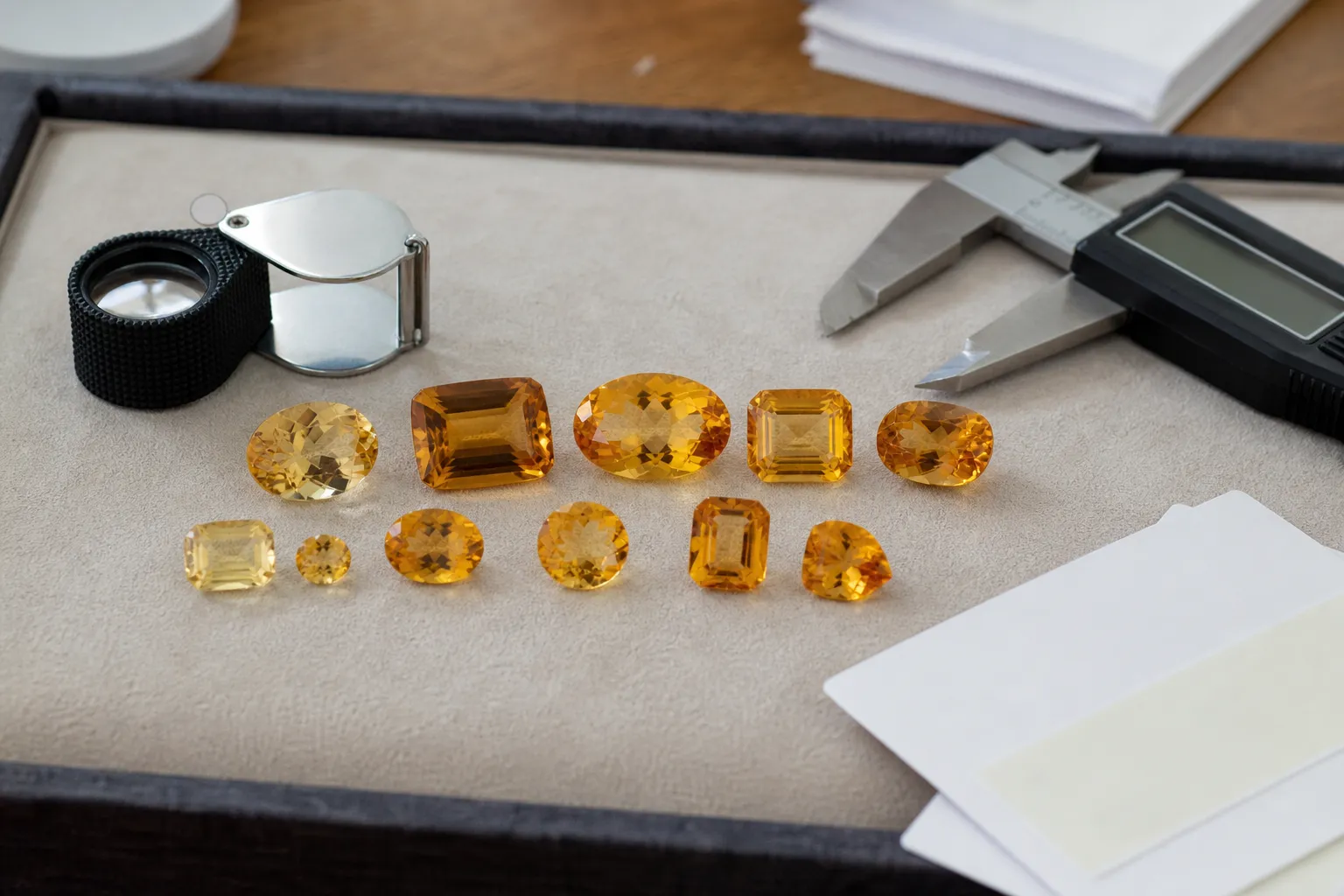
A 2026 citrine price framework: compare like with like
Citrine pricing gets confusing when listings are compared only by carat weight. Two 10-carat stones can belong in very different price conversations if one is pale yellow, visibly windowed, and loosely described, while the other is clean-looking, well cut, saturated golden-orange, and sold with a clear disclosure trail.
Before taking any price per carat seriously, ask six questions:
- What material is being sold? Citrine is a quartz variety, but listings may use loose language around yellow quartz, heat-treated amethyst, natural citrine, treated citrine, or citrine-like material.
- How strong is the color? In colored gemstones, color often carries much of the value conversation. For citrine, buyers often respond to golden, orange, and reddish-orange tones, but color alone does not prove identity, rarity, or treatment status.
- Is it eye-clean? “Eye-clean” usually means inclusions are not obvious to the unaided eye under normal viewing. It is helpful buyer language, not a complete grade.
- Does the cut help the stone? A good cut can improve brightness and face-up appeal. A poor cut can make even rich color look dull, dark, or glassy.
- Is the size adding value or just weight? Larger stones can attract more attention when color, clarity, and cutting hold up. Bigger alone does not justify a higher per-carat price.
- What has the seller actually disclosed? Treatment status, documentation, return terms, and precise wording matter more as the price rises.
Citrine price per carat table: how to read common listings
The available evidence supports the valuation factors, but not a universal 2026 dollar-per-carat chart. Use this table as a buyer interpretation model, not as an appraisal schedule, market quote, or resale forecast.
The table matters because it separates a stone’s visible appeal from the claims attached to it. A beautiful citrine may deserve a higher asking price than an ordinary one, but “beautiful” and “investment-grade” are not the same claim.
What can push citrine cost per carat higher
The strongest reason for a higher citrine gemstone price per carat is a combination of traits, not one impressive word.
Color strength usually leads the conversation. A saturated golden-orange or reddish-orange stone may be positioned above pale yellow material. The market term “Madeira citrine” is often used for desirable orange to reddish-orange color, but read it as commercial color language unless the seller explains exactly what they mean.
Clarity matters because citrine is often expected to look clean. Visible inclusions, cloudiness, fractures, or distracting internal features can reduce appeal. An eye-clean citrine is attractive to many buyers, but the phrase should not carry the whole valuation.
Cut can change the apparent value quickly. A large window, heavy extinction, uneven outline, or sloppy symmetry may weaken a stone even if the color name sounds premium. A well-proportioned cut can make color look livelier and more even.
Size only helps when quality stays consistent. A large citrine that remains clean-looking, lively, and well colored may be more compelling than a small ordinary stone. A large pale or poorly cut stone should not be priced as a collector gem simply because it weighs more.
Disclosure matters more as the price rises. If a seller asks a premium for natural citrine, untreated citrine, Brazilian citrine, Madeira citrine, or collector quality citrine, the listing should offer more than adjectives. It should identify the material, address treatment status, and give the buyer enough information to assess the claim.
Why treatment disclosure changes the price conversation
A common citrine pricing mistake is assuming that all yellow or orange quartz sold as citrine has the same value profile. Gemological and treatment research supports a basic buyer caution: amethyst can be heated to produce citrine-like yellow to orange colors, and appearance alone may not settle the full material history.
That does not make treated citrine undesirable. Treated gemstones are common in jewelry, and many buyers choose them knowingly because they like the look and price. The problem is unclear treatment language, especially when the listing also uses rare, natural, untreated, collector-quality, or investment-style wording.
A careful listing should help you distinguish among these ideas:
- Natural citrine: citrine presented as naturally occurring in its color state.
- Untreated citrine: a stronger claim that the color has not been improved or induced after mining.
- Treated citrine: citrine whose appearance has been modified or improved.
- Heat-treated amethyst sold as citrine: a common market context that should be disclosed clearly when known.
- Citrine-like yellow quartz language: wording that needs closer reading if the listing is vague.
FTC jewelry guidance and AGTA trade disclosure materials are useful guardrails here: sellers should avoid misleading material descriptions and should disclose treatments when they are relevant to value, care, or buyer expectation. Those sources do not tell you what a specific citrine is worth, but they support the larger point that treatment language should not be hidden behind romantic color names.

How to read “investment-grade citrine”
“Investment-grade citrine” is not a formal category established by the available evidence. It is market language. Sometimes it means the seller believes the stone is unusually attractive. Sometimes it is simply a way to justify a premium. Either way, the phrase should trigger verification, not excitement.
A listing using investment language should answer practical questions:
- Is the stone natural, treated, or of uncertain treatment status?
- Is “Madeira” describing color only, or implying rarity?
- Is the stone eye-clean under normal viewing, or only in selective photography?
- Are there multiple images under different lighting conditions?
- Are weight, measurements, and cutting style stated clearly?
- Is there a lab report or other credible document for a high-priced claim?
- Does the seller offer a return window and a consistent written description?
The financial boundary is simple: a high-quality citrine may be collectible, wearable, and beautiful, but that does not make it a promised investment asset. Retail asking price is not the same as resale value. “Museum quality,” “heirloom quality,” or “investment-grade” wording does not prove liquidity. Even a well-documented stone may not resell quickly or profitably.
A better question is: Does this price make sense for this exact material, color, clarity, cut, size, disclosure, and documentation?
Local price searches: UK, Philippines, India, Australia, and beyond
Searches such as “citrine price per carat UK,” “citrine price per carat Philippines,” “citrine price per carat in India,” and “citrine price per carat Australia” usually reflect a real buyer problem: prices change by currency, retail markup, import costs, seller type, and how the stone is described.
The core framework does not change by country. A pale yellow commercial citrine, an orange Madeira-labeled citrine, rough citrine, and a documented natural untreated stone should not be compared as if they were the same product. What changes locally is the retail environment: jewelry stores, online marketplaces, gem shows, custom jewelers, and specimen sellers may all price similar material differently.
When comparing across countries or currencies, avoid these shortcuts:
- Do not compare a mounted ring price directly with a loose stone price.
- Do not compare rough citrine price per carat with faceted citrine price per carat.
- Do not compare treated commercial material with an untreated claim unless disclosure is equally clear.
- Do not treat “Brazilian citrine” as a price guarantee without more context.
- Do not assume the highest listing equals market value.
If one seller’s price is much higher than nearby alternatives, the listing should show why: better color, cleaner appearance, better cutting, larger desirable size, stronger disclosure, or credible documentation. If it does not, the premium is only a claim.
A quick reasonableness check before you buy
Use this short check when a citrine listing seems expensive, especially if it uses premium seller language.
1. Read the description before the adjectives.
Look for material, treatment status, size, weight, cut, and whether the seller separates fact from opinion.
2. Compare color honestly.
Yellow citrine, lemon citrine, golden citrine, orange citrine, and Madeira citrine are not identical value conversations. Compare stones with similar color strength.
3. Check clarity and cut together.
Eye-clean is helpful, but a dull or windowed stone can still disappoint.
4. Ask what “natural” means in that listing.
Some sellers use “natural” to mean mined material, while buyers may read it as untreated natural color. If the price depends on that distinction, ask directly.
5. Treat investment wording as a documentation request.
The stronger the claim, the stronger the evidence should be. If the listing cannot support the language, value the stone as an attractive object, not as an investment asset.
Bottom line
Citrine price per carat in 2026 should be interpreted through quality, disclosure, and seller accountability rather than a universal price chart. Fine color, eye-clean appearance, strong cutting, desirable size, untreated claims, and credible documentation can all influence asking price. But “Madeira,” “premium,” “collector quality,” and “investment-grade citrine” remain claims until the listing supports them.
The most reliable buyer move is simple: identify the material, compare color, clarity, cut, and size against similar stones, read treatment disclosure closely, and ask for documentation when the price or claim is high. That approach will not turn citrine into a guaranteed investment, but it can help you avoid paying premium money for unsupported language.