First-time citrine setup
First-Time Setup: Exactly What to Do When You Bring New Citrine Home
New citrine should get a physical check before it gets any ritual treatment. Inspect the stone or jewelry in bright, indirect light, wipe away dust with a soft dry cloth, and only use a brief lukewarm rinse if the piece is a plain loose stone that still has residue. For jewelry, clusters, fractured pieces, glued parts, plated settings, elastic, or stringing, stay with a dry or barely damp cloth and dry it carefully.
After that, cleansing new citrine can be symbolic if that is part of your practice. Breath, sound, smoke kept away from heat, or a short intention-setting moment are lower-contact choices. Skip heat, steam, hot water, salt water, rock salt burial, overnight soaking, abrasive scrubbing, and sun-baking.
broader context
Citrine verification note
This narrower page works best after the broader citrine reference page.
The First 10 Minutes: Inspect Before You Cleanse
The useful first move is not a ritual. It is a close look.
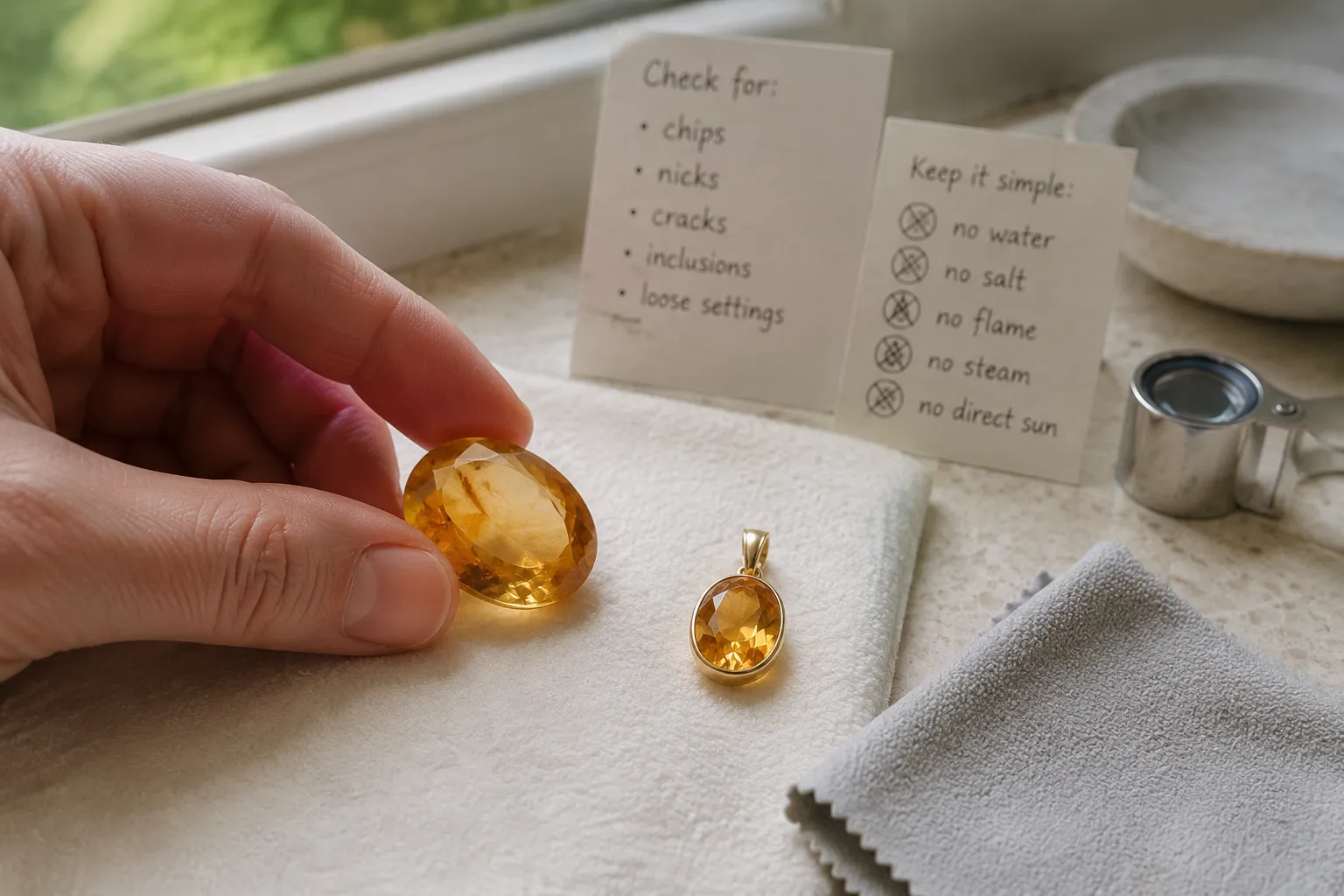
Set the citrine on a clean cloth where it cannot roll. Check what you actually brought home: a tumbled stone, raw point, fractured cluster, bracelet, pendant, ring, or faceted gem in a setting. A smooth loose stone can tolerate more handling than a glued charm, elastic bracelet, plated finding, or ring with residue around the prongs.
Look for chips, cracks, sharp edges, loose settings, glue lines, coatings, metal wear, and trapped dirt. If it is jewelry, gently test only the parts meant to move, such as a clasp. Do not pull on stringing or pry at a setting. If a stone shifts in a ring or pendant, do not wash it first; have the setting checked before adding water.
Citrine itself is a quartz gemstone. GIA describes citrine as yellow to brownish orange quartz, and its care guidance lists citrine at Mohs hardness 7 with good toughness. That supports ordinary wear with care, not careless handling. Dust and sand can contain hard grit, so a dry wipe is safer than rubbing debris across the surface.
This is also the point to separate setup from identification. A first-time care routine cannot prove whether a piece is natural citrine, treated material, synthetic material, or another yellow stone. GIA notes that yellow quartz colors are rare in nature and that much faceted citrine in the market is produced by heating amethyst. That matters for seller disclosure and value context; it does not call for a harsher home cleansing method.
Physical Cleaning Citrine Without Adding Risk
Physical cleaning has one job: remove dust, skin oil, shop residue, lint, or handling marks. It is not the same as ritual cleansing. If the citrine already looks clean, a soft dry cloth is enough.
Use this conservative order
- Place the citrine on a towel or soft cloth.
- Wipe it with a clean microfiber or lint-free cloth.
- If a plain loose stone still has residue, rinse it briefly in lukewarm water.
- Pat it dry immediately and let it air-dry fully before storage.
- For jewelry, use a dry cloth first; if needed, use a slightly damp cloth around the stone and metal, then dry carefully.
Do not soak citrine jewelry as a default. Settings, adhesives, plating, elastic, stringing, bead holes, and trapped debris all change the risk profile. The mineral may be quartz, but the object may be mixed material.
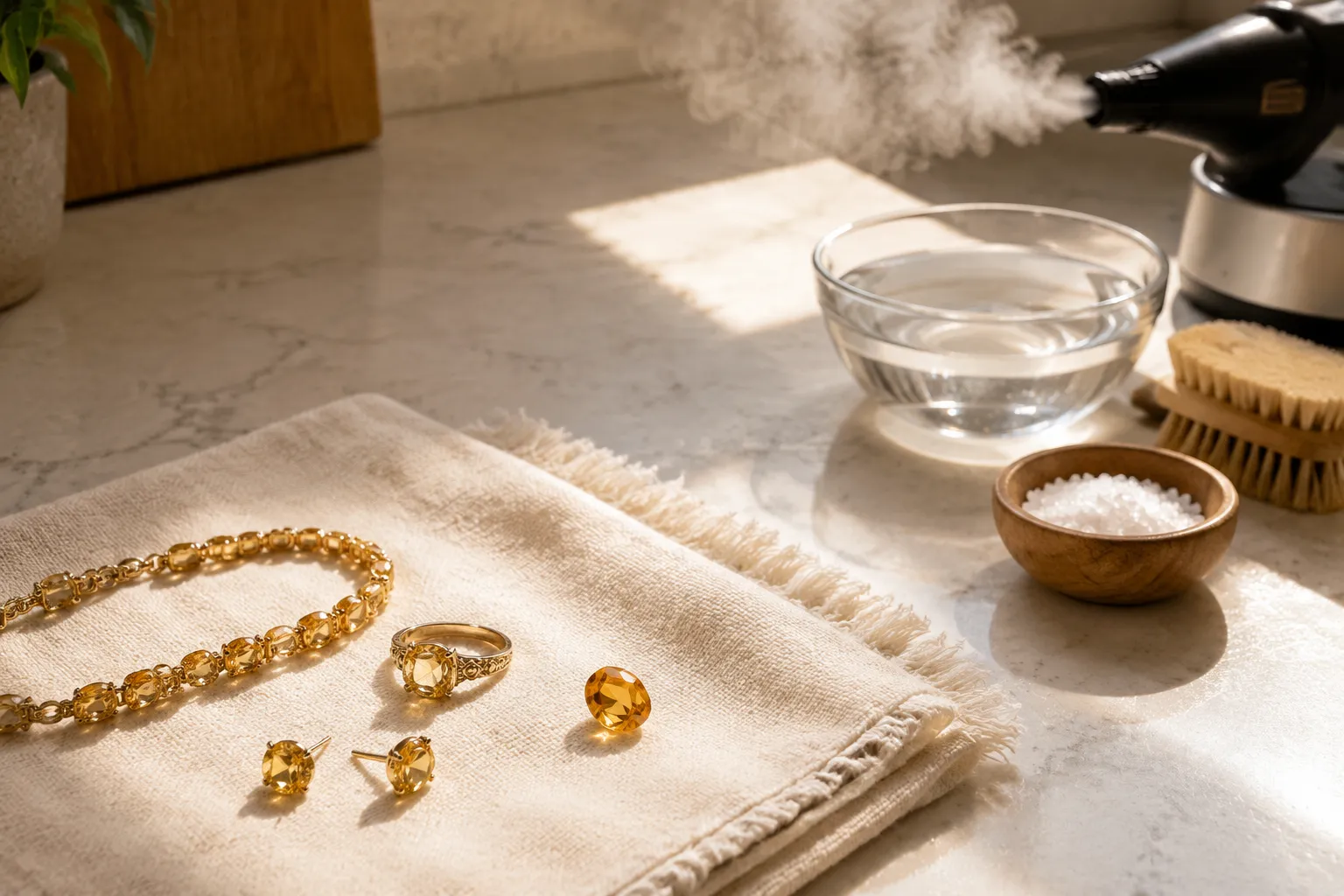
Avoid steam cleaning. GIA’s citrine care guidance does not recommend steam cleaning, and it says citrine should not be subjected to heat. That is enough reason to skip hot water, boiling water, heated bowls, candles placed close to the stone, heated lamps, and any cleansing method that depends on warming the piece.
Ultrasonic cleaning is not a good first-time default either. A loose quartz stone and a citrine ring with prongs, inclusions, fractures, or an unknown setting are different care problems. If you do not know the construction, do not begin with a machine.
A cloth method may feel less dramatic than running water, salt, or a long “charge.” It is still the better match for the task: prepare the citrine for use without stressing the stone, finish, or setting.
If You Want Ritual Cleansing, Keep It Low-Contact
Many owners use ritual cleansing to mark a transition: the stone has moved from a shop, shipment, market table, or previous owner into their own space. Phrases such as clearing store energy, initiating new crystals, vibration, frequency, and charging belong to personal, spiritual, or cultural practice language. They are not gemological facts.
A low-contact citrine onboarding ritual can be simple
- Clean the surface only if it needs cleaning.
- Hold the citrine or place it on a clean cloth.
- Take a few steady breaths.
- Say or think what role the stone will have: display, jewelry, collection piece, meditation object, gift, or reminder.
- Put it where it will not be knocked, scratched, heated, or left in direct sun.
If smoke is part of your practice, keep the citrine away from heat and heavy residue. Passing smoke nearby is different from holding the stone over a flame or coating it in soot. Incense, herbs, and smoke cleansing are ritual choices; they do not need physical contact with the citrine to serve the symbolic purpose.
Sound is another low-contact option. A bell, bowl, chime, voice, or quiet spoken intention does not soak, heat, salt, or scratch the stone. Placing citrine near another crystal, such as selenite, is also commonly described in crystal communities as a clearing method, but that remains belief-language context rather than evidence of a measurable material change.
The clean wording is this: ritual cleansing can help some owners mark ownership, attention, or intention. The available public care sources support physical limits for citrine; they do not establish that a ritual changes the stone’s effects.
Methods to Skip for a New Citrine Setup
A popular method is not always a good first method. A new citrine setup should avoid unnecessary contact, heat, abrasion, and uncertainty.
Skip salt water
Salt can be abrasive, and salt water can be unfriendly to jewelry metals, stringing, coatings, and glued parts. Even if someone describes salt as a cleansing tradition, that does not make it a suitable first-time default for citrine care after purchase.
Skip rock salt burial
Some crystal owners discuss burying stones in salt for hours or overnight, but that only shows the practice exists. It does not make salt burial a sound choice for citrine, finishes, settings, or mixed-material jewelry.
Skip overnight soaking
Water exposure is not just about the mineral name. Beads can have drilled holes, jewelry can trap moisture, and settings can hide residues. A brief rinse for a suitable plain loose stone is one thing; soaking everything sold as citrine is another.
Skip sun-baking and prolonged direct sunlight
Citrine is often linked in popular symbolism with warmth and light, so sunlight charging appears often in ritual language. Physical care should still lead. GIA’s heat caution is enough reason to avoid long direct sun or hot windowsills as a first-time charging method.
Skip harsh detergents and abrasive scrubbing
A new stone rarely needs aggressive cleaning. If jewelry has stubborn grime, the issue may be old residue, setting condition, or unknown treatment, not a reason to scrub harder.
Skip steam
This is the clearest physical boundary: GIA does not recommend steam cleaning for citrine, and heat exposure is the wrong direction for first-time care.
Natural, Treated, or Unknown: Does the Setup Change?
For first-time setup, natural citrine and heat-treated amethyst sold as citrine are handled conservatively in the same broad way: inspect, clean gently only if needed, keep away from heat and steam, avoid harsh methods, and store without abrasion.
The authenticity question still matters. Natural citrine, treated material, synthetic material, and misrepresented yellow stones carry different value and disclosure questions. A home cleansing ritual cannot settle that. Visual clues alone are not a substitute for seller disclosure, documentation, or gemological testing when value is at stake.
If the seller used wording such as “natural citrine,” “heated citrine,” “heat-treated amethyst,” “Brazilian citrine,” “smoky citrine,” or “citrine quartz,” keep the receipt or listing. That wording may matter later if you compare the piece with a lab report, appraisal, or more detailed gemological reference. For today’s setup, the care remains modest.
The main exception is construction. A coated bead, unknown yellow stone, glued pendant, plated charm, cracked cluster, or delicate ring should get less water and less handling than a plain tumbled quartz piece. The object’s build changes the method faster than the marketing label does.
Where to Put or Store Citrine After Setup
After cleaning and any personal ritual, place the citrine where the physical conditions make sense. A display shelf is fine if it is stable, away from hard knocks, and not in prolonged direct sunlight. A jewelry box works if the citrine is separated from harder or sharper items. A soft pouch is useful for a loose stone, but do not toss multiple stones together where they can rub, chip, or scratch each other.
For citrine jewelry, close clasps before storage and keep chains from tangling around the stone. Rings and pendants should not be dropped loose into a dish with keys, coins, or harder gems. Citrine has useful durability, but hardness 7 does not make it immune to scratches or impact damage.
If you plan to wear the piece immediately, make the first use gentle. Avoid lotion, perfume, sunscreen, dishwater, pool water, cleaning chemicals, workouts, and sleeping in jewelry. Those are ongoing jewelry-care habits, but they often begin on day one because a new piece is easy to over-wear.
For a collection stone, label what you know: seller name, date, claimed origin if provided, treatment wording if disclosed, and whether it was sold as natural citrine or treated material. That small note is more useful for long-term market literacy than repeating an elaborate cleansing routine.
Common Confusion About Cleansing New Citrine
One confusion is treating physical cleaning and symbolic clearing as the same task. They are not. Cleaning removes surface material. Symbolic clearing marks a change in ownership, use, or attention.
Another is assuming quartz hardness makes every cleansing method harmless. Mohs hardness helps explain scratch resistance, but it does not erase risks from heat, steam, fractures, adhesives, metal settings, stringing, coatings, or abrasive grit.
A third is treating “self-cleansing citrine” as a care rule. Some crystal communities use that phrase. As personal belief language, it may shape whether someone chooses a ritual. As physical care guidance, it should not replace inspection, gentle cleaning, and sensible storage.
The final confusion is letting the natural-versus-treated debate take over the first hour at home. Citrine authenticity is a real topic, especially where value and seller disclosure are involved. The first setup is narrower: avoid damage, keep claims modest, and save identification questions for a better evidence path.
A Simple First-Time Citrine Checklist
Use this when you want the short version:
- Inspect the citrine in bright, indirect light.
- Check for loose settings, cracks, glue, coatings, stringing, metal findings, and dirt.
- Wipe with a soft dry cloth.
- For a suitable plain loose stone, use only a brief lukewarm rinse if residue remains.
- Dry fully.
- If you want ritual cleansing, choose breath, sound, smoke kept away from heat, or intention-setting.
- Avoid steam, heat, hot water, prolonged sun, salt water, rock salt burial, soaking, harsh detergents, and abrasive scrubbing.
- Store separately from items that can scratch, chip, tangle, or heat the stone.
That is enough for a new citrine setup. The material evidence supports careful handling, gentle cleaning, and heat-conscious storage. The symbolic layer can stay personal, provided it does not ask the stone or jewelry to endure a risky method.