Burnt Orange Tips? The Uncomfortable Truth About Heat-Treated Amethyst
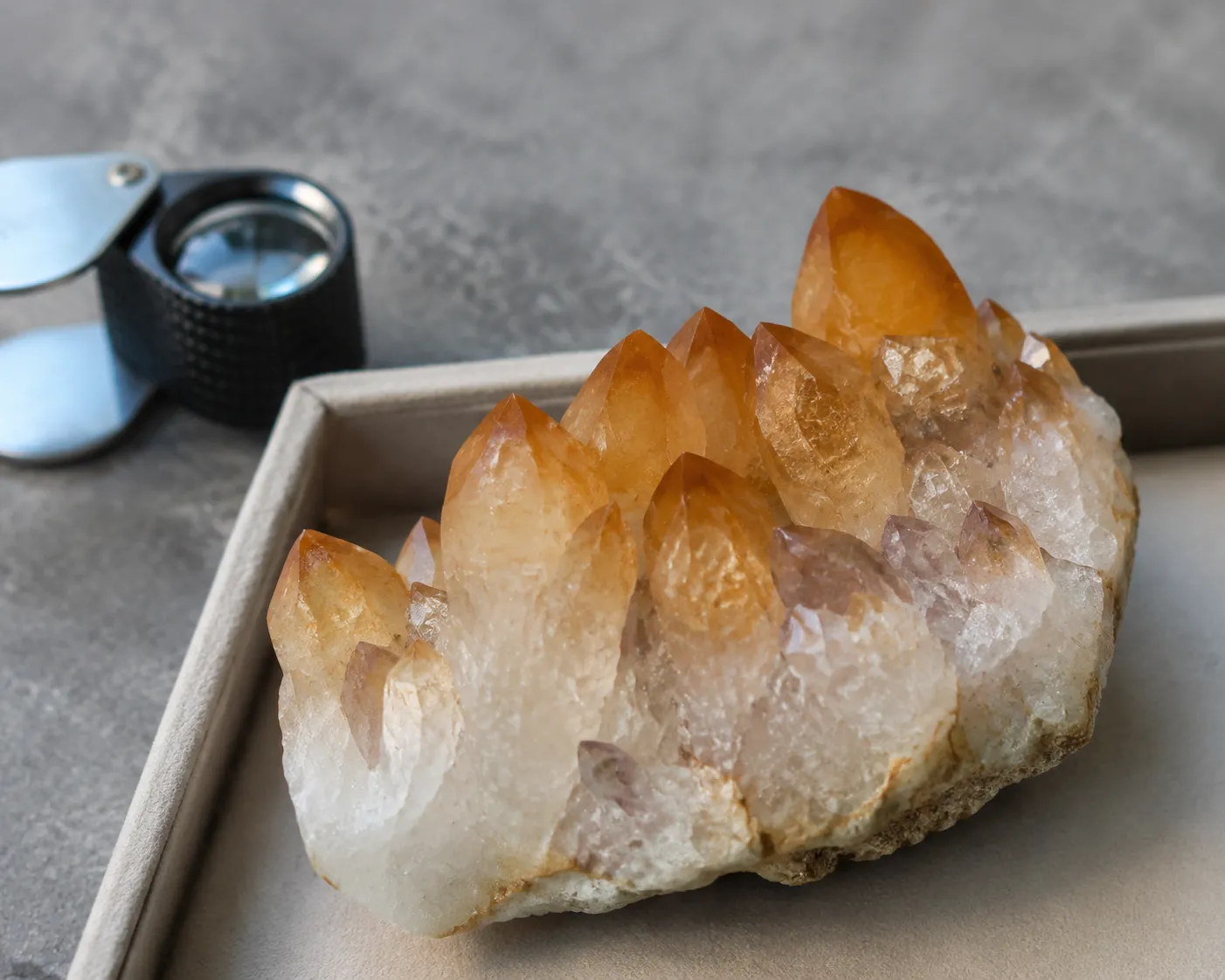
If a quartz cluster has burnt orange tips, a pale or white base, and maybe a little leftover purple, it may be Heat-Treated Amethyst being sold under citrine language. That visual pattern is common in the market. It is not final proof from a photo alone. Heat-treated amethyst is real quartz with altered color. It is not the same as untreated natural citrine.
The real issue is usually not whether the stone is “real.” It is whether the yellow-orange color formed naturally or came from heating amethyst into a citrine-like look.
broader context
Start with the main citrine page
This narrower page works best after the broader citrine reference page.
What Heat-Treated Amethyst means
Amethyst and citrine are both quartz. The difference is the color origin and material history.
In simple terms:
- Amethyst is purple quartz.
- Natural citrine is naturally yellow to orange quartz.
- Heat-Treated Amethyst is amethyst whose color changed after heating.
That is why the label matters. A treated piece can still be real quartz and still be suitable for ordinary jewelry or display use. The question is whether the treatment is being described clearly.
Gemological sources and research describe amethyst changing color when heated, often in the 400°C to 500°C range, though the outcome depends on the starting material and exact conditions. Studies also discuss iron-related color changes, including iron precipitation and changes in quartz color centers. For buyers, the practical takeaway is simpler: orange color in quartz does not always mean natural citrine.
Why burnt orange tips raise suspicion
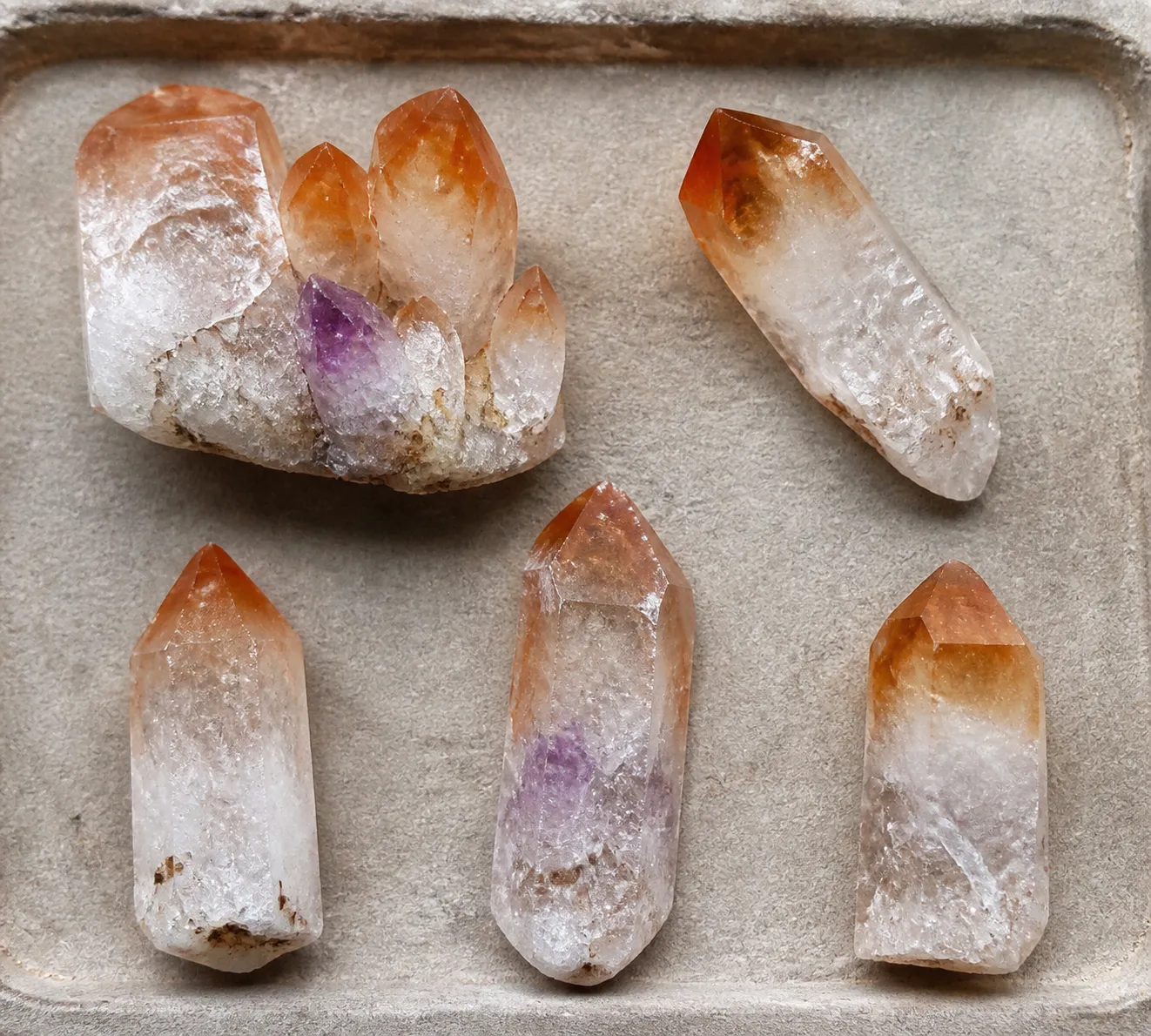
The look that makes people pause is familiar:
- reddish-orange or burnt orange tips
- a white, pale, or grayish base
- sharp color zoning
- orange concentrated near the crystal points
- small areas of residual purple or smoky color
When several of those appear together, sellers and buyers often suspect heated amethyst rather than untreated natural citrine. This is especially common with clusters and geodes.
That said, visual signs have limits. Lighting, editing, and saturation can distort color in listings. Some natural citrine is uneven. Some treated material looks less dramatic. So the safest wording is: burnt orange tips are a clue, not a verdict.
If a listing shows a bright orange cluster with a white base and only calls it “citrine,” caution is reasonable. If the seller clearly says “heat-treated amethyst,” that is a disclosure issue handled better.
Heat-Treated Amethyst vs natural citrine
This comparison gets muddled because one term describes a treatment history and the other describes a natural color variety.
A cleaner comparison looks like this:
- Heat-Treated Amethyst: quartz that began as amethyst and was later heated into a yellow-orange appearance
- Natural citrine: quartz whose yellow-to-orange color formed without later artificial heating
Both are quartz. They are not equivalent in material history.
In many retail settings, treated amethyst is sold loosely as “citrine” or “heat-treated citrine.” That wording can blur an important distinction. If a buyer wants untreated natural citrine, a treated amethyst piece is not the same purchase just because both are quartz and both look yellow-orange.
Does “treated” mean fake or worthless?
No. Heat treatment does not make quartz synthetic. It also does not make the stone worthless by default.
What it changes is the description. Treated material is often more common in the market than untreated natural citrine, and in many retail contexts it may be priced lower, but price is not a reliable test by itself. Design, size, clarity, specimen form, craftsmanship, and seller positioning can all affect pricing.
So the main buyer question is not “Is this real quartz?” It is “Is this being represented accurately?”
What changes the answer when you are buying
A photo can only take you so far. The answer gets stronger when you add disclosure, documentation, and context.
Useful checks include:
- Does the seller say Heat-Treated Amethyst, or only “citrine”?
- Is the piece a geode or cluster with orange tips and a pale base?
- Are there smoky or purple remnants?
- Is the color unusually reddish-orange?
- Is the seller charging a premium for “natural untreated citrine” without support?
- Is there documentation or a return policy?
None of those points settles the question alone. Together, they help you judge risk.
For low-cost decorative pieces, many buyers rely on honest disclosure and realistic pricing. For higher-stakes purchases, visual inspection is limited. If the natural-origin claim matters, ask for documentation or seek gemological evaluation.
What visual inspection cannot settle
Photos do not reliably identify every treated stone. Some treated quartz is subtle. Some natural quartz is uneven. Some listings are edited heavily. Mixed treatment histories may also exist.
That is the main limit of this page: appearance may suggest treatment, but it does not certify treatment history.
Meaning and the symbolic layer
Searches for “heat-treated amethyst meaning” often mix material facts with personal interpretation.
Materially, Heat-Treated Amethyst is quartz with a changed color history.
Symbolically, people may read it in different ways. Some prefer untreated natural citrine because natural formation matters to them. Others are comfortable with treated amethyst and care more about color, price, or appearance. Those are personal or market-language preferences, not gemological proof.
If symbolic meaning matters to you, the cleanest starting point is still accurate disclosure. Know what the object is before assigning significance to it.
FAQ
Is Heat-Treated Amethyst real quartz?
Yes. It is real quartz. The key distinction is that the color was altered, so it is not the same as untreated natural citrine.
Can amethyst heated to 400°C to 500°C turn citrine-colored?
Gemological sources and research describe yellow, orange, and related color changes in heated amethyst within that general range, though results vary by material and conditions.
Can burnt orange tips prove a stone is treated?
No. They are a useful warning sign, especially with a white base and residual purple, but they do not prove treatment from appearance alone.
Bottom line
Burnt orange tips, a pale base, strong zoning, and leftover purple often point toward Heat-Treated Amethyst rather than untreated natural citrine. That is the practical answer most readers are looking for.
The boundary matters just as much: these signs suggest, but do not prove, treatment. Heat-Treated Amethyst is real quartz, not synthetic material, but it is not the same as natural citrine. For purchases where that difference matters, disclosure and documentation carry more weight than color alone.