Citrine verification note
The Lwena Anomaly: Why Congo's Untreated Citrine is Dominating 2026 Collections
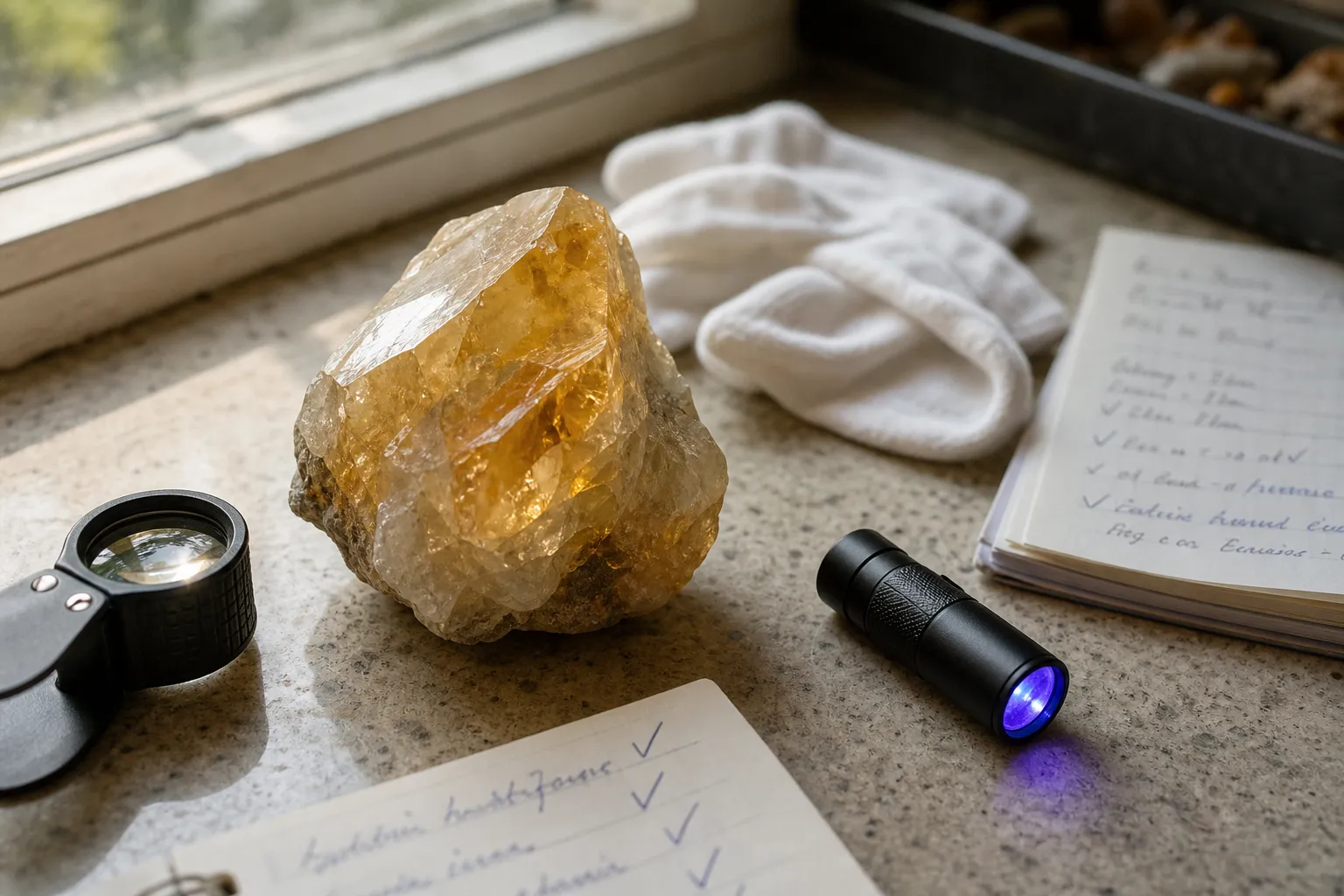
A yellow-orange crystal can look convincing before its paperwork does. That is the verification problem behind Lwena Citrine: the phrase sounds local, current, and collector-ready, but the available page evidence does not establish it as a recognized gemological category, a confirmed Congo citrine provenance, or a documented 2026 collection trend.
The direct answer is narrower than the title claim. Lwena Citrine should not be treated as “dominating” 2026 collections unless a seller can support three separate claims: the material is citrine, the color and condition are accurately disclosed, and the Lwena or Congo origin is documented beyond sales language. Without that chain, “Lwena Citrine” is better read as an emerging citrine market phrase, not a settled collector category.
That does not make every specimen sold under the name false. It means the label cannot carry the proof by itself.
broader context
Citrine verification note
This narrower page works best after the broader citrine reference page.
What the Lwena Claim Asks You to Accept
A listing marketed as Lwena Citrine often bundles several ideas into one attractive name: geographic origin, treatment status, natural color, specimen condition, sourcing story, and market importance. Those are different claims. They need different evidence.
Material identity
“Citrine” is a material identity claim. It concerns whether the stone is quartz in the citrine color range, whether the color is natural or treatment-related, and whether the item is natural material rather than synthetic or misdescribed quartz. A locality name cannot confirm that.
Provenance
“Lwena” or “Congo” is a provenance claim. Congo citrine provenance would need documentation that connects the specimen to a locality, parcel, supply route, mine source, export record, or another traceable origin path. A seller’s location, a batch nickname, or repeated marketplace wording is not the same as provenance confirmation.
Treatment disclosure
“Untreated” is a disclosure claim. For citrine collectors, that word matters because some yellow-to-orange quartz in the market is associated with treatment or presentation language that can blur natural-vs-treated discernment. A seller using “untreated Congo citrine” should be able to say how that status was determined and whether the claim is independently supported or only supplier-provided.
Market adoption
“Dominating 2026 collections” is a market adoption claim. That would need visible evidence outside one seller’s copy: collection releases, catalogued dealer material, auction language, reputable trade reporting, or documented collector demand. The supplied research does not provide that level of confirmation.
The anomaly is not that Lwena Citrine is established as dominant. The anomaly is that the phrase carries more certainty than the evidence can support.
Evidence to Ask For Before Accepting the Label
A collector does not need to reject every unpolished citrine specimen with a Congo story. The better move is to separate the evidence lanes before assigning confidence or value.
Gemological confirmation
Ask what supports the material identity. A useful description should distinguish natural citrine from treated material and synthetic material. It should not rely only on color intensity, a rustic surface, or the appeal of an unpolished form. Stronger support may include a laboratory report, a qualified gemological assessment, or a clear disclosure of what has and has not been examined.
Provenance confirmation
Ask how the Congo origin is documented. If the piece is specifically described as Lwena Citrine, the seller should explain what “Lwena” means in that listing: a locality, a trade label, a parcel name, a mining area, or a seller-created descriptor. Those meanings are not interchangeable.
Treatment disclosure
Ask whether “untreated” is based on testing, supplier assurance, visual assessment, or assumption. That distinction changes the weight of the claim. A seller may repeat a supplier’s wording honestly, but the collector still has a weaker evidence chain than independent confirmation.
Specimen condition
Ask whether the surface is natural, cleaned, stabilized, repaired, coated, oiled, or otherwise prepared for presentation. Unpolished citrine specimens can preserve crystal habit, matrix, or growth features, but “unpolished” does not automatically mean untouched.
Market momentum
Ask what shows the 2026 claim beyond repetition. A phrase can spread through listings before it becomes a documented collector movement.
A practical question works well: what remains if the sales adjectives are removed? If the answer is only “yellow quartz, sold as Congo material, with no independent paperwork,” price and confidence should reflect that thinner basis.
Why “Untreated” and “Unpolished” Are Easy to Overread
Two words create much of the appeal around this topic: untreated and unpolished. Both can matter. Neither settles the whole question.
Untreated citrine is meaningful only when the claim is supported. In citrine buying, the word often signals natural color rather than color changed by treatment. But a label does not perform gemological verification. The collector still needs to know who made the determination, by what method, and with what limits.
Unpolished specimens have a different appeal. They may show crystal habit, surface texture, matrix attachment, or a less commercial presentation than calibrated cut stones. For some collectors, that makes the object feel closer to its mineral context. Still, unpolished material can be misdescribed, cleaned, repaired, stained, treated before sale, or assigned a locality name without a strong paper trail.
The bundled wording problem
This is where seller language needs to sit beside evidence. “Raw untreated Lwena Citrine from Congo” sounds like one claim, but it is a bundle. “Raw” refers to presentation. “Untreated” refers to treatment status. “Lwena” refers to a place or trade name. “Congo” refers to country-level provenance. “Citrine” refers to material identity. Each part can be accurate, uncertain, or unsupported on its own.
The same caution applies to references to harsh mining conditions. Such language may appear in mineral storytelling, but the supplied research does not verify those conditions for this material, locality, or supply chain. If difficult extraction, scarcity, ethics, or price is part of the selling argument, ask for separate documentation.

What Would Make the 2026 Claim Stronger
A 2026 trend claim becomes more credible when it can be checked outside the seller’s vocabulary. For Lwena Citrine, the available material does not show that level of support.
Stronger evidence would include repeated use of the term by independent gemological, mineralogical, or trade sources with a consistent meaning. If one source uses “Lwena” as a locality, another as a parcel name, and another as a marketing label, the term is not stable enough to carry collector-grade confidence.
Documented marketplace adoption would also matter. That does not mean hype posts or repeated product titles. It means visible movement across reputable dealers, catalogued collections, auction descriptions, exhibition notes, or documented collector demand. Listing repetition can show seller interest; it does not establish market dominance.
Provenance records would be central. If material is claimed as Congo citrine from a specific Lwena source, the collector should expect a chain of explanation. Country-level origin is already a claim. Locality-level origin needs stronger support.
Gemological testing can help separate material identity from origin language. A report may identify quartz/citrine or comment on treatment indicators, depending on the scope of examination. It may not confirm locality. Read the wording carefully rather than assuming one document supports every part of the sales story.
A more careful 2026 wording would be: “Some specimens are being marketed as Lwena Citrine, but the term needs independent gemological and provenance confirmation before it can be treated as a verified collector category.”
Collector Considerations Before Buying Lwena Citrine
A buyer looking at material marketed as Lwena Citrine can keep the decision narrow. The question is not whether the story is appealing. The question is how much of the story is evidenced.
- Start with the invoice language. Ask the seller to write the material identity, claimed origin, treatment status, and condition in plain terms. If the invoice only says “Lwena Citrine,” the most important claims remain loose.
- Compare the price to the evidence. A specimen with independent gemological confirmation and coherent provenance support can be judged differently from an unverified piece sold under the same phrase. The name alone should not carry the premium.
- Check the return and disclosure policy. For uncertain locality or treatment claims, a reasonable inspection window matters. A transparent seller should be willing to state what is known, what is supplier-provided, and what remains unconfirmed.
- Keep ethical and mining claims in their own lane. A stone can be citrine while its sourcing story remains undocumented. The reverse can also happen: a sincere sourcing story does not confirm treatment status, material identity, or locality.
The cleanest buying posture is evidence-weighted curiosity. Be open to the material. Do not let the label do the verification.
Where the Current Evidence Stops
The supplied research does not establish Lwena Citrine as a recognized gemological term. It does not confirm Congo citrine provenance for material sold under this name. It does not verify untreated status, unpolished condition, harsh mining conditions, scarcity, pricing strength, collector demand, or dominance in 2026 collections.
That boundary shapes the answer. The title reflects a market-facing claim; the page evidence does not let that claim become a site-owned conclusion.
A more accurate reading is that Lwena Citrine may be circulating as a seller or collector phrase that needs confirmation. For now, the responsible collector response is separation: citrine identity, treatment status, provenance, specimen condition, sourcing language, and market adoption should each be checked on its own terms.
If those checks are met, a specimen may deserve serious consideration. If they are not met, the phrase should be priced and discussed as an unverified claim.
Short answer, held tightly: Lwena Citrine is not established here as dominating 2026 collections. It is a claim to verify before buying, not a fact to assume.