Why Genuine Citrine Never Forms in Massive Geode Caves
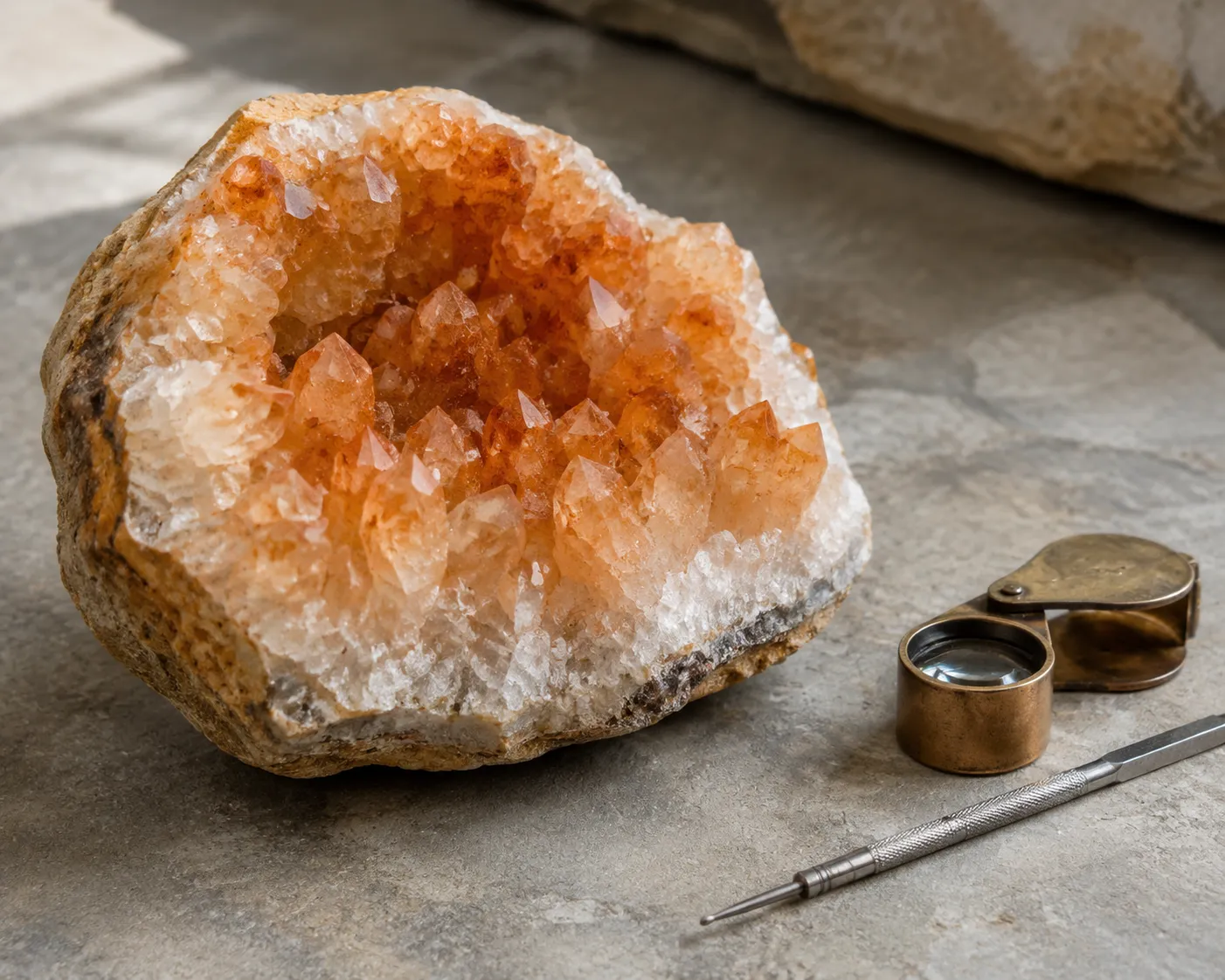
A massive orange “citrine geode cave” is usually not a genuine natural citrine formation. The geode may be real. The quartz crystals may be real. The part that needs checking is the natural-citrine claim.
In Geode Formation Verification, the useful split is simple: separate the cavity, the quartz, and the color history. Large crystal-lined geodes are a known habit for amethyst. When amethyst geodes are heated, their purple color can shift into yellow, orange, reddish brown, or honey-brown tones commonly sold as citrine.
That does not make natural citrine imaginary. It means the dramatic “citrine cathedral” form is usually a treatment-and-naming issue, not the normal geological habit of untreated natural citrine.
broader context
Citrine verification note
This narrower page works best after the broader citrine reference page.
The direct answer: the geode habit fits amethyst better
Citrine is yellow quartz. Amethyst is purple quartz. Both are varieties of silicon dioxide. The confusion starts when a real quartz geode receives a retail name that suggests its yellow-orange color formed naturally as citrine.
Large geodes lined with pointed quartz crystals are strongly associated with amethyst deposits. Amethyst geodes can form in cavities within volcanic rock, including basaltic flows. Over time, those cavities may become lined with chalcedony, quartz, amethyst, calcite, or other minerals, depending on the fluids moving through the rock.
Natural citrine does occur, but it is not commonly represented by giant orange cave-like geodes. In stricter mineral language, genuine natural citrine should owe its yellowish color to natural geological conditions, not later heating done for the gem or crystal market. Natural citrine is also often described as comparatively uncommon and frequently paler, smokier, or less saturated than many large orange geodes sold in shops.
A large orange geode can therefore be natural in one sense and misnamed in another:
- The cavity may be natural.
- The quartz may be real quartz.
- The orange color may be treatment-related.
- The label may describe appearance rather than origin.
That distinction avoids two mistakes. It is too broad to call every orange geode “fake.” It is also too trusting to treat every “citrine geode” label as a verified natural citrine formation.
Why heated amethyst creates the “citrine cave” look
The myth persists because amethyst already forms the display object people expect: a large geode lined with sparkling crystals. Heat treatment can then move the color into the range many buyers recognize as citrine.
Amethyst color can change when heated. Depending on the material and heating conditions, purple tones may weaken while yellow, orange, brown, or reddish tones develop. The full chemistry can get technical, but the verification point is practical: heated amethyst can become citrine-colored quartz.
That matches many large “citrine cathedrals” seen in retail settings. The geode shape came from amethyst formation. The citrine-like color came later.
A common visual pattern is strong orange or brownish color near the crystal tips, with paler, white, grayish, or less colored bases closer to the matrix. This pattern is often associated with heat-treated amethyst geodes. It is a clue, not a lab result, but it fits the common treatment story better than the claim that a huge natural citrine cave formed that way.
Retail language adds another layer. Terms such as “citrine geode,” “citrine cave,” “citrine cathedral,” “heated citrine,” “baked amethyst,” “burnt amethyst,” “Madeira citrine,” and “lemon quartz” are not interchangeable. Some describe color. Some imply treatment. Some are sales categories. Some are used loosely.
For geode formation verification, the key question is not “Does it look golden?” It is: did this quartz naturally crystallize as citrine in this geode habit, or did amethyst or smoky quartz change color later?
For massive orange cave-like specimens, the second explanation is usually more consistent with known geode habit and market treatment patterns.
Clues that help, and what they cannot settle
Visual clues can help you ask better questions. They cannot confirm natural origin by themselves. Quartz color may be influenced by natural conditions, treatment, irradiation, heating, zoning, inclusions, coatings, or staining.
A large geode sold as citrine is more likely to be heat-treated amethyst when several of these features appear together:
- Very strong orange, burnt orange, reddish brown, or dark honey-brown color.
- Color concentrated near crystal tips.
- White, pale, or grayish bases under the colored tips.
- A large druzy-lined cavity or cathedral form typical of amethyst geodes.
- A label that says “citrine cave” or “citrine cathedral” without explaining treatment status.
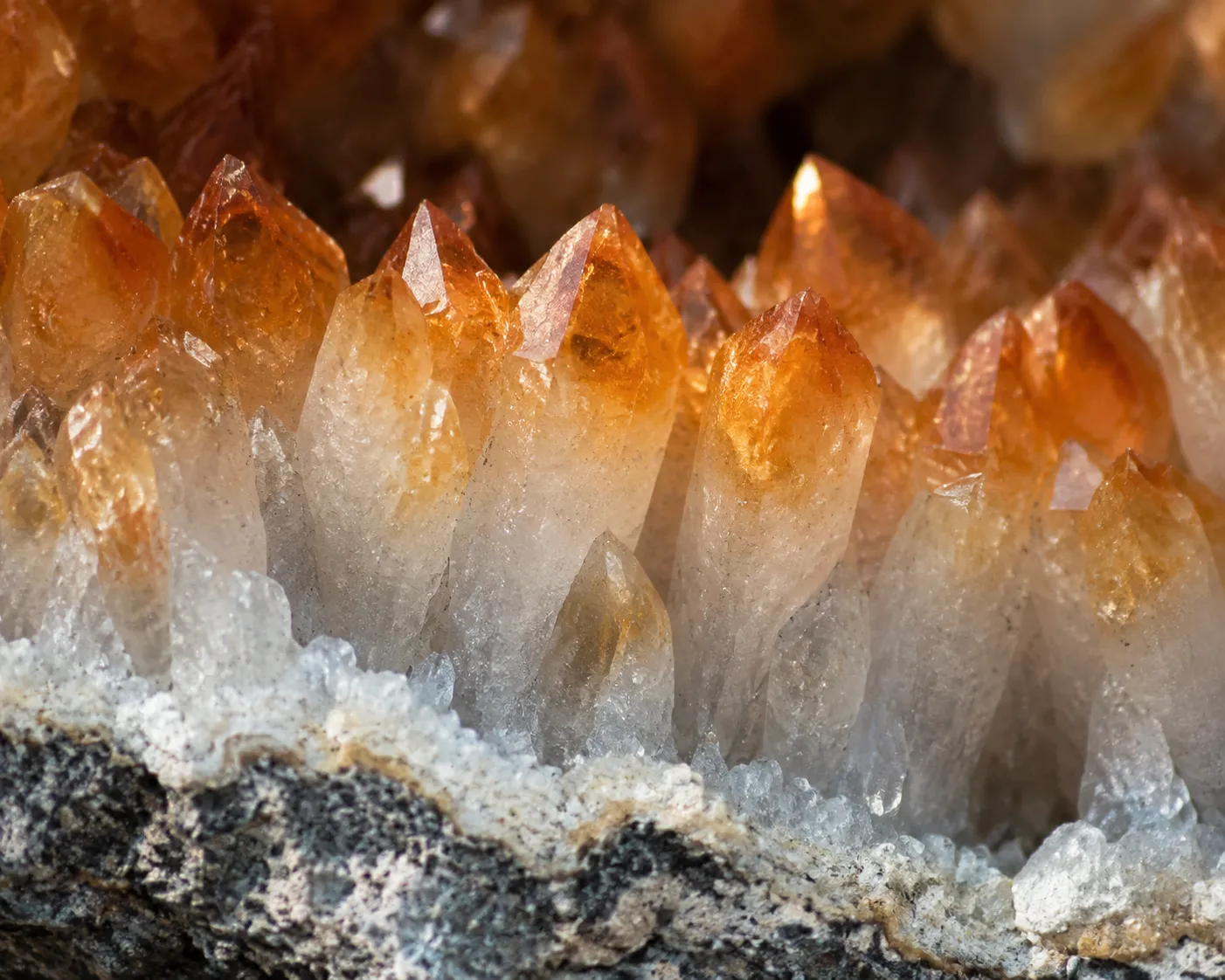
None of these features settles the matter alone. Together, they point toward the common heated-amethyst pattern.
This matters because deep color is often praised in sales language. In verification terms, intense orange-brown color in a large geode is not a reason to assume natural origin. It is a reason to ask how the color was produced.
Natural citrine material is often described differently: paler yellow, yellow-orange, yellow-green, smoky yellow, or unevenly zoned rather than vividly burnt orange. Some natural citrine may show smoky areas or internal growth features. Those traits may be more consistent with natural crystallization, but they still do not confirm origin from a photo.
Yellow surface color is another separate issue. Iron-rich coatings, staining, or other external coloration can make quartz look golden without making it citrine in the stricter sense. A specimen can be real quartz and still have a yellow appearance caused by something other than natural citrine body color.
So the better question is not simply “Is it yellow quartz?” It is: is the color internal, natural, treatment-related, surface-related, or unknown?
What changes the answer
The phrase “genuine citrine never forms in massive geode caves” should be read as a practical statement about the dramatic retail category, not as a claim that citrine cannot exist.
Several details change how cautious the answer should be.
Size and habit
Small crystals, clusters, veins, pockets, and isolated citrine crystals are not the same question as massive orange geode caves. Natural citrine can occur in settings that do not look like large amethyst cathedrals.
The issue is the combination: huge geode habit plus strong orange color plus a “natural citrine cave” label. That combination is usually better explained by amethyst geode formation followed by heat treatment.
Treatment disclosure
A seller may use “citrine” because the current color is yellow-orange, even if the material began as amethyst. Some listings disclose heat treatment. Others use only the shorter retail name.
Disclosure changes the claim. “Heat-treated amethyst geode sold as citrine-colored quartz” is clearer than “natural citrine cave.” The first describes a real quartz geode with altered color. The second suggests a natural citrine formation and needs stronger support.
Locality and documentation
A locality name alone is not enough. Some regions are known for amethyst geodes, and some are associated with citrine or smoky quartz, but the label still needs context. Stronger documentation explains the mineral identification, locality, treatment status, and basis for the description.
“Reported as natural citrine” is not the same as “verified untreated natural citrine.” “From an amethyst geode district” is not the same as “naturally formed citrine cave.”
Purpose of the claim
If the object is decorative, the distinction may mostly be about accurate language. If it is being priced, collected, insured, or represented as untreated natural citrine, the distinction matters more. This page is not an appraisal. It is a vocabulary check: natural origin, treatment status, and retail label are separate claims.
Symbolic names such as “merchant’s stone” or “money stone” belong to cultural and marketing language. They do not verify geology, treatment status, value, or practical results.
Limits of geode formation verification from photos
A photo can raise useful questions, but it cannot confirm natural citrine origin.
Photos may show:
- overall color
- color concentration at crystal tips
- pale or white bases
- geode shape
- crystal habit
- possible surface staining
- label language
Photos usually cannot show enough to determine:
- whether the color is natural or treatment-related
- whether the color is internal or superficial
- the exact cause of yellow coloration
- whether smoky zones or internal features formed naturally
- whether the specimen was heated, irradiated, stained, or otherwise altered
There is also no reliable home shortcut. Heating, burning, chemical use, acid testing, or destructive scratching can damage the specimen and still fail to answer the origin question. When labeling or value matters, a gemological or mineralogical assessment is the safer route.
A cleaner way to ask the question is:
- Is the geode itself a natural quartz geode?
- Are the crystals amethyst, citrine, smoky quartz, colorless quartz, or mixed quartz?
- Is the yellow-orange color natural, heat-treated, surface-related, or unknown?
- Does the label describe appearance, treatment status, or verified mineral origin?
That structure keeps the answer precise. A large “citrine cave” can be a real geode and a real quartz specimen while still not being a genuine natural citrine geode formation.
Minimal FAQ
Are all citrine geodes fake?
No. “Fake” is too broad. Many large orange citrine-labeled geodes are real quartz geodes, often originally amethyst geodes. The issue is usually treatment status and naming, not whether the object is real mineral material.
Can natural citrine form crystals?
Yes. Natural citrine can form as quartz crystals. This page is about massive cave-like geodes sold as “citrine cathedrals” or “citrine caves,” which are usually better explained as treated amethyst geode material.
Is deep orange citrine more natural?
Not necessarily. Deep orange, reddish brown, or burnt honey color in a geode is often a clue to ask about heat treatment, especially when the strongest color sits at the crystal tips and the bases are pale or white.
Bottom line
Genuine natural citrine exists. Natural quartz geodes exist. The doubtful part is the combined claim: massive orange “citrine geode caves” are usually not natural citrine formations.
For verification, separate the geode from the color, and separate the sales label from the mineralogical claim. That distinction explains most of the citrine cave myth.