Safe gemstone cleaning
The “Warm Soapy Water” Method: A Ritual for Safely Cleaning Quartz
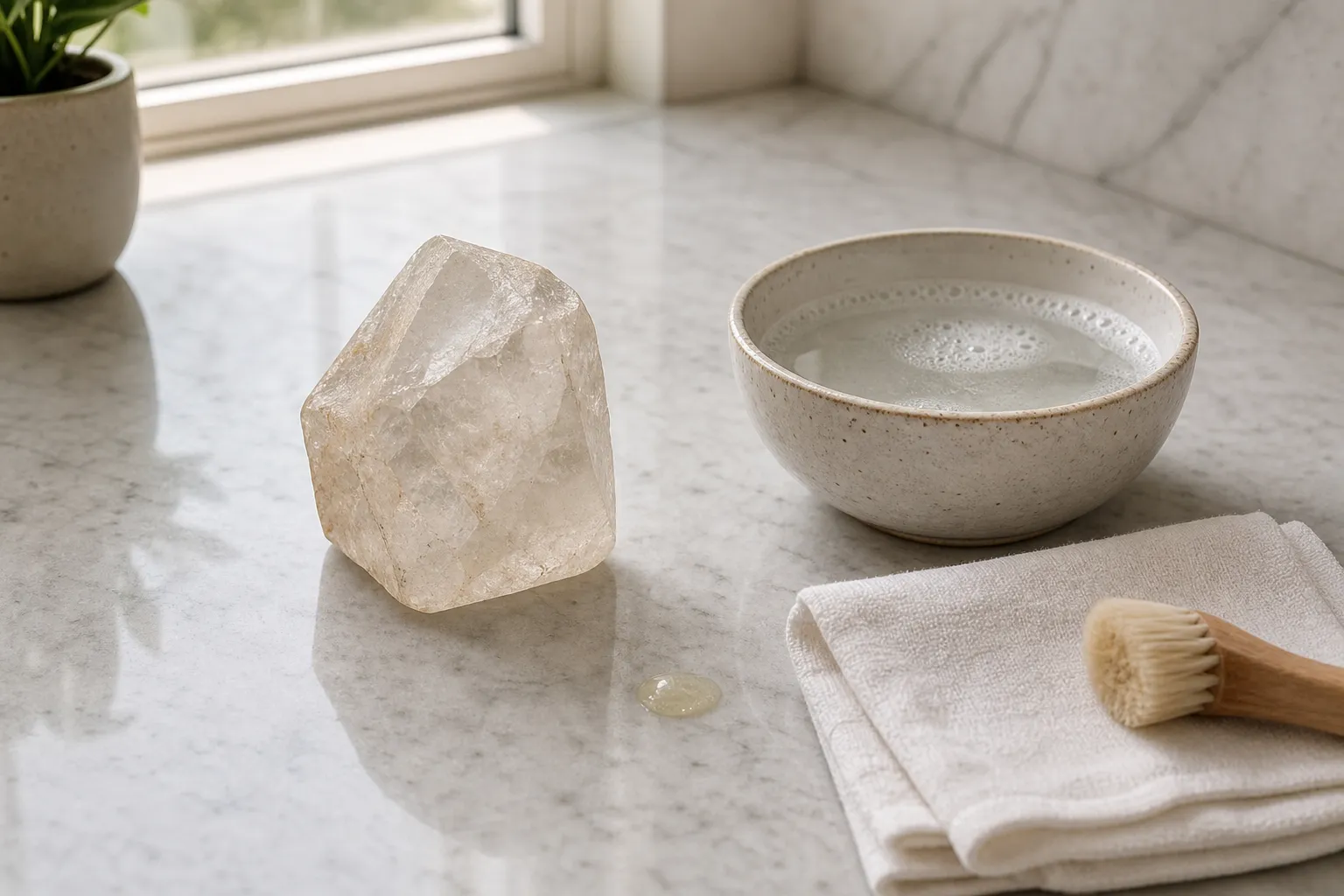
A plain quartz surface rarely needs a dramatic cleaning routine. For many simple quartz pieces, the gentlest starting point is warm water, a small amount of mild detergent, light contact with your fingers or a very soft non-abrasive brush, a careful rinse, and patient drying.
That is the warm soapy water method: a quiet, low-intensity quartz cleaning ritual, not a promise that every quartz object can be soaked, scrubbed, or treated the same way.
For Safe gemstone cleaning, the boundary comes first. This method is most appropriate for plain, stable-looking quartz with no obvious coating, glue, fragile setting, unknown treatment, or mixed material. If the piece is valuable, antique, mounted in jewelry, heavily included, dyed-looking, coated-looking, or sold with unclear treatment language, pause before using water.
broader context
Broader citrine reference
This narrower page works best after the broader citrine reference page.
The Method, Kept Narrow
This answer is narrow by design. You are not trying to restore a stone, brighten metal, remove old adhesive, reverse staining, or confirm citrine authenticity. You are only trying to lift ordinary surface dust, skin oil, or light handling residue from quartz with a mild household approach.
Use a small bowl of warm water, not hot water. Add a little mild detergent and stir it through before the quartz goes in. The water should feel comfortable to the hand; if it feels harsh to skin, it is too harsh for this routine.
For many plain quartz pieces, brief contact is enough. Hold the quartz in the water and let surface residue loosen. If dust sits in low areas, grooves, or points, touch those places gently with your fingertips or a very soft brush. Non-abrasive brushing means light pressure, short passes, and no attempt to force dirt out of a crack, pit, drill hole, glue line, or setting.
Rinse with clean lukewarm water until the slick feeling of detergent is gone. Dry with a soft lint-free cloth, then leave the piece on a clean towel until hidden moisture has time to leave edges and recesses. Do not put it away wet in a pouch, box, or closed display.
That is the routine. Warm water. Mild detergent. Gentle contact. Clean rinse. Quiet drying.
When the Answer Changes
The warm soapy water method becomes less certain when the object is not just plain quartz. Many pieces are mixed objects: quartz in metal jewelry, quartz with other stones, points glued into decorative items, dyed quartz beads on thread, coated aura-style crystals, or citrine-colored material described with loose seller language.
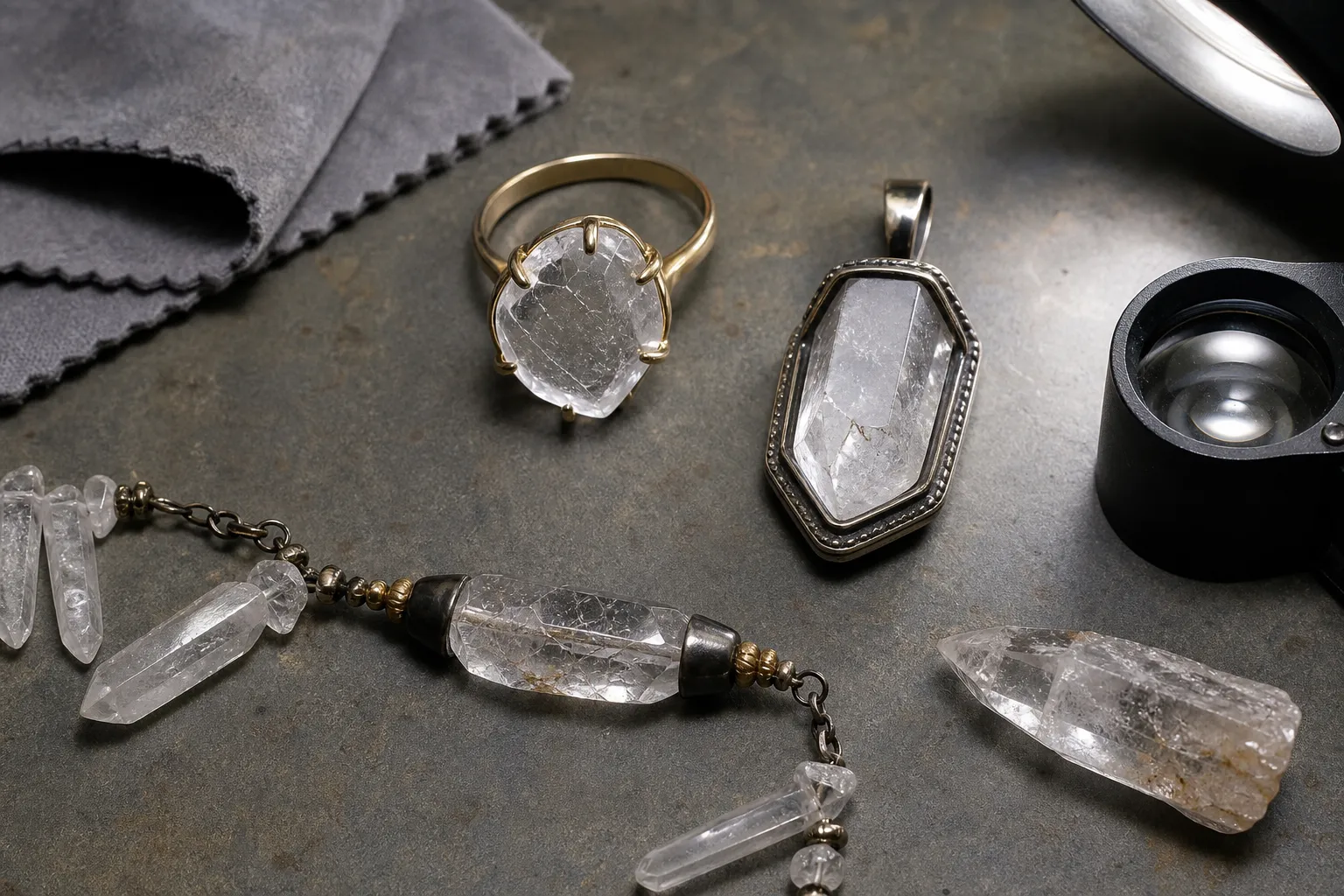
Mounted quartz jewelry needs extra caution. The stone may tolerate a gentle wipe better than the setting, adhesive, plating, stringing material, pearl, porous companion stone, or older repair. A ring, pendant, bracelet, or brooch is a small construction; cleaning quartz jewelry safely means looking at the weakest part before assuming the visible stone is the only concern.
Treatments and surface changes matter too. Some quartz may be dyed, coated, heat-treated, fracture-filled, assembled, or otherwise altered, and that history is not always clear from casual inspection. If color looks painted-on, unusually iridescent, concentrated along cracks, or inconsistent with the seller’s wording, clean less aggressively or wait for a more informed inspection.
Visible damage is a stop sign. Open fractures, crumbly matrix, powdery deposits, unstable inclusions, loose prongs, lifting glue, flaking coatings, or trapped dirt under a setting move the piece out of the simple cleaning category. Brushing into those areas can make a small surface problem more complicated.
A valuable or sentimental piece deserves a slower decision. The risk is not only price; it is the consequence of being wrong. If the item is an heirloom, a high-value citrine claim, an antique jewel, or a specimen whose treatment history affects value context, a barely damp soft cloth may be the better interim step.
A Calm Cleaning Sequence
Look before touching
Place the quartz under steady light and check for loose parts, coatings, filled-looking cracks, drilled holes, glued areas, delicate metalwork, or other stones. This first minute often decides whether warm soapy water is reasonable.
Prepare a weak bath
Use warm water and only a small amount of mild detergent. The detergent is there to help loosen ordinary residue, not to act as a chemical treatment. If the piece is plain loose quartz and shows no obvious risk signals, dip it briefly or let it sit only long enough for surface grime to soften.
Clean with touch, not force
The softest useful tool is often your fingers. If a brush is needed, choose one that is very soft and reserved for delicate surfaces, not one that has carried grit, toothpaste, polish, or household cleaner. Brush choice for quartz is less about buying a special tool and more about avoiding abrasive history.
Rinse more carefully than you scrubbed
Detergent left in recesses can dry into a dull film or sit against metal, thread, glue, or other materials. Let clean lukewarm water move over the surface, turning the piece gently rather than blasting it with pressure. If the quartz is mounted, avoid flooding areas where water can collect behind stones or under settings.
Dry in two stages
First, blot with a soft cloth; do not rub hard across points, edges, prongs, beads, or delicate surfaces. Second, leave the piece in open air on a towel until it is fully dry. Rinsing and drying quartz is not only about appearance; it also limits hidden moisture in parts of the object that may not be quartz at all.
Where Hydrolysis Belongs
Hydrolysis sometimes appears in cleaning conversations because water can participate in chemical change in some materials. That does not mean every quartz cleaning session should be framed as a hydrolysis problem. With the available source set for this page, there is no citable basis here for a precise claim about hydrolysis behavior in quartz cleaning, detergent compatibility, or long-term effects across treatments.
The useful point is narrower: water is not automatically harmless just because the visible stone is quartz. A gemstone object can include adhesives, fillers, coatings, metals, plating, stringing materials, porous companion stones, or repaired areas. Those parts may respond differently to moisture and detergent.
So hydrolysis should not become a dramatic warning or a borrowed authority. It is only a reminder to keep wet cleaning short, mild, and limited when materials are uncertain. A seller label that says “quartz,” “citrine,” “aura quartz,” “coated quartz,” or “treated quartz” is not the same as cleaning clearance.
Common Quartz Cleaning Misunderstandings
Hardness does not equal cleaning freedom
A material may resist some scratching better than softer stones, yet still have fractures, inclusions, coatings, treatments, repairs, or settings that change how it should be handled. Durability language helps only when it is tied to the actual piece in front of you.
Mild detergent is not every soap-like product
For this method, mild means plain, sparse, and easy to rinse. Avoid products that are abrasive, oily, strongly scented, colored, acidic, alkaline, bleach-based, ammonia-based, polish-like, or intended for household surfaces.
Longer soaking is not automatically better
Soaking may loosen surface residue, but it also gives water more time to reach thread, glue, cracks, under-settings, and mixed materials. For many plain pieces, a brief wash and rinse is safer than a long bath. If residue does not lift with gentle contact, the next move is not automatically stronger soap or more time.
Ultrasonic and steam cleaning are outside this method
They introduce different forces and risks, especially for mounted stones, treated material, fracture-filled pieces, or mixed-stone jewelry. This article stays with the lower-intensity warm soapy water approach.
Stop Conditions
Stop before cleaning if the quartz has unknown coatings, visible dye concentration, glued construction, a fragile setting, mixed stones, pearl or porous companions, antique metalwork, loose prongs, a high-value claim, or treatment language that affects value. Dry dusting or professional review is better than guessing with water.
Stop during cleaning if color appears to move, a surface film lifts, grit keeps catching, a crack darkens with moisture, metal parts loosen, thread changes, glue clouds, or the piece begins to feel unstable. Do not keep going just to finish the job. Rinse gently if appropriate, blot dry, and leave the piece alone.
Stop after cleaning if dullness, residue, trapped moisture, or new visual change remains. The next step is not harsher cleaning. It is closer identification of what the piece is: plain quartz, treated quartz, mounted quartz jewelry, a composite decorative object, or a mixed-material item being sold under a simple gemstone name.
This matters especially for citrine-colored quartz. Cleaning cannot tell you whether a yellow to orange stone is natural citrine, heat-treated amethyst, treated smoky quartz, synthetic material, coated material, or another lookalike. A cleaner surface may make observation easier; it does not replace gemological verification or clear seller disclosure.
A Short Pre-Cleaning Checklist
Use the warm soapy water method only when most of these statements are true:
- The piece appears to be plain quartz, not a mixed-material object.
- There is no visible coating, dye layer, glue line, loose setting, or fragile repair.
- The cleaning goal is light surface residue, not restoration or stain removal.
- The detergent is mild, sparse, and easy to rinse away.
- Brushing, if used, will be soft, brief, and non-abrasive.
- Soaking will be short, not prolonged.
- Drying will continue until recesses are dry before storage.
If one or more points are uncertain, scale the method down. Wipe with a barely damp soft cloth, avoid soaking, and do not brush into cracks or settings. When the piece has financial, sentimental, antique, or identification significance, uncertainty is enough reason to pause.
FAQ
Can I use dish soap for quartz?
A very small amount of plain mild detergent is the cautious version of this method, but this page does not support a universal product rule. Avoid abrasive, strongly scented, oily, bleach-based, ammonia-based, acidic, or polish-like cleaners. If the quartz is mounted, treated, coated, glued, or mixed with other materials, detergent choice is only one part of the risk.
How long should quartz soak in warm soapy water?
For many plain quartz pieces, think in brief contact rather than extended soaking. Let surface residue soften, clean gently, rinse, and dry. If the piece has unknown treatment, cracks, glued parts, or a setting, skip soaking or keep water contact minimal.
Is warm soapy water safe for all quartz jewelry?
No. Quartz jewelry is not just quartz. Metal, plating, adhesives, prongs, thread, companion stones, coatings, and repairs can all change the cleaning answer. Warm soapy water may be a gentle starting point for some simple pieces, but it is not a blanket rule for every ring, pendant, bracelet, or antique item.
The Bounded Answer
The warm soapy water method is a useful first ritual for many plain quartz pieces: warm water, mild detergent, light non-abrasive contact, full rinsing, and patient drying. Its strength is restraint.
Its limit is just as important. The method does not verify quartz identity, confirm citrine authenticity, establish treatment history, or make coated, dyed, filled, glued, mounted, antique, valuable, or mixed-stone pieces low-risk. Clean only where the object stays simple. Pause where the evidence becomes uncertain.