Bounded crystal wellness practice
An Introduction to Trauma-Aware Somatic Lithotherapy
A stone’s color, weight, temperature, and surface can give the hands something simple to notice. In trauma-aware Somatic Lithotherapy, that is the narrow center: a consent-led, non-clinical crystal wellness ritual that uses stones as sensory anchors for gentle body awareness, not as a substitute for licensed care.
Somatic Lithotherapy, in this bounded sense, may include opt-in stone handling, body-focused prompts, supportive seating, a predictable sequence, and plain stopping language. It should not be presented as clinical trauma work, a mental-health intervention, or a confirmed method for changing symptoms.
The careful version is modest. Current public-health and complementary-health sources can support the language of consent, choice, emotional wellness, and referral limits. They do not show that lithotherapy itself changes trauma outcomes.
broader context
Citrine verification note
This narrower page works best after the broader citrine reference page.
What It Can Be
A consent-led sensory wellness ritual using optional stones, predictable pacing, body-awareness prompts, supportive posture, and clear stopping language.
What It Is Not
It is not licensed trauma care, clinical assessment, diagnosis, care planning, or a confirmed method for changing mental-health symptoms.
Where Evidence Stops
Available public-health and complementary-health language can support boundaries, choice, and referral limits; it does not prove lithotherapy outcomes.
What “Trauma-Aware” Changes
“Trauma-aware” should change the structure of the practice before it changes the tone of the description. It points toward permission, pacing, collaboration, emotional comfort, and clear scope. Those ideas are familiar in trauma-informed guidance, but moving them into a crystal setting does not make the setting professional care.
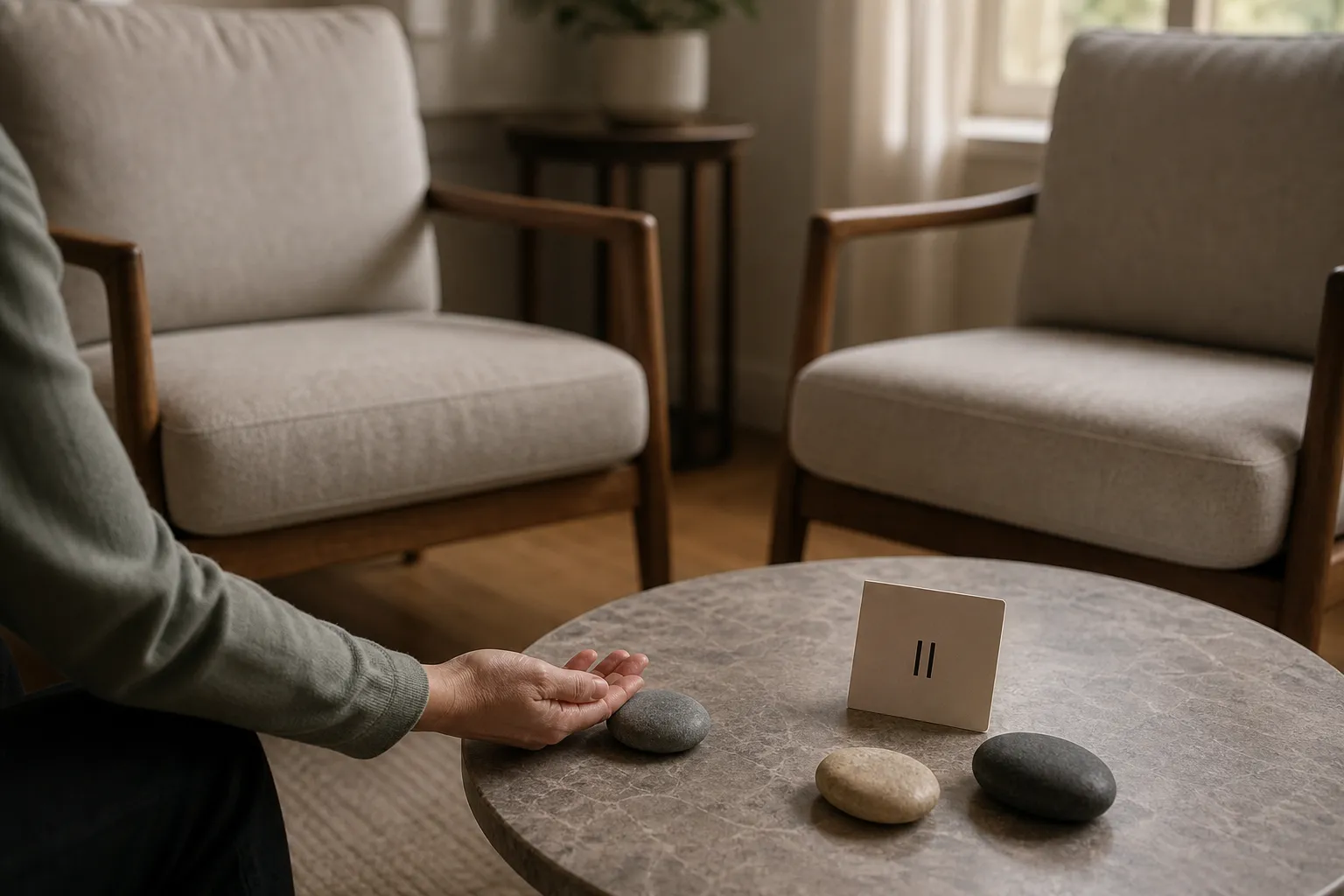
A trauma-aware session begins with choice. The practitioner, host, or facilitator does not assume that a person wants touch, silence, breath cues, closed eyes, or stones placed on the body. Each element remains optional. The person can hold a stone, place it nearby, keep it on a table, decline it entirely, or change their mind mid-session.
That flexibility is not decorative. Sensory practices can feel settling to one person and intrusive to another.
This is where trauma-aware Somatic Lithotherapy differs from a casual crystal ritual. A casual ritual may focus on intention, symbolism, or atmosphere. A trauma-aware version slows down the social pressure around those elements. It asks: Is the person choosing this? Can they pause? Do they know what comes next? Can they leave, shift position, or ask for less stimulation without embarrassment?
The stone remains a sensory object and a symbolic object. It is not evidence of clinical benefit. For a citrine-focused reader, the habit may feel familiar: seller language can make a stone sound more certain than the material evidence allows. The same market literacy applies here. Warm language around “energy,” “release,” or “deep transformation” may be meaningful in personal or cultural contexts, but it should not be treated as proof of outcome.
A Gentle Session Frame
A trauma-aware Somatic Lithotherapy session is easier to understand as a room-and-consent structure than as a promise. The useful parts are observable: how the space is arranged, how choices are offered, how prompts are worded, and how quickly a person can stop.
A restrained sequence might look like this:
- The person is told what will happen before anything begins.
- Stones are introduced as optional sensory anchors, not required tools.
- The person chooses whether to hold, view, touch, place nearby, or ignore them.
- Body-focused prompts stay simple, such as noticing contact with the chair or the temperature of the stone.
- Silence, breathing cues, and eyes-closed moments are offered only with permission.
- The person is reminded that pausing, changing position, or skipping a prompt is acceptable.
That is not a clinical protocol. It is a comfort structure. Its value is in reducing surprise, performance pressure, and unwanted intensity during a wellness ritual.
Easy stopping language should be plain: “You can pause this at any time,” “You can keep your eyes open,” “You can move the stone away,” or “You do not have to explain why.” The person should not have to manage the facilitator’s feelings in order to stop.
Opt-in stone placement deserves special care. Placing stones on the body can feel intimate even when no skin contact is involved. A trauma-aware approach asks before placement, names the location, waits for a clear answer, and offers alternatives. Holding a stone in the hand, placing it beside the chair, or simply looking at its color can keep the ritual intact without crossing a comfort line.
The same restraint applies to body-focused prompts. Interoceptive training is often used broadly for practices that invite attention to internal sensations, but this page’s evidence base does not support claims that interoceptive training with stones produces measurable health change. In this setting, the cleaner wording is “gentle interoceptive check-ins”: brief invitations to notice what is present, with no demand to search for meaning, memory, or emotional explanation.
Room Comfort Without Overclaiming
Therapy room spaces, wellness rooms, and private ritual areas can all borrow from one practical principle: comfort should not depend on endurance. If a person has to hold a position, suppress discomfort, or tolerate a room arrangement to be “doing it right,” the session has drifted away from consent-led practice.
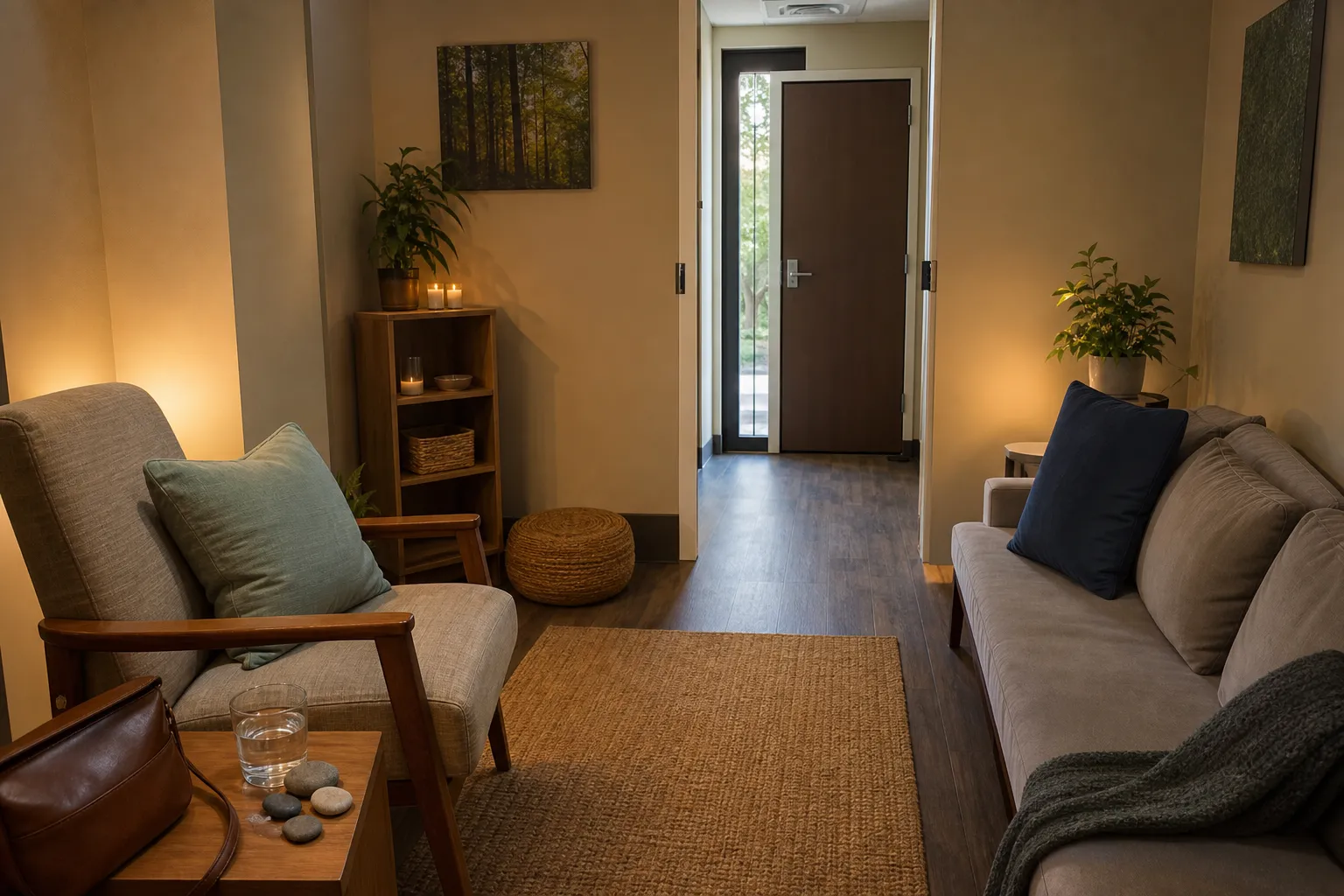
Ergonomic protocols in this context are not medical corrections. They are ordinary comfort choices: supportive seating positions, space to change posture, stable surfaces for stones, easy access to water or personal items, and clear paths to the door. An accessible room layout also considers lighting, sound, scent, and visual clutter. Some people prefer dim light and quiet; others feel more settled with brighter light, an open door, or the ability to sit upright.
A stone-focused ritual can be arranged without making the body the site of pressure. The person might sit with feet supported, hold a smooth stone at chest or lap level, rest the hands on a cushion, or place the stone on a table within view. If lying down is offered, it should not be treated as the deeper or more correct option. For some people, sitting upright feels more comfortable and more in control.
Room design also shapes power. A facilitator seated between the person and the exit, a closed door with no explanation, or a session format that discourages movement can make a gentle ritual feel overly controlled. A trauma-aware room makes choice visible: where to sit, how close the facilitator is, where stones are placed, and how to end the interaction.
This is a practical lane, not an efficacy claim. Comfortable positioning may make a session easier to participate in. It does not show that the session changes trauma, mood, memory, or nervous-system patterns.
Common Confusion: Complementary Wellness Is Not Licensed Care
The most common misunderstanding is assuming that “trauma-aware” makes Somatic Lithotherapy a trauma service. It does not. Trauma-aware language can improve boundaries in a wellness setting, but it does not create professional scope, clinical assessment, diagnosis, or care planning.
Complementary-health terminology can also be confusing. A practice may be described as complementary, reflective, ritual-based, or wellness-oriented without being medically validated. Public sources can clarify naming and general wellness boundaries, but they do not validate crystal outcomes.
That absence should change the wording. A careful facilitator avoids claims about resolving trauma, uncovering stored memories, forcing emotional catharsis, or producing specific mental-health changes. A careful reader should be cautious around session descriptions that sound certain, especially when they combine crystals, body language, and guaranteed personal transformation.
The safer framing is smaller and cleaner: a consent-led sensory wellness ritual may help some people notice comfort, preference, texture, temperature, breath pace, posture, or room conditions in the moment. It may provide a reflective structure. It may carry symbolic meaning for someone who values stones. Those statements do not require pretending the practice has evidence it does not have.
When the Answer Changes
The answer changes when distress is significant, persistent, escalating, or connected to safety concerns. In those situations, Somatic Lithotherapy should not be the main support. A person dealing with crisis risk, severe distress, dissociation, functional impairment, self-harm thoughts, or trauma symptoms that interfere with daily life should seek qualified professional support or urgent help when appropriate.
A practitioner’s scope boundary should be easy to hear before a session begins. They can say that the work is non-clinical, that stones are used for sensory and symbolic reflection, and that the session does not diagnose or manage mental-health conditions. That clarity protects the reader from inflated claims and keeps the practice from becoming a disguised care setting.
There are also smaller moments when the session should change course. If a person becomes tense, confused, frozen, overwhelmed, unusually quiet, or eager to comply despite discomfort, the facilitator should slow down and return to choice. The next step may be opening the eyes, moving the stone away, changing posture, returning attention to the room, or ending the ritual. No one should be encouraged to push through distress to complete a symbolic sequence.
For self-guided practice, choose ordinary, reversible actions. Sit comfortably. Keep eyes open if that feels better. Hold one stone or place it nearby. Notice simple contact points: hand, chair, floor, tabletop. Stop before the practice becomes intense. If the ritual raises distress that feels hard to manage, the next step is appropriate support, not a more elaborate crystal routine.
A Bounded Way to Use the Language
“A non-clinical crystal wellness practice that uses optional stones, predictable pacing, and gentle body-awareness prompts to support reflective sensory attention.”
That sentence makes room for ritual without borrowing authority from clinical care.
Less careful wording tends to overreach. It may imply that the stone itself produces a health outcome, that the facilitator can guide trauma processing, or that body sensations reveal hidden truths. Those claims need stronger evidence than this page has. Without that evidence, the responsible path is to keep the practice in the realm of consent, comfort, symbolism, and self-observation.
For readers drawn to citrine, quartz, amethyst, or any other stone, the same verification habit applies: separate the material object from the story built around it. A stone can be beautiful, tactile, meaningful, and useful as a focus object in a personal ritual. That does not make every claim around it sound.
Trauma-aware Somatic Lithotherapy is best introduced as a careful container, not a promise. It can offer opt-in stone contact, predictable pacing, accessible room choices, supportive posture, and language that makes stopping easy. It cannot, on the current evidence, be presented as licensed trauma care or as a confirmed path to mental-health outcomes. The stone may hold attention; the boundary holds the practice.