Bounded crystal comparison
Thermal Shock vs. Deep Earth: The Energetic Difference in Crystals
broader context
Broader citrine reference
This narrower page works best after the broader citrine reference page.
Direct answer
A crystal’s formation story can matter deeply in metaphysical practice, but it should not be confused with a measured energetic ranking. Deep-earth crystal formation may feel more resonant to someone who values slow natural growth, geological continuity, and an unaltered material history. Thermal shock or heat-treated history may feel less aligned if that person reads sudden heat exposure as disruption.
That is an interpretation, not a gemological result. The material difference is real: quartz-family identity, color origin, heat exposure, fractures, and seller disclosure can all affect how a stone should be described. The energetic difference is belief-based.
The available gemological and mineralogical sources support mineral identity and treatment boundaries; they do not verify that one formation path creates higher Metaphysical Vibrational Frequencies than another.
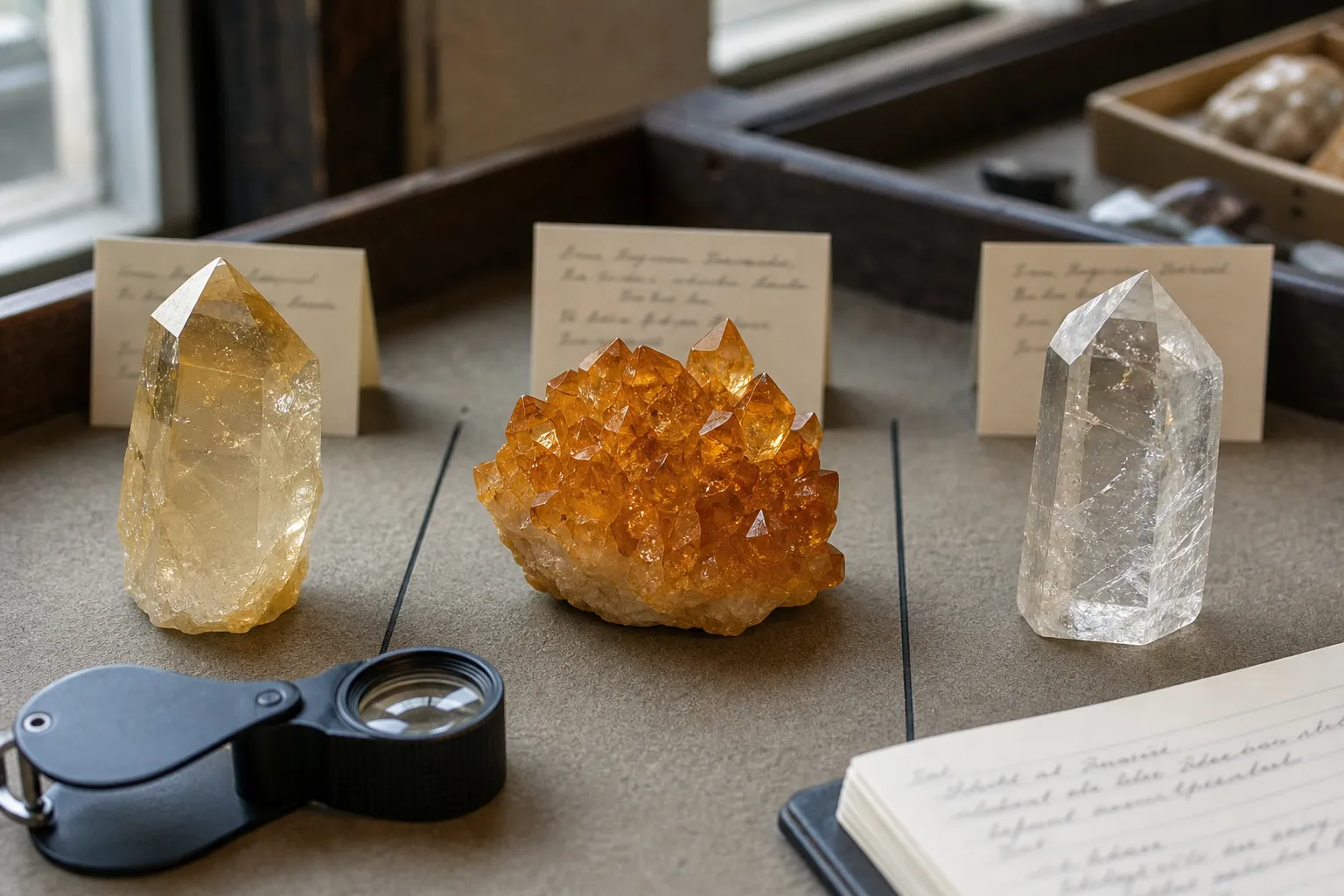
The Material Difference Comes First
Before a crystal can be interpreted energetically, it needs a cleaner material name. Citrine, amethyst, and quartz are connected, but they are not interchangeable labels. GIA describes citrine and amethyst as quartz varieties, while Mindat gives the broader mineral context for quartz itself: composition, structure, and natural occurrence come before spiritual meaning.
That matters because “deep-earth crystal” can sound more precise than it is. A natural citrine specimen, heated amethyst sold in citrine language, and a general quartz point may all appear in the same crystal conversation. Their histories are not the same. If seller language blurs natural citrine, heat-treated quartz, and amethyst categories, the metaphysical comparison starts from a weak label.
Heat exposure can change appearance in some quartz-family material. In market language, that often matters most around citrine-like stones, where heated amethyst or treated quartz may be presented near natural citrine. Thermal shock is narrower: it points to stress from sudden temperature change, which may relate to cracking, internal strain, or durability concerns.
Those are material claims. They do not automatically prove energetic damage.
A treated stone is not factually “dead” because it has been heated. A deep-earth stone is not shown, by the sources available here, to hold a measurable metaphysical frequency advantage. The useful comparison begins by keeping those two lanes separate.
Why Deep-Earth Formation Feels Different to Some Readers
Deep-earth formation has a strong symbolic pull. It gives the crystal a long geological story: pressure, time, slow growth, mineral continuity, and connection to place. In spiritual interpretation of crystals, those qualities may be read as steadiness, patience, grounding, or long-term intention.
That is a fair way to describe personal meaning. It should not be turned into a mineralogical conclusion.
Gemological references can help confirm what a material is called. Mineral references can explain quartz as a natural mineral and provide structure, occurrence, and composition context. They do not measure personal resonance, spiritual purity, or the felt difference between two specimens. If a person says natural quartz or natural citrine feels clearer to them than a heat-treated piece, the cleanest framing is personal experience or symbolic preference.
Cleaner wording
“I interpret deep-earth formation as energetically meaningful.”
Overstated wording
“Deep-earth formation has a higher measurable metaphysical frequency.”
The word “frequency” is where the comparison often gets muddy. In physical contexts, frequency has measurable meanings. In metaphysical crystal language, Metaphysical Vibrational Frequencies usually refer more loosely to felt tone, energetic character, or intuitive resonance. Mixing those meanings can make a belief-based statement sound like a test result. The first sentence respects the practice. The second overstates what the evidence can carry.
What Thermal Shock or Heat Treatment Can Change
Thermal shock crystals raise a practical question before an energetic one. The concern is not only whether heat changed the color or surface. Readers often want to know whether rapid heat, treatment, or stress in the structure changes crystal energy resonance.
The physical side is limited but real. Sudden temperature change can stress a material. In crystal discussions, people may mention lattice damage, internal fractures, cloudiness, or brittleness. That wording should stay close to observable effects unless stronger evidence is present. Lattice damage in crystals is a material concept; it is not a shortcut for damaged energy.
Heat-treated crystal history can matter in three ways
- It may change or intensify appearance, especially color.
- It may affect disclosure, because “natural citrine,” “heated amethyst,” and “heat-treated quartz” do not mean the same thing.
- It may change how a person personally relates to the stone as an intention object.
The first two fit inside gemological and mineralogical boundaries. The third belongs to practice, symbolism, and personal interpretation.
For one reader, a heat-treated stone may feel transformed rather than weakened. For another, the same history may feel interrupted. The current source set does not let this page rank those experiences. It can only name the difference clearly.
A Cleaner Comparison: Formation, Treatment, and Meaning
The most useful comparison separates physical material history, marketplace language, and metaphysical interpretation. Most confusion begins when those layers collapse into one claim.
Material fact
Deep-earth formation points to natural geological growth or occurrence, depending on the specimen.
Thermal shock or heat-treated history means heat exposure, treatment, or stress history may be relevant.
Verification point
Identify the mineral and variety before assigning meaning.
Clarify whether it is heated amethyst, heat-treated quartz, natural citrine, or another quartz material.
Physical concern
Natural origin does not automatically mean flawless structure.
Sudden heat stress may relate to fractures or durability concerns.
Metaphysical reading
Deep-earth formation is often interpreted as steady, slow-formed, or less altered.
Thermal shock or heat-treated history may be interpreted as disrupted, transformed, or intentionally repurposed.
Evidence limit
Deep-earth formation is not shown to create a measurable metaphysical frequency advantage.
Thermal shock or heat-treated history is not shown to create objective energetic loss.
This does not make deep-earth crystals spiritually superior. It does not make thermal shock crystals energetically inferior. It says material history can be real while energy meaning remains interpretive.
For citrine-focused readers, the distinction matters because market language carries emotional weight. Natural citrine is often treated as more desirable in buyer conversations, while heated amethyst or heat-treated quartz may be described with suspicion. That preference can spill into spiritual language: “natural” becomes “purer,” and “treated” becomes “less resonant.”
The preference itself is not the problem. Presenting it as settled fact is. A precise sentence would be: “I prefer natural citrine for intention work because its formation story matters to me.” A less precise sentence would be: “Heat-treated citrine has no energy.” The first keeps symbolic meaning in bounds. The second turns a belief into a universal claim.
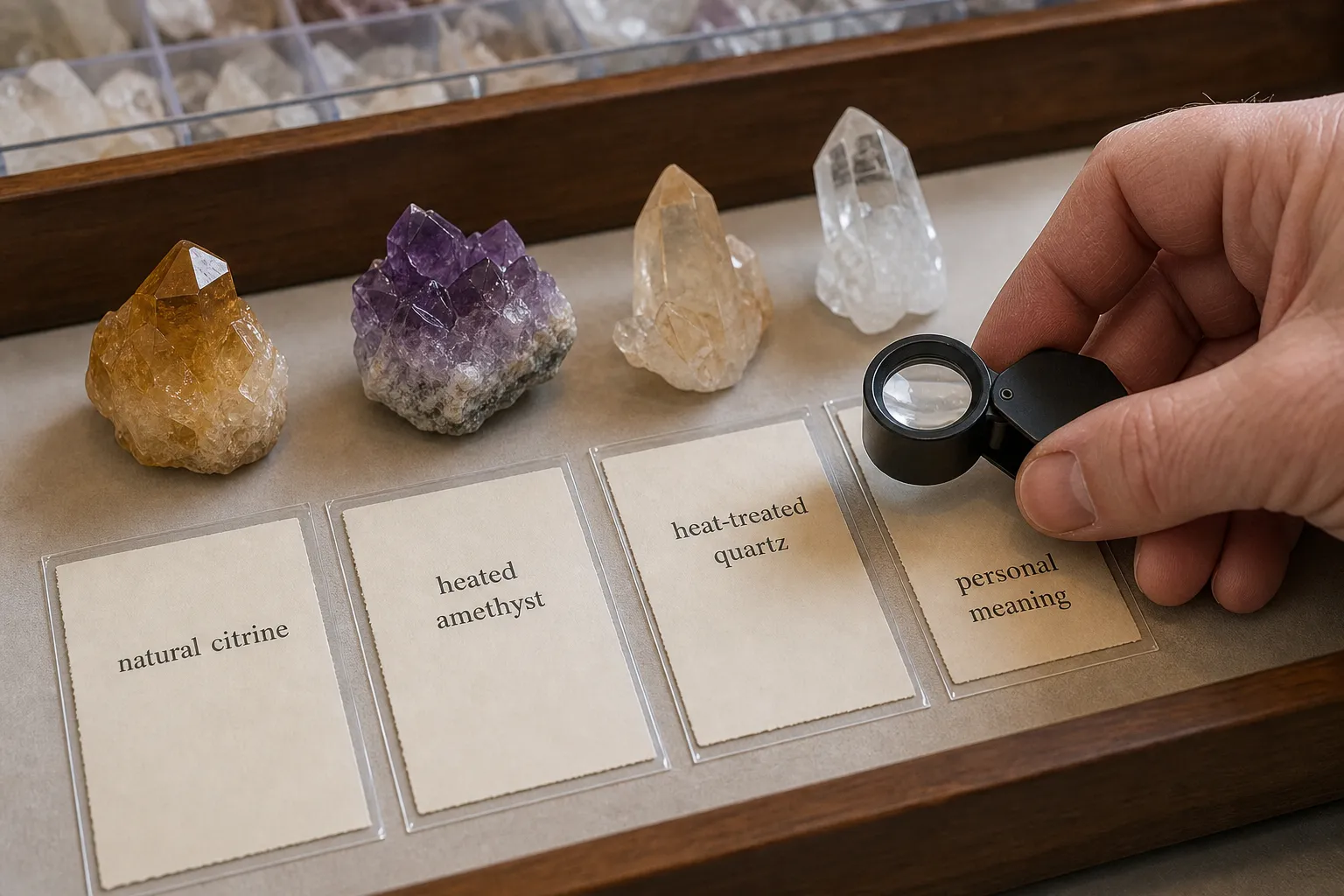
Where the Answer Changes
The answer depends on what kind of difference the reader is asking about.
Mineralogical
Thermal shock and heat treatment belong to material history, structure, appearance, and identification. A treated quartz-family stone may still be quartz. A heated amethyst sold with citrine language may need clearer disclosure. A crystal with fractures from sudden temperature stress may be less desirable for handling, setting, or display.
Market-facing
The issue is language. A seller may use appealing wording without clearly separating natural citrine from treated material. That does not prove bad intent in every case, but it does mean the buyer should ask cleaner questions: What is the identified material? Has it been heated? Is it natural citrine, heated amethyst, or another quartz variety?
Metaphysical
The answer becomes personal. Some users reserve deep-earth stones for continuity, grounding, or long-term intention tools. Some use heat-treated stones as symbols of transformation. Some do not care about treatment history at all. The available evidence does not establish one interpretation as objectively correct.
Those questions are not meant to police anyone’s practice. They keep energetic interpretation from resting on a vague label. Energy resonance can describe how a person relates to a crystal. It should not be written as if it were a gemological test result.
Common Confusion Around “Frequency” and “Damage”
The biggest misunderstanding is treating scientific-sounding words as proof of spiritual claims. “Lattice,” “frequency,” “resonance,” and “thermal shock” all sound precise, but they do not do the same work.
Quartz has mineral structure. That supports discussion of identity and broad physical context. It does not establish measurable metaphysical frequency limits. A physical lattice is not the same as a metaphysical field. A fracture is not automatically spiritual injury. A heat-treated color history is not automatically energetic loss.
The reverse is also true. Lack of mineralogical proof does not erase personal meaning. If someone feels more connected to a deep-earth crystal because of its slow formation, that experience can matter within their practice. It simply should not be described as a verified property of the stone.
Another confusion is treating “natural” as morally better. Natural formation may matter for identification, value context, and personal symbolism. It does not make every natural specimen better for every intention. A poorly disclosed or misidentified stone can still have a romantic origin story. A treated stone can still be visually appealing, personally meaningful, or useful as an intention tool for someone who accepts its history.
The cleaner question is not “Which crystal has better energy?” It is: “Which material history aligns with the way I assign meaning, and is the label clear enough for that choice?”
A Practical Way to Decide Without Overclaiming
- Start with the observable layer. In the quartz family, ask whether the piece is described as citrine, amethyst, quartz, heated amethyst, or heat-treated quartz. If the seller cannot separate those categories, keep your metaphysical interpretation separate from the label.
- Then look at condition. Thermal shock concerns belong here: visible cracks, internal fractures, sudden heat exposure, or durability worries. These observations may affect how you handle, set, or display a crystal. They do not need to become fear-based spiritual language.
- Finally, decide what the history means in your own practice. If deep-earth formation matters because you associate it with patience and continuity, own that interpretation. If heat-treated history feels acceptable because you read transformation as meaningful, that can also be coherent.
The difference is not an established higher frequency; it is whether the story, disclosure, and physical condition support the way you want to use the piece. For intention tools, honest language is enough: what the material appears to be, what is known about treatment, what remains uncertain, and what meaning the user chooses to place on it.
The Bounded Answer
Thermal shock and deep-earth formation are different material histories. Deep-earth formation can support a symbolic reading of natural continuity. Thermal shock or heat-treated history can raise physical and labeling questions, especially around quartz, citrine, and amethyst categories. Those differences matter.
But the energetic difference is not established as a measurable property by the visible evidence available here. Metaphysical Vibrational Frequencies, energy resonance, and formation-based crystal meaning belong in a personal, cultural, or belief-based lane unless stronger evidence is being discussed.
Choose deep-earth crystals if their unaltered formation story matters to your practice. Consider heat-treated or thermally stressed crystals only with clear disclosure and realistic expectations. Let gemology name the material; let your symbolic language name the meaning.