Thermodynamic Stability in Gems: Why Rust Precipitates Outlast Atomic Defects
Rust-colored material in a gem can appear to “last longer” than an atomic defect because the two features are not the same kind of thing. A rust-like iron oxide precipitate is a material feature: a tiny particle, film, stain, inclusion, or fracture-related deposit. An atomic-scale defect is a disturbance inside the crystal structure.
For readers searching around Thermodynamic stability gems, the practical answer is this: a visible precipitate may persist because it has formed as a comparatively settled material phase, while a defect-related color effect may shift when the crystal’s internal charge state, energy state, or structure changes. That does not mean the precipitate is permanent, diagnostic, natural, valuable, or more important. It only means precipitates and defects follow different rules.
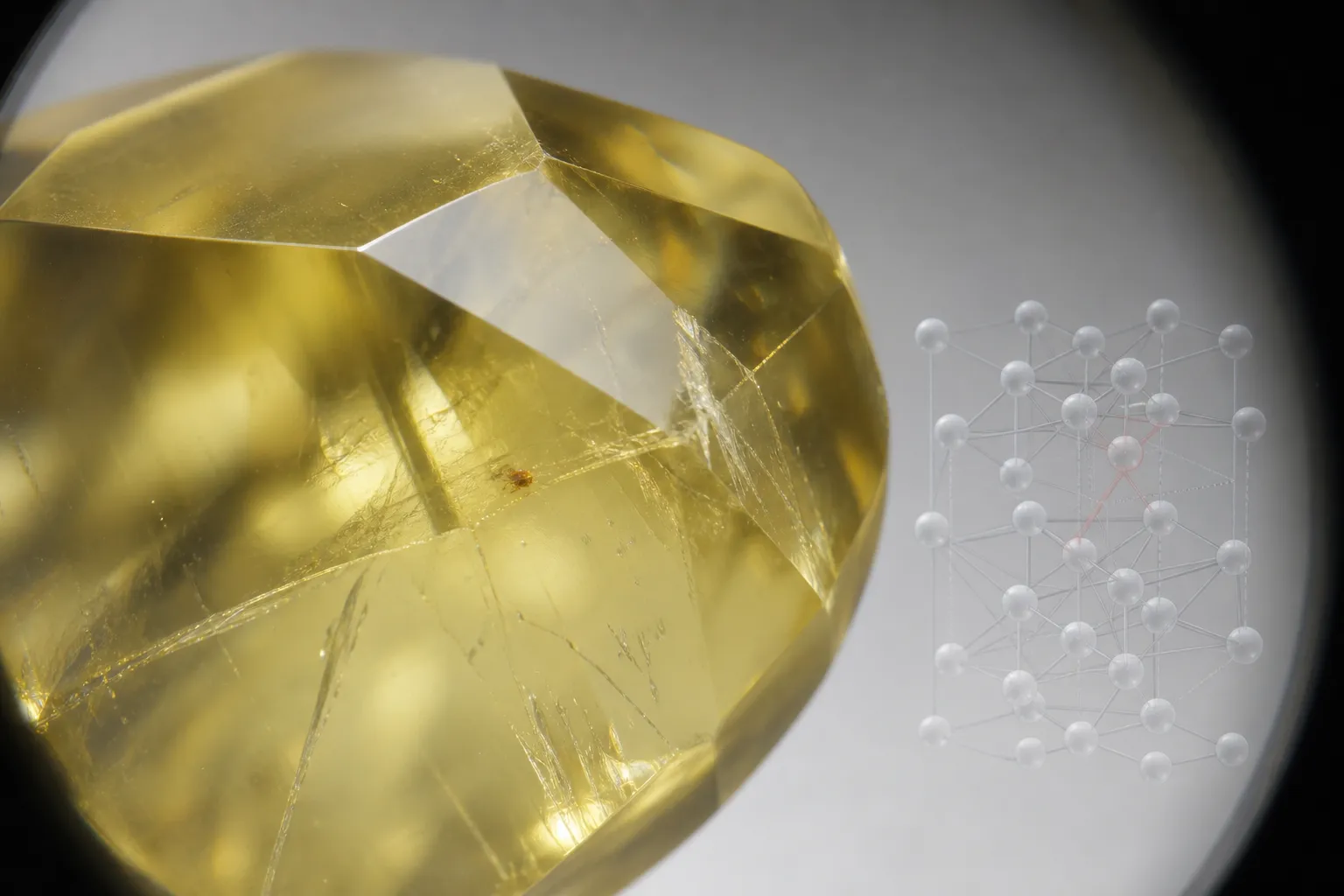
broader context
Broader citrine reference
This narrower page works best after the broader citrine reference page.
The Short Answer
A rust-like speck is usually discussed as a visible material feature. An atomic defect is not a grain or stain that can be pointed to with the naked eye. It is a local irregularity in the crystal lattice, such as a missing atom, a substituted atom, a shifted position, or an electronic imbalance.
That distinction explains the “outlasting” impression. If an iron-bearing compound has separated into a small precipitated feature, it may behave more like a tiny mineral or alteration product trapped in or on the gem. If a color effect depends on atomic-scale defects, the visible result may depend on conditions that are easier to disturb: heat, light exposure, irradiation history, charge balance, or other structural factors.
“Outlast” still needs limits. A precipitate may remain visible because change is slow, because it is protected inside the stone, because reactive fluids are absent, or because ordinary viewing does not reveal subtle alteration. Persistence in observation is not the same as certainty under all conditions.
Thermodynamic Stability Is Not “Nothing Will Ever Change”
Thermodynamic stability describes whether a state is favored under a given set of conditions. It does not tell you by itself how fast change will happen. A material can be favored but slow to form. Another state can be less favored yet remain for a long time because the path to change is blocked or very slow. That practical staying power is kinetic persistence.
This matters for precipitates versus atomic defects. A rust-like precipitate may look stable because it is already a formed material feature. It has chemical bonds of its own, occupies space, and may be trapped along fractures, growth zones, cavities, or other internal settings. If the surrounding environment does not allow it to dissolve, migrate, react, or transform quickly, it may remain visible over ordinary periods of handling and storage.
An atomic-scale defect is different. It is part of the host crystal’s internal arrangement, not a separate visible particle. Some defects can be long-lived; others may change under heat, light, irradiation history, or shifts in charge state. The careful comparison is not “precipitates are stable and defects are unstable.” It is that a formed precipitate and a lattice defect must be evaluated as different kinds of features.
Why Rust-Like Precipitates Can Seem More Persistent
When people describe rust-colored features in gems, they may mean reddish, brownish, orange, or earthy-looking material. “Rust-like” is useful as a visual description, but appearance alone is not enough to identify the substance. A reddish inclusion, stain, or film may need proper analysis before it can be confidently called an iron oxide.
Still, the general reason a precipitate may seem persistent is straightforward: it has moved from dispersed chemistry into a visible material feature. Instead of being only an atom-level irregularity inside the crystal lattice, it may exist as a small phase with its own bonding and physical presence.
None of these points proves that precipitated iron oxides in gems are permanent. They explain why a visible precipitate can appear more durable than a color center or another defect-related effect.
Atomic Defects Are Real, Even When They Are Invisible
Structural defects in gemstones can matter even when no speck, cloud, or stain is visible. A defect may involve a missing atom, an impurity atom, a displaced atom, a charge imbalance, or a more complex local arrangement. Some defects interact with light and contribute to color. When that happens, readers may also see the term color center.
A color center is not “color trapped inside a gem.” It is a structural or electronic condition that changes how the material absorbs light. That makes it easy to confuse with a colored inclusion, but the two are different. A colored inclusion is material that may be visible as a separate feature. A color center can affect body color without appearing as a particle.
This helps explain why defects may seem less persistent. If conditions alter the charge state or arrangement responsible for a color effect, the visible color may shift even though nothing flakes away. A precipitate, by contrast, may occupy a small visible zone and remain recognizable while a broader color effect changes.
Chemical Bonds and the Scale Problem
Chemical bonds appear on both sides of this discussion. The host gem is held together by bonding arrangements. A precipitated iron oxide also has chemical bonds. The question is not whether one feature has bonds and the other does not. The question is where those bonds belong and what kind of structure they support.
In the host gem, chemical bonds form the larger crystal framework. A structural defect is an irregularity in that framework. It may be small, dispersed, and invisible, even if it has a noticeable optical effect.
A precipitate suggests that some material has separated into a distinct phase or particle-like feature. It may sit inside the host, along a fracture, near an inclusion boundary, or in another local setting. Even when tiny, it exists at a different scale of observation. A visible speck and an invisible atomic condition are not competing on equal visual terms.
That scale difference changes what “lasting” means. A defect may stop producing a color effect while the host crystal remains intact. A precipitate may remain visible because it is large enough, relative to atomic defects, to be seen as a speck or stain. The precipitate has not necessarily “won” thermodynamically; it is simply easier to observe.
Common Misunderstandings
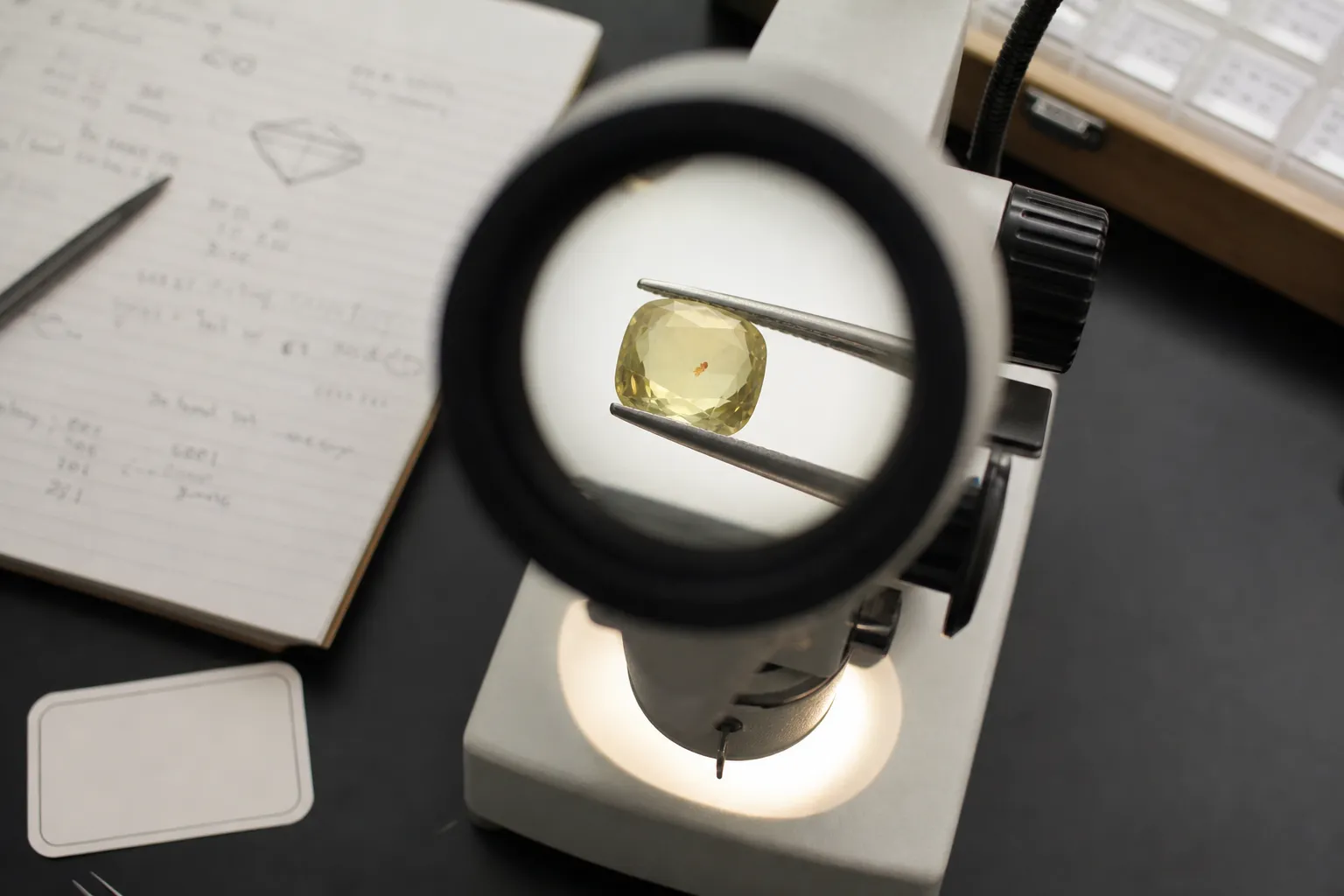
The most common mistake is giving visible features too much interpretive weight. A brown-orange speck may feel more “real” than an invisible defect because it can be seen. In gemstones, visible and important are not the same category.
A small inclusion may have little effect on body color. An invisible atomic defect may have a large effect on color. A precipitate may be stable under ordinary conditions but irrelevant to identity. A defect-related color effect may be central to appearance while leaving no visible particle behind.
Another mistake is treating “rust” as a complete diagnosis. In everyday speech, rust usually points toward reddish-brown iron oxidation. In gem discussion, “rust-like” should usually remain a visual description unless analysis supports a more specific identification.
A third misunderstanding is expecting thermodynamic stability to explain every observed change. It does not. A feature may persist because reaction rates are slow. Another may change because heat, light, or treatment history affects a defect state. Some changes are surface-related. Some are optical interpretation rather than material alteration. Without testing and context, the safe conclusion is narrow: visible precipitates and invisible defects are different evidence types.
What Can Change the Answer
The answer depends on the host gem, the feature, and the conditions. A rust-colored precipitate in one mineral setting cannot automatically be compared with a defect in another. Formation history, impurities, fractures, treatments, and environmental exposure all affect what can reasonably be inferred.
This is the useful boundary for iron oxides and gem stability: the concept can frame the question, but it cannot replace identification.
What Appearance Can and Cannot Tell You
From appearance alone, you can say that a visible feature exists. You can describe its color, position, shape, and whether it appears internal or surface-related. You can note whether it looks like a speck, film, stain, inclusion, or fracture-associated material. You can compare photographs taken under similar lighting if you are watching for visible change over time.
You cannot responsibly infer full mineral identity, formation history, treatment history, or long-term stability from color alone. A rust-like look may suggest a direction for inquiry, but it is not a substitute for analysis. Likewise, a fading or shifting color effect does not by itself prove that atomic defects disappeared.
The working summary is simple: visible precipitates in gems may appear to outlast invisible atomic defects because precipitates are material features at a larger observational scale, while defects are structural or electronic irregularities that may affect appearance without being visible. Thermodynamic stability helps explain why some phases are favored; kinetic persistence helps explain why some features remain when change is slow or restricted.
A rust-colored precipitate may be more visually persistent than a defect-related color effect. It is not automatically permanent, diagnostic, or more scientifically meaningful. In gem observation, the feature you can see is the beginning of the evidence, not the end of the answer.