Brazilian Star Citrine: The Rise of Asterism in High-End Quartz
Brazilian star citrine extraction is best read, for now, as market language rather than a confirmed mining category. The phrase is attractive because it joins three ideas that sound rare and collectible: Brazilian quartz, a star-like optical effect, and a sense of newly recovered material. But the available source set does not document a recognized rise in Brazilian star citrine, a confirmed asterism effect in natural citrine, a specific Brazilian locality, or a named extraction method.
For readers seeing Star Citrine Extraction claims, the practical answer is simple: keep the interest, but separate it from the evidence. A stone can be described as “Brazilian,” “star citrine,” or “high-end quartz” in seller language before its identity, origin, optical effect, and extraction story have been independently documented.
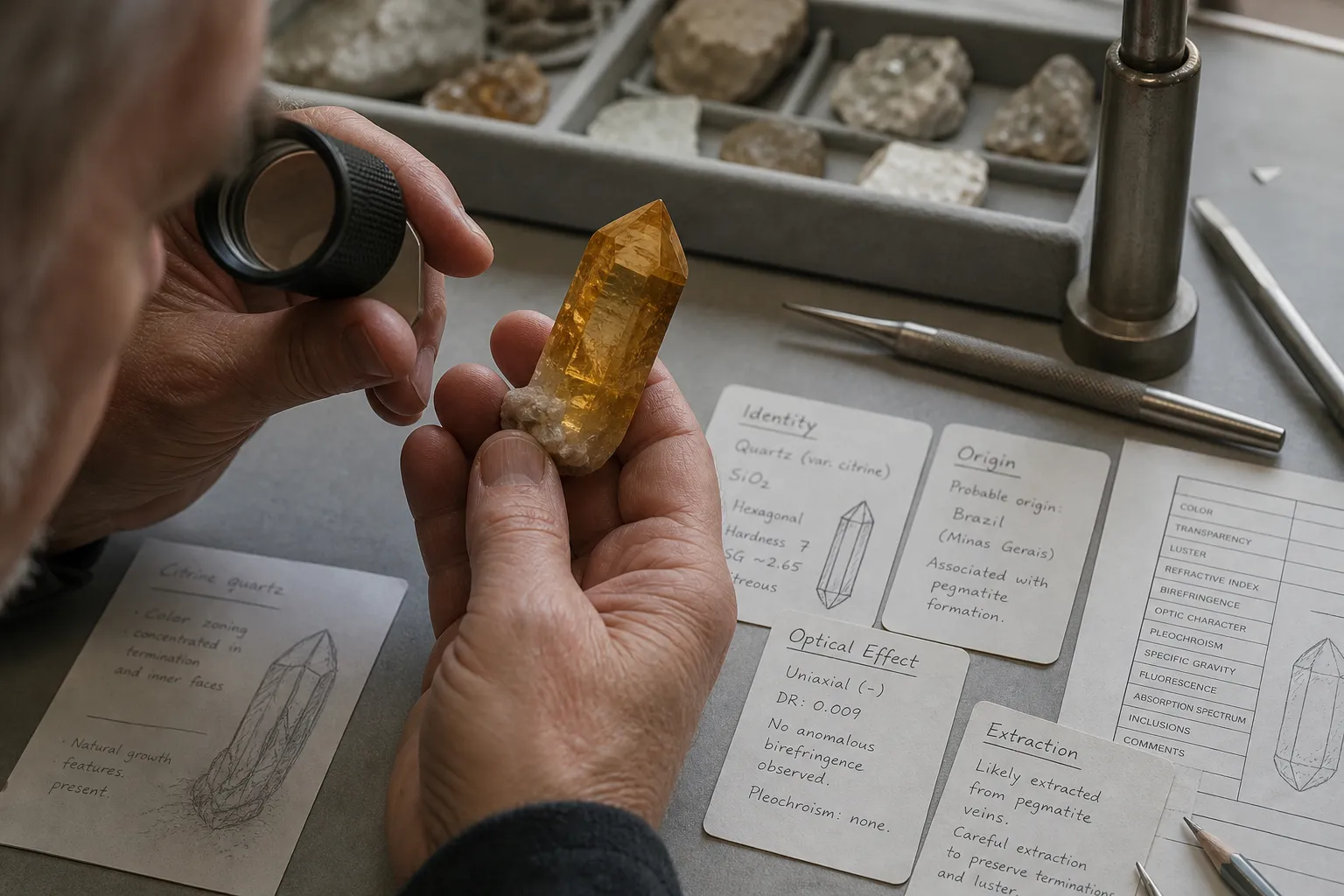
broader context
Start with the main citrine page
This narrower page works best after the broader citrine reference page.
Why the Phrase Works So Well
“Brazilian star citrine” has the shape of a luxury-gem story. It gives the reader a place, a material, a visual effect, and the suggestion of scarcity.
“Brazilian”
The label can point toward a quartz-rich source region in the reader’s mind, but a country label is not locality evidence by itself. A product title, caption, or attractive trade name cannot establish where a specimen came from. That needs traceable documentation.
“Star citrine”
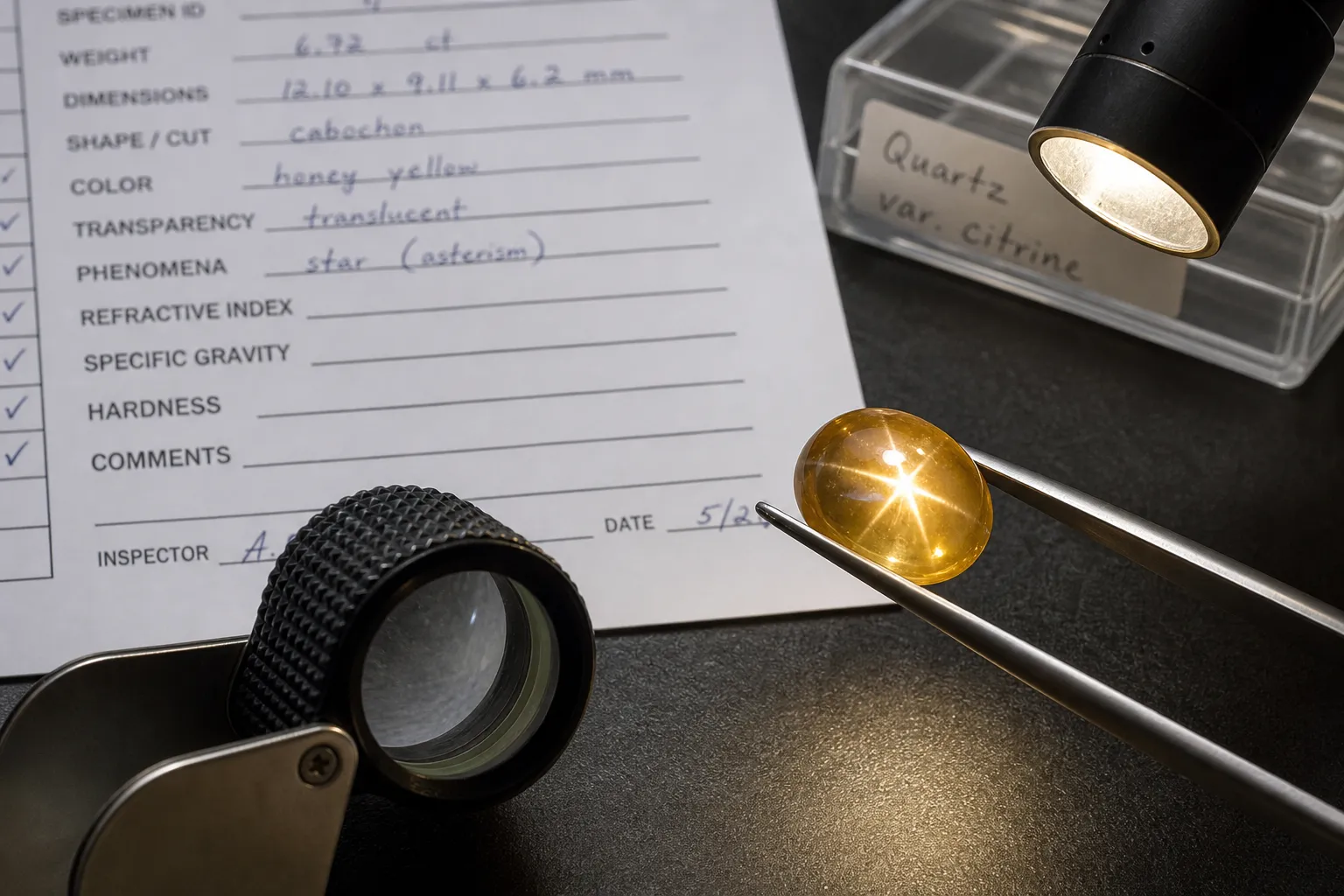
The phrase suggests asterism: a star-like optical display seen under the right light. Yet a bright line, glow, cross, or reflected pattern in a photograph may come from lighting, surface reflection, cutting style, or image presentation. The effect needs observation, not just repetition.
“Extraction”
The word makes the subject sound like a distinct mining stream: material being located, removed, sorted, and promoted as a special quartz category. The current evidence does not support that stronger reading. “Reported star citrine extraction” should be treated as a claim that still needs support.
What Would Need to Be Shown
A serious Brazilian star citrine claim has several separate parts. One piece of support does not automatically confirm the rest.
- First, identity: the stone would need to be identified as citrine rather than another quartz variety, treated quartz, or a loosely named commercial material. In high-end quartz documentation, identity comes before rarity, price, or origin language.
- Second, optical effect: the asterism effect would need gemological confirmation. The question is whether the stone itself produces a stable star-like optical effect under appropriate observation, not whether a sales image shows a striking reflection.
- Third, origin: the Brazilian origin would need support beyond a label. Useful evidence might include credible supply-chain records, official documentation, reliable mineralogical reporting, or other traceable material connecting the specimen to a locality.
- Fourth, extraction: the extraction story would need its own evidence. If a claim says Brazilian star citrine extraction is rising, it should be backed by mining records, field reporting, geological survey material, or well-documented trade evidence. Without that, “the rise” may describe attention, search curiosity, or sales language rather than increased mining output.
- Finally, value: “high-end” and value claims need independent market documentation. Asterism may make a stone more interesting to a collector, but interest is not the same as documented pricing, rarity, or trade recognition.
Asterism Is the Attraction, Not the Answer
The asterism effect is the center of the reader’s curiosity. A star-like display can make quartz feel more distinctive than ordinary transparent, smoky, or yellow material, and the word “star” naturally fits luxury storytelling. That does not make every marketed star citrine a confirmed gemological specimen.
The useful distinction is between an observed appearance and an interpreted claim. A seller may call a stone star citrine. A collector may use the phrase because the stone throws a star-like reflection under a light. A social post may repeat the term because it is memorable. None of those uses, on its own, confirms the material, the cause of the effect, or the origin.
This matters because commercial quartz language can be broad. Stones may be named by color, locality, treatment history, visual effect, or branding style, and those layers often blur. Until stronger support is available, cleaner wording would be “marketed as star citrine,” “reported as Brazilian,” or “said to show a star-like effect.”
The available material does not establish that star citrine asterism is common, newly discovered, limited to Brazilian material, or tied to a specific mining district. That does not rule out individual specimens. It only keeps the page from turning market interest into established fact.
Remote Sensing and Automated Robotics
Remote sensing and automated robotics appear around this topic in search language, but the current evidence does not connect either one to Brazilian star citrine extraction.
Those terms can sound plausible. Modern mining and geological exploration may use advanced tools, and automation appears in many industrial settings. But a general mining-technology example does not show that remote sensing is being used to locate Brazilian star citrine, or that automated robotics are part of a citrine-bearing quartz extraction workflow.
For this page, the boundary is narrow: remote sensing evidence limits have not been crossed for this specific topic, and no robotics in mining evidence has been supplied for star citrine. If future field documentation ties those tools to a named Brazilian quartz operation and relevant material, that would change the discussion. It is not established here.
A technical phrase should prompt a basic follow-up: who produced the document, what material was identified, where was it found, and how is it connected to the specific stone being discussed?
Common Misunderstandings
Country label
A country label is not an authenticity guarantee. “Brazilian” can be meaningful when documented, but it can also work as commercial shorthand.
Asterism
Asterism is not a value guarantee. A star-like effect may interest collectors, but this page has no support for a confirmed premium, recognized high-end category, or rising price trend.
Quartz wording
“Star citrine in quartz” can also be circular. Citrine is quartz by mineral family, while commercial quartz labels may include color, treatment, origin, and branding language. The available material does not confirm natural origin, treatment history, or gemological identity for any specimen.
The rise of asterism
“The rise of asterism” should be read carefully. It may describe increased attention, seller phrasing, or editorial interest. It does not, from the current source set, document increased extraction, auction recognition, or expert consensus.
A useful sequence is: identity first, optical effect second, origin third, extraction story fourth, market language last.
Evidence Checklist
Before accepting a Brazilian star citrine claim, look for support for each point:
- •Is the stone identified as citrine by a credible gemological report or qualified assessment?
- •Is the star-like effect documented through observation, not only sales photography?
- •Is the Brazilian origin supported by records beyond a product title?
- •Is the extraction claim tied to a real locality, mine, field report, or official record?
- •Are remote sensing or automated robotics mentioned with topic-specific evidence?
- •Are rarity, pricing, and high-end claims supported by independent market documentation?
If those pieces are missing, restrained wording is more accurate than confident labeling.
The Bottom Line
Brazilian star citrine is a compelling phrase, but the available evidence does not verify a documented rise of asterism in high-end quartz. It does not confirm Brazilian locality, extraction methods, remote sensing use, automated robotics, rarity, authenticity, pricing, or market momentum.
So the answer is bounded: Brazilian star citrine extraction should be treated as an unverified claim cluster until stronger sources appear. The idea may be worth watching for readers interested in unusual quartz, but the current line is clear. Asterism needs gemological confirmation, Brazilian origin needs documentation, and extraction stories need source-backed mining evidence before they move beyond attractive market language.