Using a Calcite Dichroscope: The Optical Secret to Verifying Natural Citrine
A Calcite Dichroscope can help you check whether yellow quartz shows pleochroism, but it cannot confirm natural citrine on its own. It is one clue, not a verdict. If you see two slightly different color impressions through the calcite, that may support an anisotropic reading. Treatment status, origin, and value still need broader gemological context.
broader context
Citrine verification note
This narrower page works best after the broader citrine reference page.
What a calcite dichroscope shows
A calcite dichroscope uses calcite, also called Iceland spar, to split incoming light into two rays. That makes weak color differences easier to see side by side.
The effect you are looking for is pleochroism: a change in color with viewing direction caused by directional absorption. This is a material property, not a surface effect.
That matters for citrine because citrine is quartz, and quartz is optically anisotropic. But the limit is important. Not every quartz stone shows an obvious split, and not every color difference means natural citrine. Color zoning, inclusions, cut shape, and viewing angle can all affect the result.
How to use the tool on citrine
The reading is clearest when the stone is steady and the light is strong.
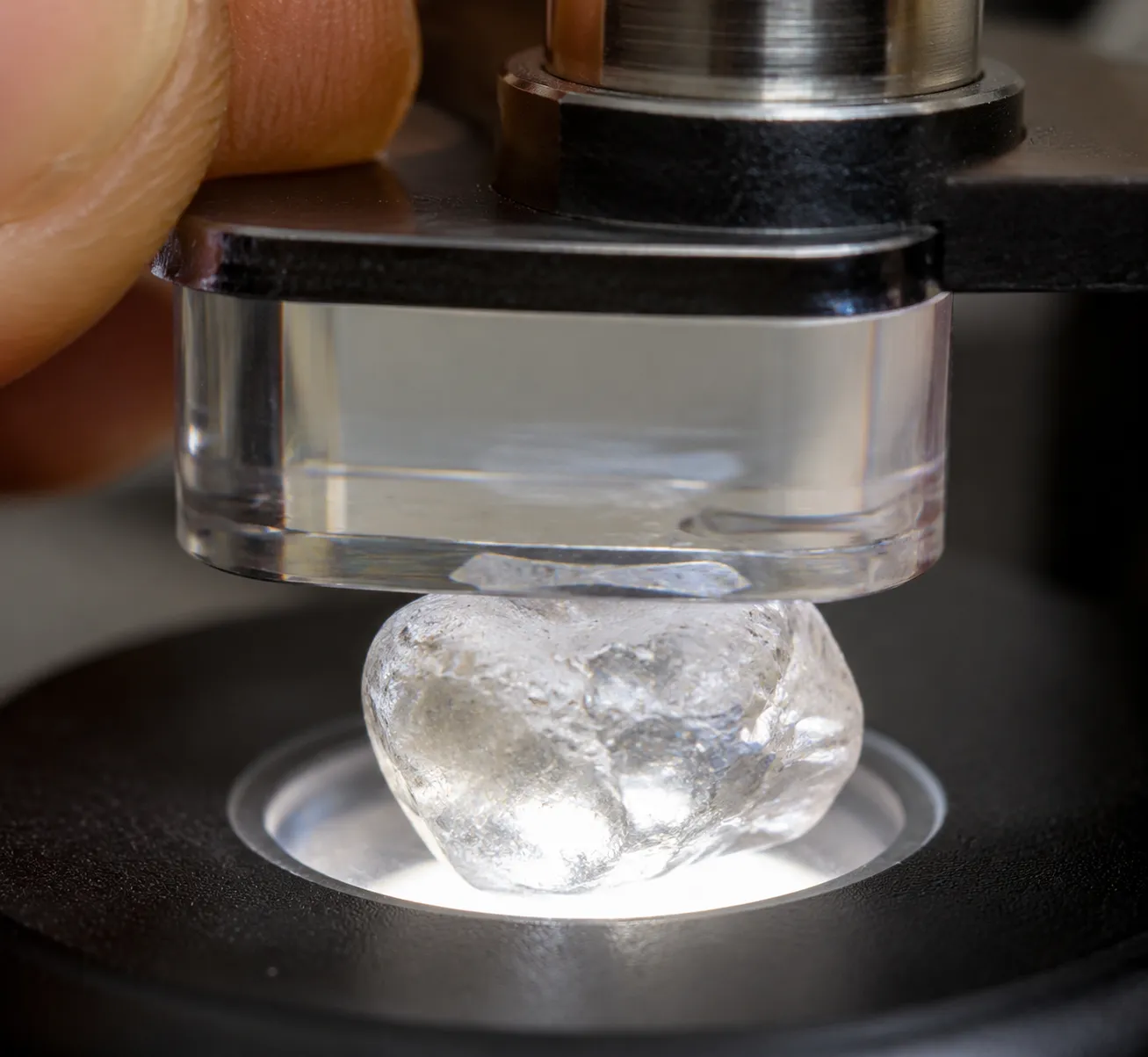
- Use strong white light behind the stone.
- Hold the stone close to the aperture, nearly touching if possible.
- Look for the image to split into two small windows.
- Compare the two sides for any color difference.
- Rotate the stone and the dichroscope through multiple angles.
- Repeat the check from more than one direction.
That last step matters. A single angle can miss weak pleochroism. Fluorescent light can also flatten or distort subtle differences, so it is not the best choice for this check.
What changes the reading
Several factors can change what you see, even with the same stone.
Cut and orientation
A faceted stone may send light through several directions at once. Rough stones can be easier to read in some orientations and harder in others. A result from one angle is not enough.
Weak color differences
Some stones show only weak pleochroism. In those cases, the split may be subtle or barely visible. No clear split does not automatically mean the stone is not citrine.
Zoning and inclusions
Uneven color can come from zoning or internal features rather than pleochroism. The dichroscope helps sort that out, but it only shows transmitted light. It does not settle every ambiguity.
Heated citrine and treatment questions
This is the main boundary. A dichroscope does not tell you whether quartz was naturally colored, heat treated, or otherwise altered. So if your real question is “natural citrine or treated yellow quartz?”, the instrument is only one part of the answer.
Common misunderstandings
A few shortcuts cause most of the confusion.
- Two colors means natural citrine: no. It suggests directional optical behavior, not natural origin.
- One color means fake: also no. Viewing direction, weak pleochroism, and stone type can all affect the reading.
- Yellow color settles it: it does not. Retail naming for yellow quartz can be loose, which adds confusion.
- The tool replaces other tests: it does not. It is an aid, not a full identification method.
FAQ
Does citrine always show pleochroism in a calcite dichroscope?
No. Some stones show a weak split, some show none that you can clearly see, and the result depends on direction and lighting.
Is a calcite dichroscope enough to identify natural citrine?
No. It can support a pleochroism check, but it cannot by itself confirm natural origin or rule out treatment.
Why use calcite instead of polarizing filters?
Calcite is colorless, so it tends to disturb the color impression less. That makes it useful for seeing small differences more cleanly.
Bottom line
A Calcite Dichroscope is useful for checking whether a citrine-like stone shows pleochroism, but it is not a final test for natural origin. Use strong white light, check several angles, and treat the result as one clue in a wider gemological reading.
Sources
Sources and further reading
Reference links are limited to sources considered suitable for public citation in this page.