Energetic Cord-Cutting: Severing Ties with Smoky Quartz
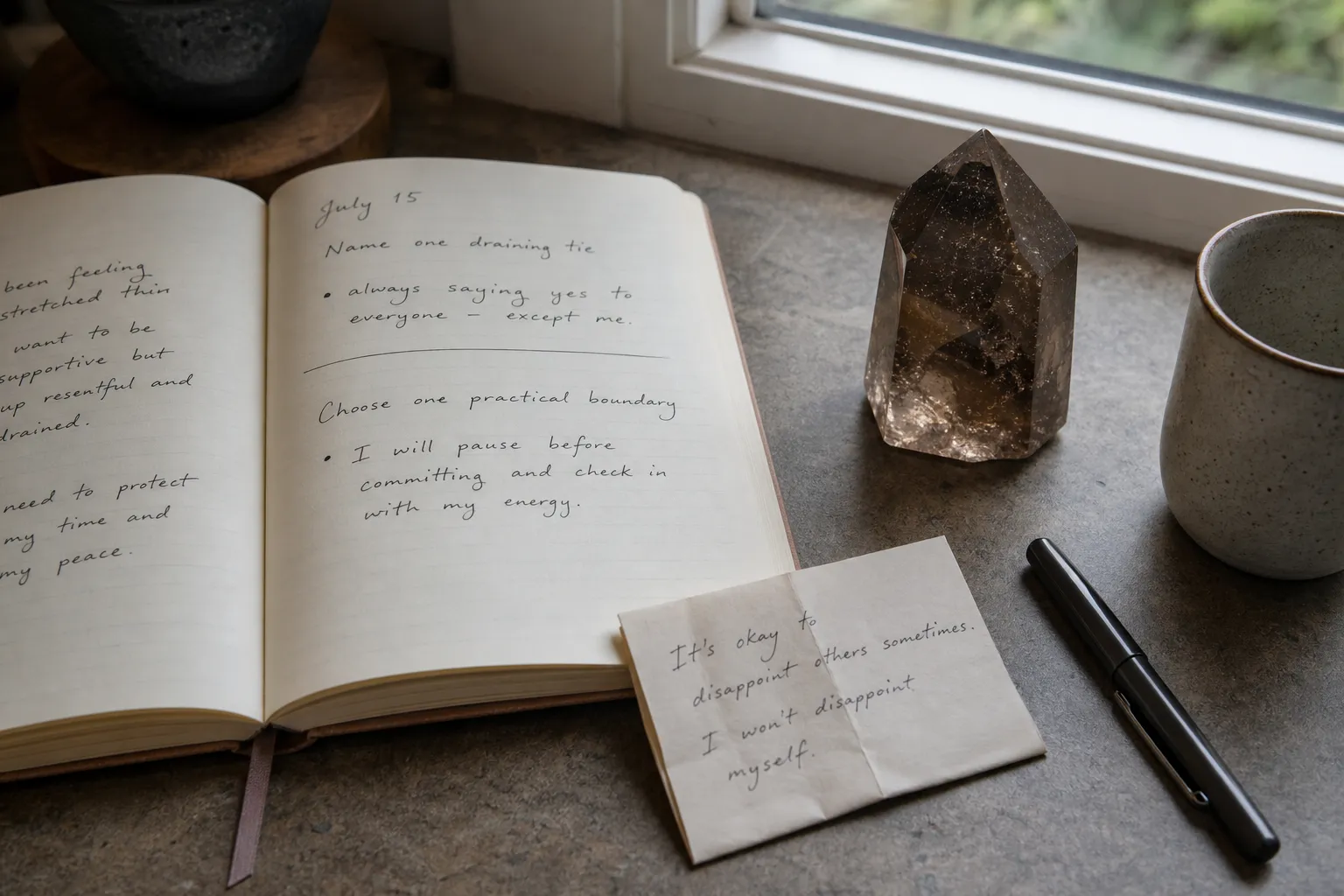
Energetic Cord-Cutting with smoky quartz works best as a symbolic practice: you hold or place the stone as a physical focus, name the tie that feels draining, choose the boundary you want to remember, and close with one grounded action. The smoky quartz does not change another person, end a relationship for you, or guarantee emotional safety. Its role is quieter and more useful: it gives your intention a shape you can return to when old patterns start pulling at your attention.
broader context
Broader citrine reference
This narrower page works best after the broader citrine reference page.
What Smoky Quartz Represents Here
In a bounded spiritual practice, smoky quartz can stand for heaviness, release, grounding, and closure. Its dark, translucent look gives many readers an easy visual language for what they are trying to put down. That is enough. The practice does not need bigger claims to be meaningful.
As a smoky quartz ritual aid, the stone may help you notice a loop you are ready to step out of: replaying conversations, waiting for approval, answering too quickly, explaining yourself after you already said no, or confusing intensity with closeness. Because the stone is touchable, it can work as a grounding anchor. You can hold it, place it beside a journal, set it near your phone, or put it away when the ritual is finished.
That distinction matters. “Cord-cutting” is often described in energetic language, but the clearest framing for this page is symbolic meaning-making. The practice can help you name a tie, choose a boundary, and remember your intention. It should not replace practical decisions, qualified support, or direct help when a situation is unsafe.
A Simple Cord-Cutting Practice With Smoky Quartz
Keep the practice short. The point is not to make the moment dramatic. The point is to create a clean pause between an old attachment pattern and the boundary you are choosing now.
You might use this sequence:
- Choose one tie to name, not your entire life story.
- Hold smoky quartz or place it where you can see it.
- Write one sentence about what the tie has been costing you.
- Write one sentence about the boundary you want to practice.
- Take a few slow breaths and notice your body, room, and choices.
- Put the stone down, close the journal, and take one small real-world step that matches the boundary.
That last step keeps the ritual from floating away into vague intention. If the tie shows up as late-night messages, the step might be turning off notifications. If it shows up as over-explaining, the step might be writing one clear response and not adding a second paragraph. If it shows up as a memory loop, the step might be closing the journal and doing something ordinary: making tea, washing your face, or stepping outside.
A short journaling prompt
“I am not using this ritual to control anyone else. I am using it to notice where my attention, access, and energy need clearer limits.”
Then complete these lines:
- “The tie I am naming is…”
- “The pattern I no longer want to feed is…”
- “The boundary I can practice in real life is…”
- “The smallest next step is…”
The smoky quartz does not do the boundary setting for you. It marks the moment when you stop treating the old pattern as automatic.
When the Answer Changes
When a symbolic container may fit
If you mean a draining attachment, recurring emotional pull, unresolved resentment, or a pattern of overgiving, a symbolic cord-cutting practice may be a reasonable self-care container. It gives the feeling a beginning, middle, and end. It may help you speak to yourself more clearly.
When ritual is not the center
If you mean an unsafe relationship, coercion, stalking, violence, threats, self-harm risk, or acute distress, a smoky quartz ritual is not the right center of action. In those situations, look for qualified professional, local emergency, or crisis support in your area. A symbolic practice may feel personally meaningful later, but it should not replace real-world help, planning, or protection.
The answer also changes if cord-cutting becomes a way to avoid a necessary decision. Some ties are mostly internal. Others require practical boundary setting: changing access, communicating limits, adjusting routines, seeking support, or documenting what is happening. A ritual can clarify your intention, but it should not become a way to delay the choices that protect your time, attention, or safety.
Intensity is another signal. If the practice helps you feel steadier, keep it simple. If it leaves you flooded, fixated, or more attached to the person or situation, stop and return to ordinary grounding. Symbolic practices work best when they create space, not when they pull you deeper into the loop.
Common Confusion About “Cutting Cords”
The most common confusion is expecting energetic cord-cutting to produce an immediate external result. That can make the ritual feel like a test: if the other person texts, if you still miss them, or if the memory returns, then the practice “failed.” A more careful interpretation is simpler. The ritual is not a remote control. It is a way to mark your own participation in a boundary.
Another confusion is thinking strong wording makes the practice stronger. You do not need dramatic declarations. Quieter language is often cleaner:
“I return my attention to myself.”
“I do not need to keep rehearsing this tie.”
“I can care about what happened without staying available to the pattern.”
“I can choose a boundary before I feel completely certain.”
These phrases keep the focus on your agency. They do not pretend that smoky quartz can remove a person from your life or rewrite your emotional history.
There is also a market-language problem around crystals. Some descriptions make stones sound as if they guarantee protection, release, or lasting psychological safety. The available material for this page does not support that kind of claim. A more accurate phrase is felt steadiness: the ritual may feel supportive because it uses a tangible object and a clear moment of reflection. That is different from a reliable outcome.
Cord-cutting can also be confused with rejection or numbness. A boundary is not always a declaration that someone is bad. Sometimes it is simply the decision that a certain form of access no longer works for you. Smoky quartz can symbolize that shift without turning the situation into a battle.

Using Smoky Quartz After the Ritual
The ritual may last only a few minutes. The more useful part often comes afterward, when the stone becomes a reminder for boundary setting in ordinary life.
You can place smoky quartz somewhere connected to the pattern:
- By your journal, if the tie shows up as rumination.
- Near your phone, if the tie shows up as compulsive checking.
- On a desk, if the tie affects your focus.
- In a drawer, if the point is closure rather than constant visibility.
Let the placement match the purpose. If seeing the stone helps you feel clear, keep it visible. If it keeps the person or situation too present, put it away. A grounding anchor should help you return to yourself, not keep the old tie on display.
You can also pair the stone with one practical sentence:
“When I see this stone, I pause before responding.”
That is stronger than a vague wish to “release toxic ties,” because it connects the symbolic object to a behavior you can notice. The practice becomes less about proving that energy has been cut and more about rehearsing a boundary until it becomes easier to choose.
The Evidence Limit
No high-quality public sources were available in the research set for this page that could responsibly support crystal-based outcomes, firsthand results, or a specific traditional system for smoky quartz cord-cutting. That does not make the reader’s language meaningless, but it does set the boundary for the answer.
The careful claim is this: smoky quartz can be used as a symbolic focus object in a personal ritual for boundary reflection, releasing attention from toxic ties, and supporting a felt sense of grounding. The stronger claim that the stone literally severs energetic cords or produces reliable emotional or relationship outcomes is outside what this page can support.
If you keep the practice within that limit, it can still be useful as a private act of meaning. Name the tie. Hold the stone. Write the boundary. Take one real-world step. Let the ritual close when it is done. The clearest cord-cutting is not the most dramatic one; it is the one that helps you stop feeding a pattern you are ready to leave.