Documentation-first market judgment
2026 Gem Investment: Why Traceable Natural Citrine Is Defying Market Trends
A vivid orange citrine sold as “natural,” “mine direct,” or “fully traceable” is not an investment case on its own. Traceable Natural Citrine is getting more serious attention in 2026 because it can reduce information risk in a category where natural citrine is uncommon, much commercial citrine is heat-treated, and seller language often runs ahead of documentation.
The premium is most defensible when records support the stone’s identity, treatment status, origin trail, custody path, and responsible sourcing claims. That does not establish future appreciation, easy resale, or market outperformance. It makes the value argument cleaner.

broader context
Citrine verification note
This narrower page works best after the broader citrine reference page.
The 2026 Premium Is About Documentation, Not Hype
Citrine’s investment-minded appeal starts with a practical problem: many buyers cannot tell what kind of yellow-orange quartz they are being shown. GIA describes citrine as transparent quartz ranging from pale yellow to brownish orange, with saturated yellow to reddish orange stones with little brown especially prized. GIA also notes that natural citrine is rare and that most citrine on the market is produced through heat treatment.
That distinction matters. A listing may use “citrine” for natural citrine, untreated natural citrine, heat-treated citrine, heat-treated amethyst sold as citrine, or synthetic material. Those are not the same value conversation. A premium request should begin with identity and treatment language, not with color photography, a romantic mine story, or a QR code.
Traceability only helps after the base description is credible. A chain-of-custody record for a misdescribed stone is still weak evidence. A blockchain entry that repeats an unchecked treatment claim does not become gemological verification. A “mine direct” story may be interesting, but without matching records it is not the same as documented provenance.
The better 2026 case is narrow: in a market crowded with treated material and broad retail claims, a well-documented natural citrine may be easier to understand, easier to defend, and easier to discuss with a future buyer or appraiser.
What Must Be Documented Before Premium Pricing Makes Sense
A traceable natural citrine premium should rest on several separate layers. If one layer is missing, the price may still be possible, but the buyer should know exactly what is being paid for.
Natural citrine documentation
For higher-value stones, a gemological identification report may help because it gives an independent description of the material. GIA notes that citrine identification reports are available, though they are not commonly requested for many stones because report costs can be high relative to lower-priced citrine. That cost mismatch is part of the market reality. It makes written seller disclosure, invoices, prior reports, and custody records more important when a seller asks for a premium.
Treatment disclosure
If a seller uses phrases such as “natural,” “untreated,” or “no heat,” those words should appear clearly and consistently across the listing, invoice, report, and provenance material. “Natural citrine” and “untreated natural citrine” should not be used casually if treatment status has not been checked or disclosed.
Heat treatment is not automatically a reason to reject a stone. The issue is whether the buyer is told what the material is and how it has been represented. Natural vs treated citrine is a disclosure question before it is a pricing question.
Origin or provenance
Citrine provenance records may include a mine, region, supplier, cutting location, custody transfers, dates, and invoices. Origin language needs care because a country or mine claim can be difficult to support after material has moved through the trade. “Brazilian natural citrine” is weaker than a consistent document set showing where the material entered the chain and how it moved.
Responsible sourcing
Responsible sourcing for citrine should include accurate gemstone description, custody clarity, and due diligence around labor and environmental claims. Responsible-jewelry frameworks generally treat sourcing as a process, not a slogan. Ethical mining language is strongest when it names what was checked, who checked it, and what limits remain.
Where Blockchain Helps, and Where It Does Not
Blockchain traceability for gemstones can be useful when it preserves records across custody events. It can make later alteration harder after data is entered, and it can help connect a stone to documents, images, ownership transfers, or processing steps. That infrastructure can support a premium when the underlying records are strong.
Its limits are just as important. A digital ledger cannot confirm that the first entry was accurate. It cannot identify heat-treated amethyst by itself. It cannot verify a mine claim, labor conditions, or a carbon footprint simply because those words appear in the record. It records claims and custody events; it does not automatically validate every claim inside them.
For a citrine buyer, the better question is not “Is there blockchain traceability?” It is: what exactly does the record connect?
A useful record connects the physical stone to a gemological description, treatment disclosure, photographs or identifying details, supplier documents, transfer records, and responsible-sourcing evidence. A weak record repeats marketing phrases such as “ethical,” “mine direct,” “full traceability,” or “natural” without showing how those claims were checked.
Trade infrastructure for colored gemstone traceability is developing, and that background matters. It does not establish citrine-specific demand, buyer willingness to pay more, or resale liquidity. Platform features are tools. The stone still needs accurate description.
Ethical Mining and Carbon Claims Need Their Own Proof
Ethical mining language often appears beside traceable citrine, but the two ideas are not identical. Traceability describes how a stone’s path is recorded. Ethical mining describes conditions, impacts, and due diligence around extraction and trade. A stone can be traceable without strong ethical evidence, and a sourcing claim can be incomplete if the gem itself is not accurately described.
Colored gemstone supply chains are often fragmented, especially where artisanal and small-scale mining is involved. Due diligence has to account for local economic context, custody gaps, cutting and trading stages, and the limits of what can be checked after material leaves the mine. A simple “ethical” label is not enough for a premium argument.
Carbon footprint claims need an even tighter standard. A serious citrine carbon footprint verification claim should define the measurement scope, method, assumptions, transport stages, cutting or processing inputs, and verification process. The available evidence does not establish a citrine-specific low-carbon advantage for traceable natural citrine. If a listing says “low carbon” or “carbon neutral,” the buyer should ask what was measured and by whom.
This is where premium pricing often gets blurry. A seller may combine natural identity, ethical mining, mine-direct sourcing, blockchain traceability, and carbon language into one elevated story. Those claims should be separated. Each one needs its own support.
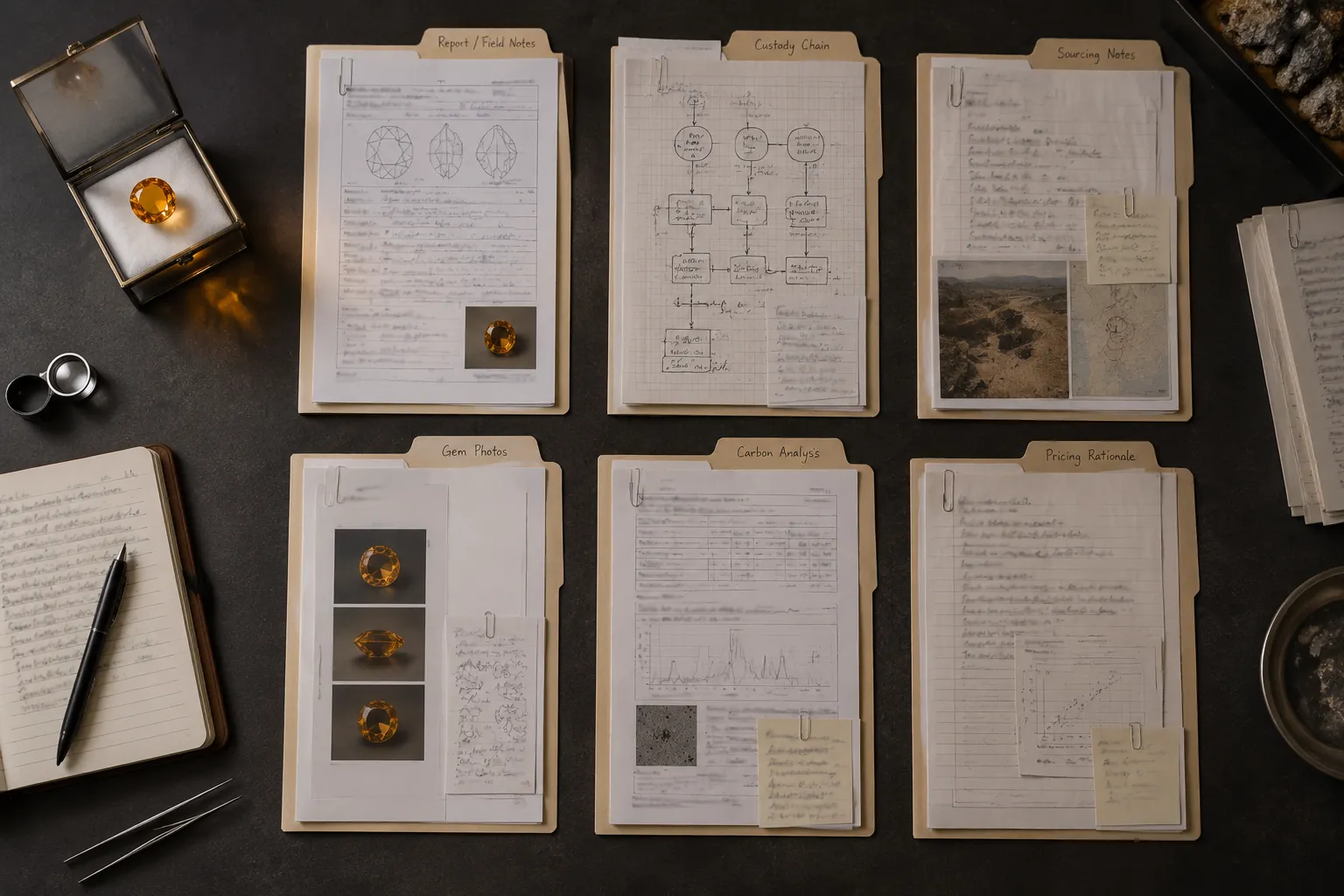
A Practical Test for the 2026 Buyer
A traceable natural citrine premium is more defensible when the answers are specific and written.
What is the material?
Stronger answer: Natural citrine described consistently in documents.
Weaker answer: “Real citrine” with no further detail.
Is treatment disclosed?
Stronger answer: Untreated, heated, or otherwise disclosed in writing.
Weaker answer: “Natural color” without support.
Is origin supported?
Stronger answer: Records connect the stone to a source or custody path.
Weaker answer: Country or mine name used only in marketing copy.
Is traceability auditable?
Stronger answer: Custody records link the physical stone to documents.
Weaker answer: A generic platform badge or QR code.
Are ethical claims checked?
Stronger answer: Due diligence process, standards, or third-party records are named.
Weaker answer: Broad “ethical mining” language.
Are carbon claims measured?
Stronger answer: Scope and method are stated.
Weaker answer: “Low carbon” as a standalone phrase.
Is the premium explained?
Stronger answer: Price is tied to identity, color, size, clarity, treatment, and documentation.
Weaker answer: Price is justified mainly by rarity or trend language.
This test does not tell a buyer what to pay. It tells the buyer what kind of premium is being requested. A color premium is different from a natural-origin premium. A provenance premium is different from an ethical-sourcing premium. A documentation premium is different from an investment claim.
GIA’s color guidance also matters here. Saturated yellow to reddish orange citrine with little brown may be more prized, and much faceted citrine is eye-clean. A traceable stone with weak color, poor cutting, or unclear treatment status should not be treated as automatically superior to a better-described stone simply because the listing sounds more responsible.
What “Defying Market Trends” Can and Cannot Mean
For traceable natural citrine, “defying market trends” can reasonably mean that a better-documented category may stand apart from loosely described, mass-market citrine. It may appeal to buyers who want a documented object rather than only an attractive yellow quartz gem. It may also give future resale conversations a cleaner starting point because identity, treatment, and provenance are easier to explain.
It should not be read as evidence of broad 2026 price growth. The available source set does not establish independent support for citrine market outperformance, quality-adjusted price premiums, or reliable resale liquidity. Commercial price charts and seller claims depend too heavily on inventory, size, color, treatment language, and retail positioning to carry that conclusion.
A careful buyer can still see why the category is gaining attention. Natural citrine is rare, most market citrine is heat-treated, and provenance language is becoming more visible across colored gemstones. Those facts make documentation more valuable. They do not turn citrine into a predictable financial instrument.
Short Answers Before You Pay a Premium
Is traceable natural citrine automatically investment-grade?
No. Traceability may improve documentation quality, but value still depends on identity, treatment disclosure, color, cutting, size, clarity, provenance, and buyer demand.
Does blockchain prove a citrine is natural or untreated?
No. Blockchain can preserve records after entry, but it does not perform gemological identification. The record is only as useful as the evidence attached to it.
Is heat-treated citrine fake?
Not by default. The better distinction is disclosed treated material versus documented untreated natural citrine. The problem is unclear or misleading disclosure.
Can ethical mining or carbon language justify a higher price?
Only when the claim is specific, documented, and limited. Ethical sourcing and carbon footprint claims need their own evidence; they should not be bundled into the word “traceable.”
Traceable Natural Citrine may deserve a 2026 premium when that premium is paid for documented identity, transparent treatment disclosure, credible provenance, and well-supported sourcing claims. If the price rests mainly on “ethical,” “blockchain,” “mine direct,” or “investment” wording without the records behind it, the trend is carrying more weight than the stone’s evidence.