Direct answer
Does Altered Amethyst Carry the Same Resonance as Untreated Citrine?
A heat-treated amethyst sold as citrine should not be assumed to carry the same resonance as untreated citrine. The cleaner answer is narrower: Heat-Treated Citrine Energy is a belief-based interpretation, not a verified mineral fact or measurable frequency claim.
Some people choose treated material because its color, label, and personal use feel “citrine-like” to them. Others reserve untreated citrine resonance for material they understand as natural citrine without a treatment history. Both positions can exist inside symbolic practice, but they are not evidence of energetic equivalence.
The practical boundary is simple. Material history and metaphysical meaning are different lanes. A phrase such as “heat-treated citrine,” “baked amethyst,” or “natural citrine” may shape expectation, but it does not by itself prove origin, treatment status, crystal lattice behavior, or spiritual effect. If resonance matters to you, disclosure matters too.
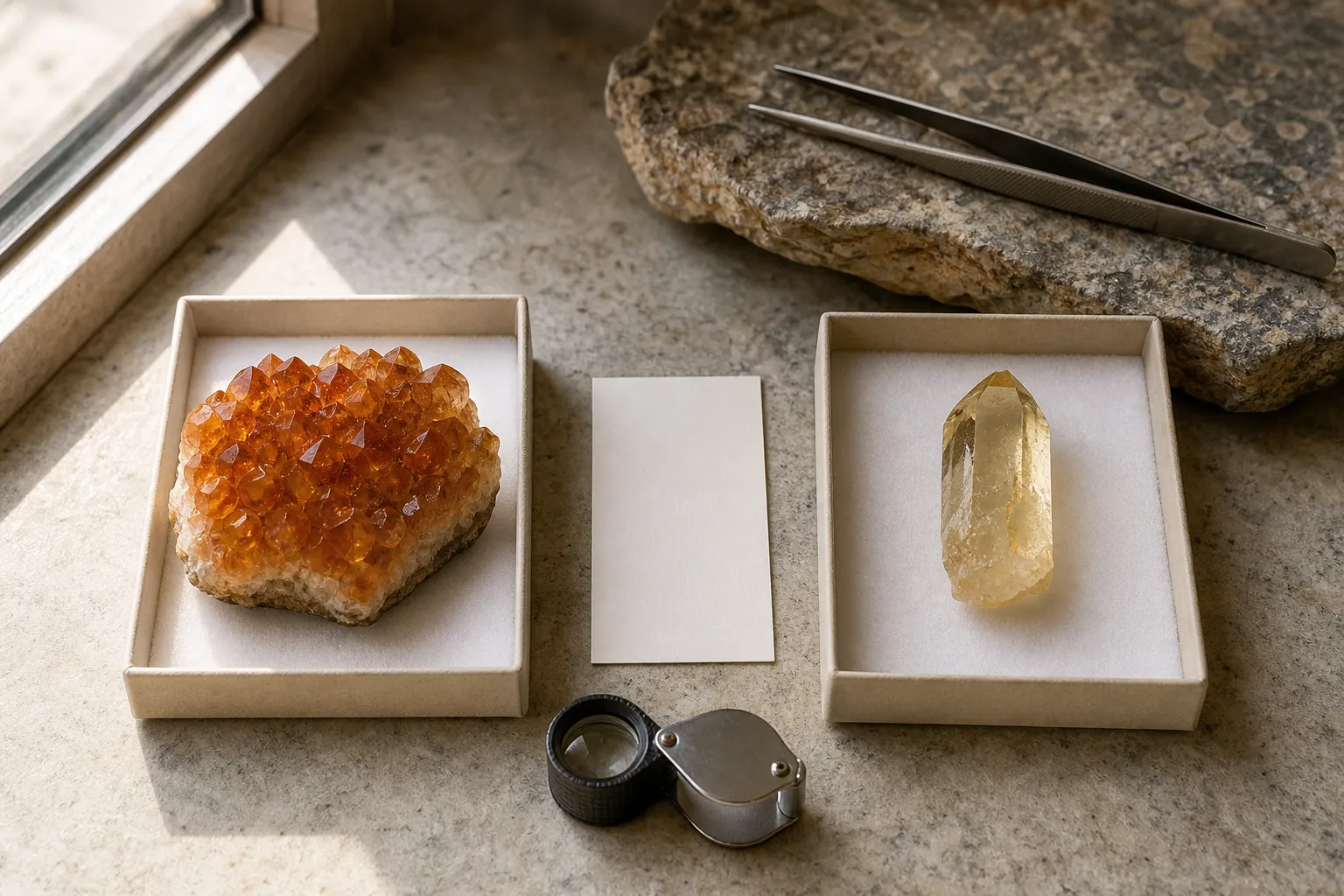
broader context
Citrine verification note
This narrower page works best after the broader citrine reference page.
Material History Versus Symbolic Use
The strongest distinction is not that one stone has “real energy” and the other does not. That would be too certain. The better distinction is that untreated citrine and altered amethyst start from different interpretive positions.
Untreated citrine is usually valued in this question because the buyer or practitioner wants the stone’s identity to align with the citrine name without a treatment story attached. In that frame, the material, color, label, and symbolism feel continuous. For someone focused on untreated citrine resonance, that continuity may be part of the appeal.
Heat-treated amethyst as citrine asks for a more layered reading. The material is being presented through treatment history and market language. A person may still use it symbolically as citrine, especially if color and intention matter more than origin. That is a personal or tradition-based choice; the available page evidence cannot confirm it as equivalent.
This is where citrine energetic claims often stretch too far. Phrases such as “citrine energy,” “solar resonance,” or “abundance frequency” may be familiar in crystal-spirituality settings, but they belong to symbolic language. They are not the same kind of statement as a verifiable disclosure about whether a specimen is untreated, treated, synthetic, or uncertain.
What Changes the Answer?
The answer depends on what you mean by “same.”
Gemological verification
Resonance is not the test. You would look for clearer seller disclosure, careful wording, and appropriate identification where needed. Without that, spiritual vocabulary should not blur treatment history or material identity.
Personal symbolic practice
Altered amethyst may carry the meaning you assign to it. A treated yellow-orange stone sold in the citrine category may work for an altar, pocket stone, meditation object, or decorative intention. That describes a personal relationship with the object, not a verified frequency.
Untreated-source purity
Heat-treated amethyst will usually not satisfy the same expectation. In that approach, origin and minimal alteration are part of the meaning. The buyer is not only choosing a color; they are choosing a story of material history.
Market literacy
The most useful question is not metaphysical at all: what is the seller actually disclosing? “Citrine” alone is less useful than language that separates natural citrine, treated material, synthetic material, and uncertainty.
Why “Frequency” Language Needs Care
“Frequency” is easy to overuse in this topic. In everyday crystal practice, it may work as a metaphor for mood, intention, symbolism, or perceived fit. In an evidence setting, it can sound like a measurable physical claim. Those uses should not be mixed.
For this page, crystal frequency claims are best treated as interpretive metaphysical properties. They belong to belief, culture, ritual, preference, and personal language. They should not be presented as a confirmed effect, a measurable spiritual output, or a result that applies to everyone.
The same caution applies to “crystal lattice.” Without citation-ready mineralogical support for this page, it would be overreaching to claim that heat treatment changes or preserves a lattice in a way that proves a spiritual result. The narrower boundary is stronger: treatment history can matter to how people interpret a stone, but no supplied evidence establishes that altered amethyst and untreated citrine share the same spiritual frequency.
That restraint does not empty the stone of meaning. A stone can be meaningful without its meaning being measurable. A buyer can prefer untreated citrine without proving treated material is spiritually lesser. A practitioner can use heat-treated material without turning that choice into a verified energetic claim.
Common Confusion Around Heat-Treated Citrine Energy
The confusion often starts when one phrase is asked to do too much. “Heat-treated citrine” can sound like an identity statement, a value statement, and a metaphysical statement at once. It is not.
For a shopper, it may mean, “This is sold in the citrine category, but it has a treatment history.” For a symbolic practitioner, it may mean, “I am using this stone in the citrine role.” For someone focused on natural-vs-treated discernment, it may mean, “This is not the same thing I am trying to buy.” Those are different readings.
Color alone also does not settle resonance. A yellow or golden appearance may be enough for personal symbolism, especially when visual association matters. But color should not be treated as proof of untreated origin or identical metaphysical properties.
Seller language adds another layer. Listings may use warm, confident descriptions to make an object feel appealing. That language can show how the market talks, but it should not carry the factual weight. If a listing describes a particular energy, the careful reader still separates that from treatment disclosure and source history.
The cleanest wording is modest: “This is treated material being used symbolically as citrine,” or “I prefer untreated citrine because treatment history affects how I interpret the stone.” Both sentences leave room for meaning without pretending the evidence has settled the question.
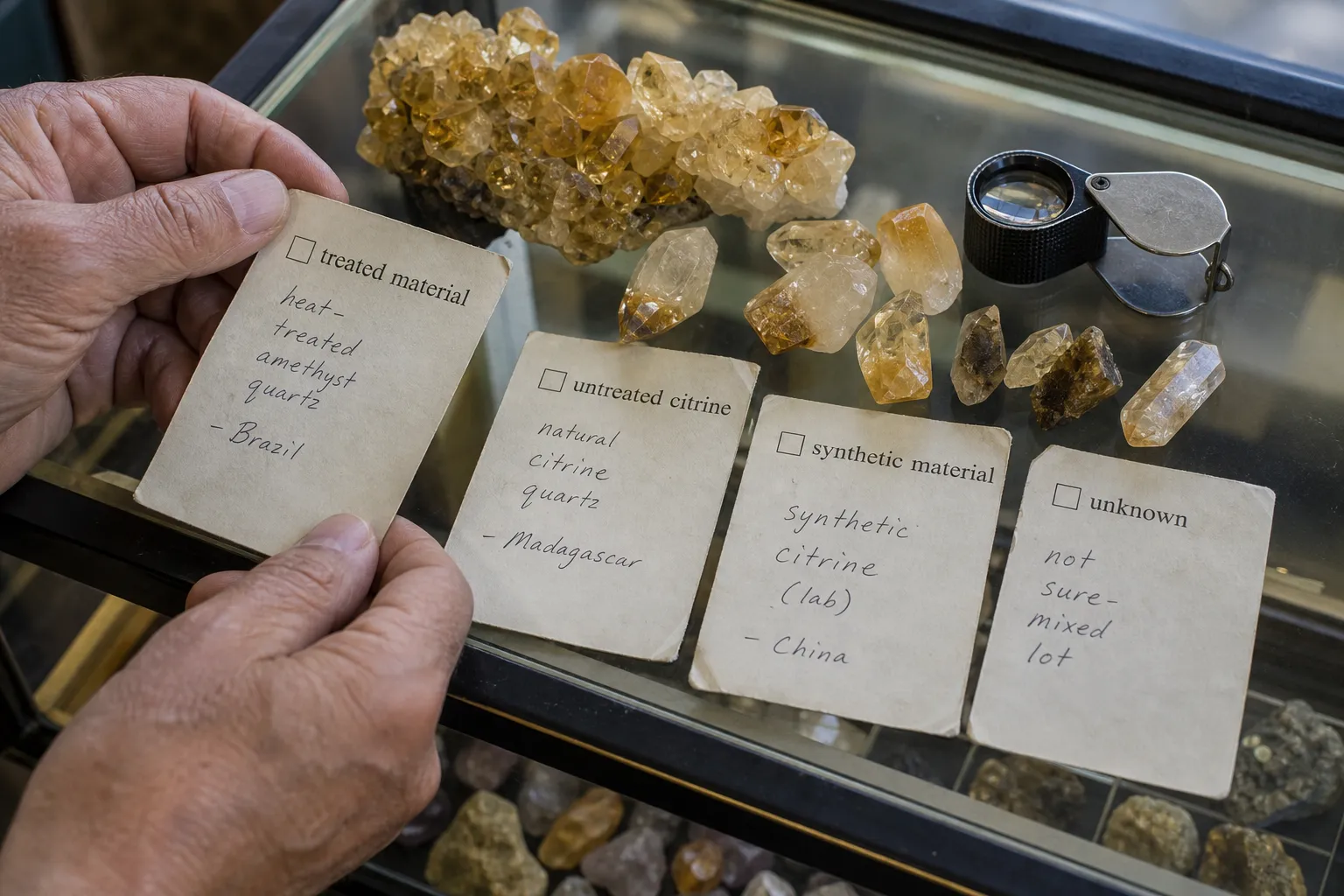
A Practical Way to Decide
If you are choosing between altered amethyst and untreated citrine, start with the role the stone needs to play.
Choose untreated citrine if your practice or purchase decision depends on origin, minimal alteration, and a closer match between label and material history. In that case, resonance is tied to disclosure and trust. You are not only buying a look; you are choosing a meaning that depends on the stone not being presented through treatment transformation.
Choose heat-treated material if your practice is comfortable with symbolic adaptation. Some readers care more about color, accessibility, intention, or the role the stone plays in a personal setting. That can be valid as personal meaning, as long as the treatment history is not hidden or rewritten.
Pause if a seller moves too quickly from energy language to certainty. A description that leans heavily on metaphysical properties but gives little clarity about treatment, source, or material identity should be read cautiously. Symbolic language is not the problem. Letting symbolic language replace material disclosure is the problem.
Short checklist
- Do I need untreated citrine, or do I only need a citrine-colored stone for symbolic use?
- Has the seller clearly separated treated material from untreated material?
- Am I using “frequency” as a personal metaphor or as if it were a verified measurement?
- Would I still want this piece if it were described plainly as heat-treated amethyst sold as citrine?
- Is my interpretation based on my own practice, or on a seller’s energetic claim?
If those answers feel uncomfortable, untreated citrine may be the better fit. If treatment does not conflict with your symbolism, treated material may still serve your personal purpose.
Where This Page Draws the Line
This article can answer the reader question, but it cannot prove an energetic hierarchy. The supplied research material does not provide citation-ready sources for mineral color mechanisms, heat-treatment behavior, crystal lattice details, practitioner consensus, or measured metaphysical effects. Because of that, the answer stays deliberately bounded.
What the page can support is a reasoning boundary: altered amethyst should not be assumed to carry the same resonance as untreated citrine unless your own belief system treats symbolic use, color association, or intention as enough. What the page cannot support is a claim that either stone has a verified spiritual frequency, or that treatment creates a measurable energetic equivalence or loss.
For citrine authenticity and market literacy, the next useful move is to ask for cleaner language. “Untreated citrine,” “treated material sold as citrine,” and “personal symbolic use” are three different categories. Keeping them separate lets you honor the meaning you bring to the stone without letting retail language decide the facts.
Short Questions That Still Matter
Is heat-treated amethyst wrong to use as citrine?
Not necessarily. It depends on your standard. If your practice allows symbolic substitution, color-based association, or intention-led use, you may choose to use it as citrine. If your meaning depends on untreated origin, it will not meet the same personal threshold.
Does untreated citrine have a verified higher frequency?
This page cannot support that claim. “Higher frequency” belongs here as spiritual or symbolic vocabulary, not as a verified measurement of metaphysical effect.
What should a seller disclose?
At minimum, the language should not blur treated and untreated material. A clear description should help the buyer understand whether the piece is being sold as untreated citrine, treated material, synthetic material, or uncertain. Energetic language should not replace that distinction.
The shortest answer remains: altered amethyst can carry citrine-like meaning for someone who accepts that interpretive frame, but it should not be treated as automatically equivalent to untreated citrine. Material history belongs on one side; belief-based resonance belongs on the other.