The Fading Myth Debunked: Why Most Market Citrine Will Never Lose Its Color
A citrine kept in a jewelry box, worn in ordinary rotation, or displayed away from harsh direct light is not automatically heading toward visible color loss. That is the useful answer behind the Citrine fading myth: “can some color change under some conditions?” is not the same as “will my stone fade soon.”
The careful version is narrower. Normal ownership is not prolonged light stress, and seller wording is not gemological proof. Without stronger public source coverage for citrine UV behavior, iron-related color mechanisms, and treatment history, this page should not promise that every citrine color is permanent. But for most owners, the fear is larger than the evidence available here supports.
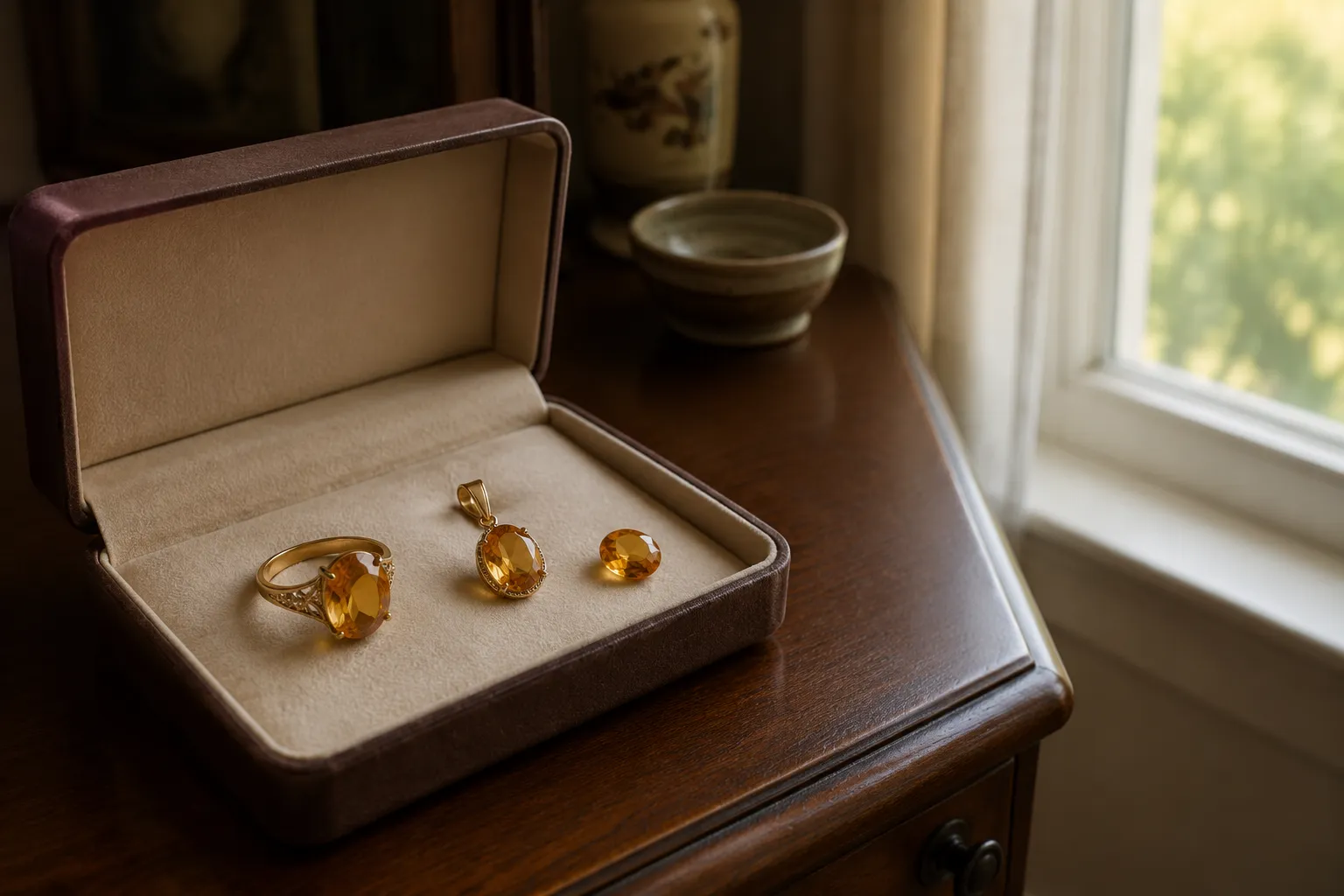
broader context
Start with the main citrine page
This narrower page works best after the broader citrine reference page.
The Better Question Is Not “Does Citrine Fade?” but “Under What Conditions?”
“Does citrine fade?” sounds simple, but it folds several issues into one worry: material identity, treatment history, type of light exposure, length of exposure, and whether the owner is seeing true color loss or only a change in viewing conditions.
A stone can look warmer under yellow indoor light, paler near a window, deeper against dark fabric, or more brownish under cool white lighting. That is not automatically market citrine color loss. It may be ordinary visual comparison, especially when the “before” image is a sales photo or a memory.
The more useful question is this: has the citrine spent extended time under unusually strong light or UV exposure, and is there a consistent comparison showing a real shift in body color?
Most owners are not describing that situation. Rings, pendants, loose stones, and shelf pieces usually move through mixed conditions rather than sitting permanently in intense direct light.
That distinction matters because the fading myth treats all citrine as the same material, all yellow-orange color as equally vulnerable, and all light as equally damaging. The available page evidence does not support that broad certainty. It supports a more practical conclusion: routine ownership should not be confused with a controlled light-stress scenario.
Why Market Citrine Creates So Much Color Anxiety
Citrine is both a gem name and a marketplace word. Some stones are sold as natural citrine, some as heat-treated amethyst citrine, and some listings use loose commercial language that does not clearly explain origin or treatment.
That is where anxiety grows. Phrases such as “natural color,” “permanent color,” or “sun-charged” may sound reassuring, but they do not prove color stability. A cleaner buying question is: what treatment history does the seller disclose, and is that disclosure specific enough to help you understand the stone?
Heat-treated amethyst is especially easy to misunderstand. Some yellow-to-orange quartz material may be sold as citrine even when treatment history matters for value context and seller disclosure. That does not mean the stone is about to lose its color. It means the buyer should separate three questions:
- Is the stone quartz being sold as citrine?
- Has heating or another treatment been clearly disclosed?
- Is there actual evidence of fading, or only a general fear?
Those questions should not be collapsed into one dramatic claim. A treated stone can still be attractive. An undisclosed treatment can still be a disclosure problem. A disclosure problem is not the same as a fading prediction.
This is also why “market citrine” is too broad for a single color-stability rule. It can include different colors, sources, treatments, and sales contexts. The practical answer is therefore restrained: most owners do not need to assume ordinary use will erase the color, but buyers should still ask for treatment clarity when authenticity or value matters.
What Light Exposure Can and Cannot Tell You
Light sits at the center of many citrine fading claims, especially claims about sunlight and UV light. The problem is that “sunlight” is not a precise condition. A pendant worn outside for an afternoon, a ring kept near a bright window, and a display stone left for months in direct sun are not equivalent.
For ordinary jewelry care, the conservative habit is simple: do not store colored stones where strong direct sunlight hits them for long periods. That is not an alarm. It is a cautious care practice that avoids turning an uncertain mechanism question into a home experiment.
What this page cannot responsibly do is name a UV threshold, a number of hours, or a specific fading timeline.
The supplied reference set does not include vetted public sources for citrine UV exposure, quartz color mechanisms, or iron impurities. Those topics may matter in gemology and mineralogy, but this page should not pretend to settle them without stronger references.
So the boundary is practical: brief, ordinary light exposure is not the same as prolonged high-intensity exposure. If you want to be careful, store citrine away from strong direct sun when you are not wearing it. If your stone has not visibly changed under normal use, that observation is more relevant to your situation than a broad online claim that all citrine fades.
Common Confusion: Fading, Lighting, Dirt, and Expectation
A citrine may seem to change color for reasons that are not actual fading. Before assuming permanent color loss, check the simpler possibilities.
Compare Like With Like
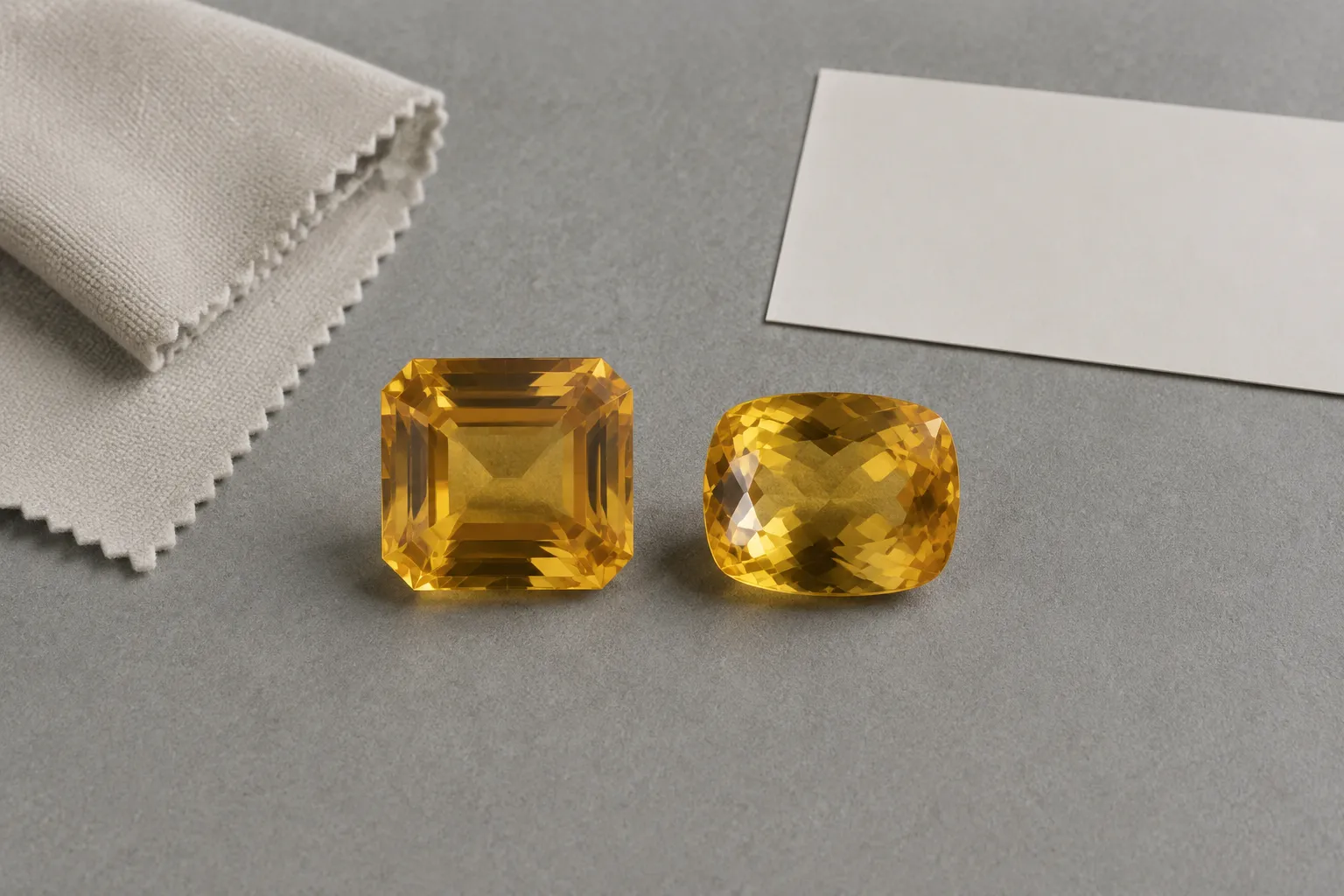
Compare it under the same lighting. A stone photographed under warm evening light can look richer than the same stone near a cool window. If the “before” image came from a listing, the comparison is weaker still; photography, screen brightness, background color, and editing can all affect perceived saturation.
Clean Before Judging
Clean the stone gently before judging color. Skin oils, lotion residue, dust, and grime can dull the surface. A duller surface can make a stone look less lively even when the body color has not changed.
Check the Setting
Look at the setting and background. Yellow-orange quartz can read differently in yellow gold, white metal, dark display foam, or against a pale hand. A loose stone on white paper may look lighter than it did in a shaded display tray.
Separate Color Zoning
Also separate color zoning from fading. Some stones have uneven color distribution. If rotating the stone reveals lighter and darker areas, that may be part of the material’s appearance rather than new loss.
None of these checks proves that fading never happens. They prevent a weak conclusion. For an owner, the first step is not panic; it is comparing like with like.
A Practical Ownership Rule for Citrine Color Stability
For normal ownership, a measured rule works better than the myth: wear citrine if you enjoy it, store it away from prolonged direct sun, and do not treat every slight change in appearance as evidence of fading.
That rule fits the evidence limits here. It does not promise perfect permanence. It does not claim that natural citrine, treated material, and synthetic material behave identically. It also does not turn ordinary daylight into an emergency.
A Repeatable Owner Check
- Take one clear photo in indirect daylight.
- Use the same neutral background.
- Note the date.
- If you later worry about color change, repeat the photo under similar conditions.
This is not a laboratory test, but it is more useful than comparing memory against a seller image.
If you are buying a stone as natural citrine, or if price depends heavily on treatment status, ask for clearer seller disclosure before purchase. Color alone cannot carry the whole authenticity question. A warm golden stone may be appealing, but appeal and verification are different lanes.
For a higher-value purchase, an independent gemological evaluation may be worth considering. This page cannot replace that. Its job is narrower: reduce fading panic, name the conditions that would matter, and keep market claims from doing more work than they can support.
What This Page Can Say—and What It Cannot
This page can say that the strongest version of the citrine fading myth is too broad. It is not useful to tell ordinary owners that most market citrine should be expected to lose its color under normal ownership. That turns a conditional concern into a blanket fear.
This page can also say that treatment disclosure matters. If a seller’s wording is vague, the issue is not only color stability; it is whether the buyer has enough information to understand what is being sold. Natural citrine, heat-treated amethyst, and other market categories should not be blurred when authenticity or value context matters.
What this page cannot say is that citrine color is guaranteed under every condition. It cannot assign a fading timeline, define exact UV limits, or prove a specific iron-impurity mechanism from the current materials. Those claims need stronger gemological, mineralogical, museum, university, standards-based, or treatment-disclosure references.
That limit does not weaken the practical answer. It keeps the answer clean.
For an owner, the sensible conclusion is simple: do not assume your citrine is quietly losing color because broad internet language says citrine fades. Keep it out of prolonged harsh light when stored, compare it under consistent conditions, and treat seller language as something to verify rather than something to fear or accept whole. Most ordinary citrine color anxiety starts before the evidence does.