Strict quartz clarity language
Tiger Stripes Exposed: The Strict Eye-Clean Protocol for Step-Cut Quartz
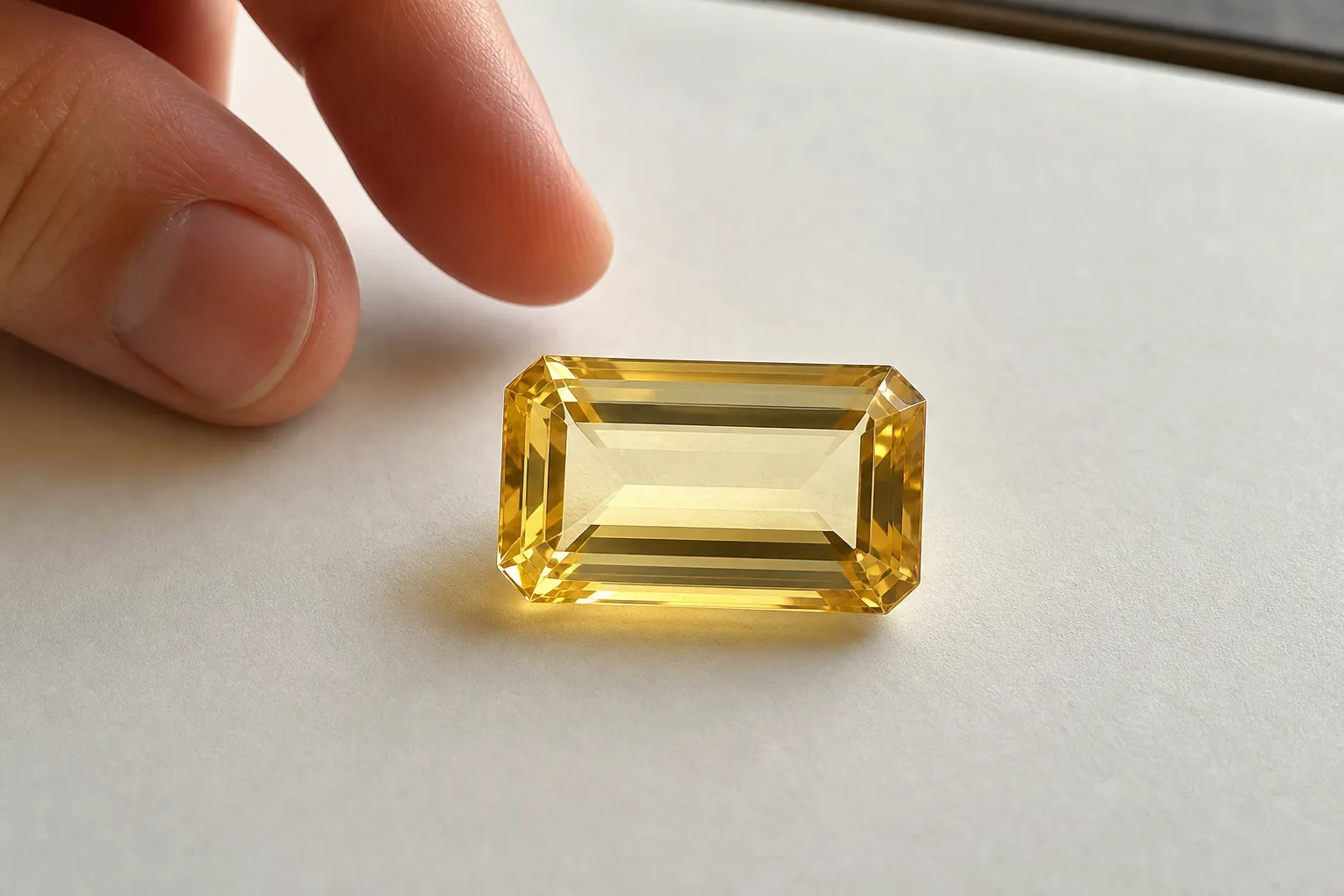
A strict eye-clean clarity assessment for step-cut quartz answers one narrow question: can stripe-like internal features be seen with the unaided eye in controlled, ordinary viewing?
If tiger-stripe or zebra-stripe-like features are visible face-up at a normal viewing distance, the stone does not pass this strict protocol. If they show only after close searching, hard tilting, or unusually revealing light, the more accurate wording is “mostly eye-clean in normal viewing,” not a clean pass.
This is appearance language, not a laboratory grade. It can help a buyer or collector describe what is visible; it cannot confirm quartz identity, treatment history, origin, value, or grading status.
broader context
Start with the main citrine page
This narrower page works best after the broader citrine reference page.
The Pass/Fail Rule for Stripe-Like Features
Under this protocol, eye-clean means no distracting stripe-like internal feature is visible without magnification in a repeatable, normal-use setup.
“Tiger stripes” and “zebra stripes” are reader-facing descriptions here. They refer to visible banded, streaked, or parallel-looking internal features. They are not treated as confirmed scientific categories unless a qualified report separately supports that wording.
Step-cut quartz deserves a stricter look than a quick glance. Broad, orderly facets can make internal interruptions easier to notice than they might be in a busier, more brilliant cut. That does not make the stone poor quality by itself. It changes the clarity language.
Strict pass
“Eye-clean under this protocol”
No stripe-like feature is visible without magnification in controlled normal viewing.
Conditional pass
“Mostly eye-clean in normal viewing”
A feature appears only when the stone is searched closely, tilted hard, or viewed in especially revealing light.
Fail
“Visible stripe-like inclusion present”
The feature can be seen unaided in face-up or ordinary tilted viewing.
Avoid making the wording carry more than the check supports. “Eye-clean” describes visible appearance. It is not a promise of rarity, natural origin, treatment disclosure, or higher market value.
Viewing Setup for Quartz: Keep the Test Plain
A useful step-cut quartz inspection starts with boring conditions. The goal is not to make the stone look its best or worst; the goal is to make the observation repeatable.
Use neutral, steady light. A harsh spotlight can exaggerate reflections. Dim light can hide features that matter to the eye. Balanced room light or soft daylight near a window is enough, as long as the stone is not lost in glare or shadow.
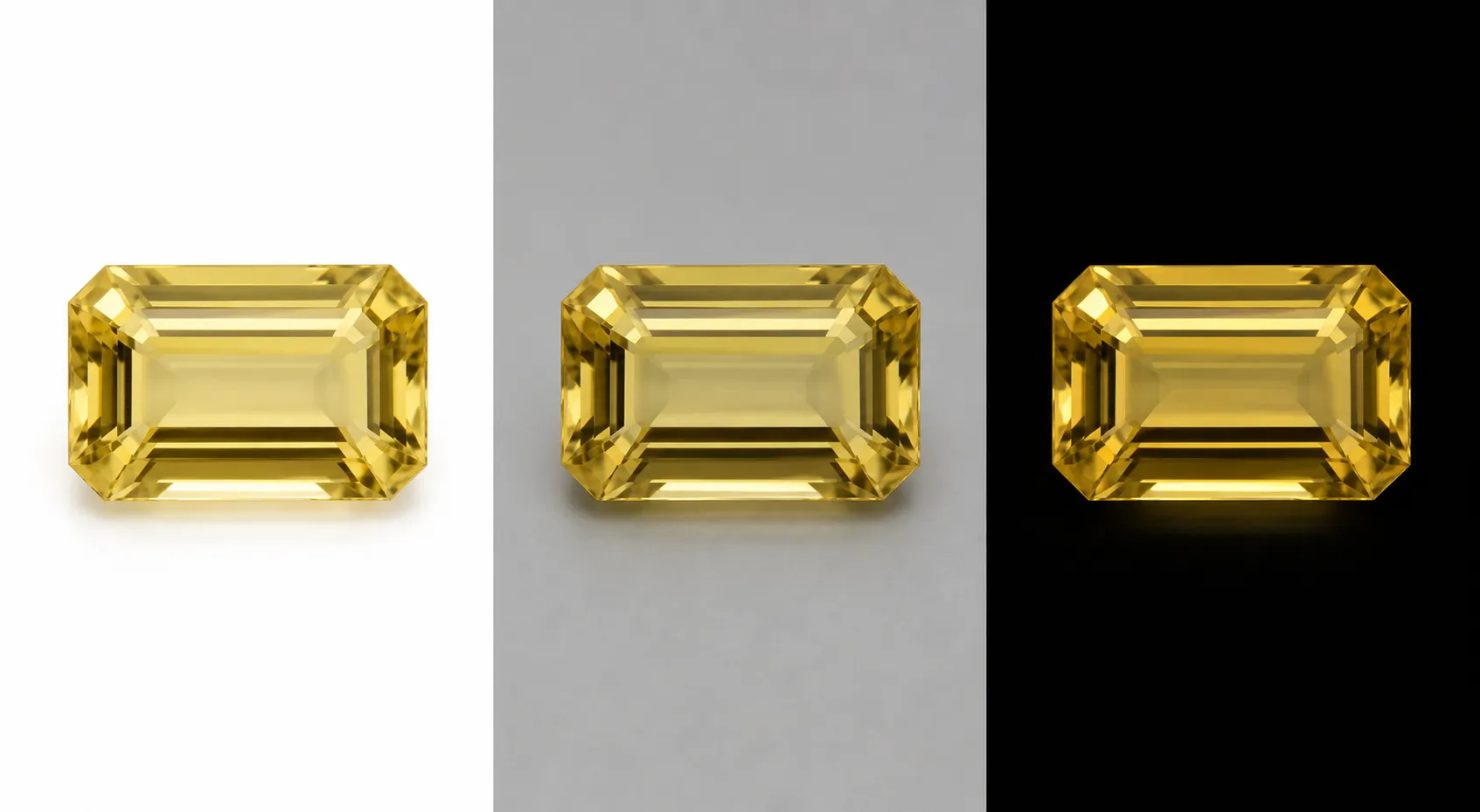
Place the stone on a neutral surface, then change that surface once or twice. White, gray, and matte black backgrounds may reveal different things. If a stripe appears only on one dramatic background and disappears everywhere else, that supports conditional wording. If it follows the stone across several reasonable backgrounds, it matters more to the eye-clean call.
Clean the quartz before judging it. Dust, fingerprints, lint, and facet smudges can mimic lines. Inspect, clean, and inspect again before calling a feature internal.
Keep magnification out of the final pass/fail decision. A loupe or phone macro image may help you locate a feature, but strict eye-clean language is based on what the unaided eye sees. If a line becomes obvious only after magnification points it out, say that: “not apparent to the unaided eye in normal viewing” is cleaner than pretending the stone has no internal features.
Viewing Distance, Rotation, and Angles
Begin at a normal viewing distance: the distance at which someone would naturally examine a loose stone in hand or in a ring tray. The exact number matters less than consistency. If the quartz must be brought very close to the face and searched, the result belongs in conditional language.
Start face-up. That is the view most buyers and wearers notice first. Look without rocking the stone for a few seconds. If a stripe is immediately visible, the stone fails the strict eye-clean protocol.
Then rotate slowly. Turn the stone through several orientations while keeping the face-up view stable. A reflection may flash, shift, or vanish as the stone moves. An internal stripe is more likely to stay in a consistent place relative to the stone.
After that, tilt modestly. Ordinary handling angles count; extreme positions designed only to expose something should not control the wording. If a tiger-stripe-like feature appears during modest tilting and remains easy to see, disclose it plainly. If it appears only at a narrow angle after deliberate searching, “mostly eye-clean” may be the more accurate result.
Photography can document the finding, but it should not replace the eye check. Phone cameras can sharpen contrast, flatten depth, or make faint lines look more decisive than they are in hand.
Why Step-Cutting Changes the Call
Step-cutting creates a calmer view into the stone. Its broad facet rhythm can draw attention to internal interruptions, especially in pale or open-looking quartz. Treat that as a practical viewing observation within this protocol, not a universal rule about all quartz.
This is why strict wording matters. A seller or collector may be tempted to call a stone eye-clean when a stripe is faint, attractive, or visible only from certain angles. This page uses a tighter standard: if the stripe is visible during normal unaided viewing, the description should name it.
Lapidary craft also needs careful wording. A cutter may orient material to manage appearance, but this article does not claim a technical rule for how cutting choices prevent or expose stripe-like features. The defensible point is narrower: the finished cut affects how the eye encounters internal features, and step-cut quartz should be inspected with that visibility in mind.
The same boundary applies to citrine authenticity. A clean-looking step-cut yellow quartz is not automatically natural citrine, and a striped stone is not automatically treated material or synthetic material. Visible clarity features may shape appearance and disclosure wording; they do not settle identity or treatment history.
Common Confusion: Stripes, Reflections, and Seller Language
A stripe-like line is not always an inclusion. Facet junctions, window reflections, dust, girdle reflections, and background edges can all create line-like effects. Rotate the stone and change the background before naming anything as an internal feature. If the line moves with the environment, it may be reflection. If it stays fixed inside the stone’s view, it deserves closer attention.
“Fluid inclusion” language needs restraint. The phrase appears in gemstone discussions, but this article does not identify zebra stripes fluid inclusions in quartz by sight alone. Without professional documentation, use appearance language: “stripe-like internal feature,” “parallel-looking inclusion,” or “visible banded feature.”
Seller disclosure can help, but it should not replace the viewing check. If a listing says “eye-clean,” ask what lighting, distance, and magnification were used. If a listing says “natural citrine,” treat that as a separate claim from eye-clean appearance. This protocol evaluates visible clarity; it does not verify the full seller story.
Value context should stay modest. A visible stripe may affect appeal for a particular buyer, especially in a step cut where calm transparency is part of the look. This page does not assign price penalties, rarity scores, or investment meaning. Those claims require stronger evidence than unaided clarity viewing.
The Strict Eye-Clean Protocol
Use this checklist when you need disciplined wording without turning the process into a lab claim.
- Clean the stone and inspect it without magnification.
- Use neutral, steady lighting rather than harsh glare or deep shadow.
- Check the stone face-up at a normal viewing distance.
- Rotate the stone slowly through several orientations.
- Tilt it modestly, avoiding extreme angles.
- Change the background once or twice to separate internal features from reflections.
- Record the result in pass/fail clarity language.
A strict pass means no tiger-stripe or zebra-stripe-like feature is visible to the unaided eye in that setup. A conditional pass means the feature can be found only by searching, tilting, or using unusually revealing conditions. A fail means the feature is visible enough that a careful buyer would likely notice it during ordinary inspection.
Let the wording follow the result. Say “eye-clean under normal viewing” only when the stone passes the actual check. Say “mostly eye-clean, with a faint stripe visible at some angles” when that is the cleaner description. Say “visible stripe-like inclusion” when the feature is plainly there.
Limits of Eye-Clean Assessment
This protocol is intentionally narrow. It describes what the unaided eye can see in step-cut quartz. It does not establish a formal clarity grade, and it should not be presented as a professional gemological conclusion.
It also cannot decide whether the quartz is natural citrine, heat-treated amethyst or smoky quartz, synthetic material, or another yellow quartz presentation. Those questions belong to gemological verification, seller documentation, and, when the decision justifies it, a professional report. Eye-clean appearance is one lane; identity and treatment are separate lanes.
The same restraint applies to lapidary craft inspection. A visible stripe may tell you something about the finished appearance, but this page does not support claims about the cutter’s choices, rough orientation, or technical optimization. Keep the observation at the level you can defend: what is visible, under what conditions, and how it should be described.
For a purchase decision, ask for face-up and tilted photos or video under ordinary lighting, plus clear disclosure wording. If identity, treatment, or value matters materially, do not rely on an eye-clean clarity assessment alone.
Short FAQ
Can step-cut quartz with faint tiger stripes still be attractive?
Yes. A stone can be appealing while failing a strict eye-clean protocol. This article is about accurate clarity wording, not personal taste.
Are zebra stripe inclusions proof of treatment or natural origin?
No. Visible stripe-like features alone should not be used to prove treatment history, natural origin, or synthetic status. Those claims need stronger verification than unaided viewing.
Should I use a loupe for the final eye-clean decision?
No. Magnification can help locate or document a feature, but the final eye-clean call in this protocol is based on unaided viewing under controlled normal conditions.
A strict eye-clean protocol gives step-cut quartz cleaner language: pass, conditional pass, or visible feature. It can sharpen a buying conversation; it cannot carry claims about identity, treatment, value, or professional grading.