Citrine naming check
Ferruginous Quartz: Why Mineralogists Are Renaming Heat-Treated Amethyst
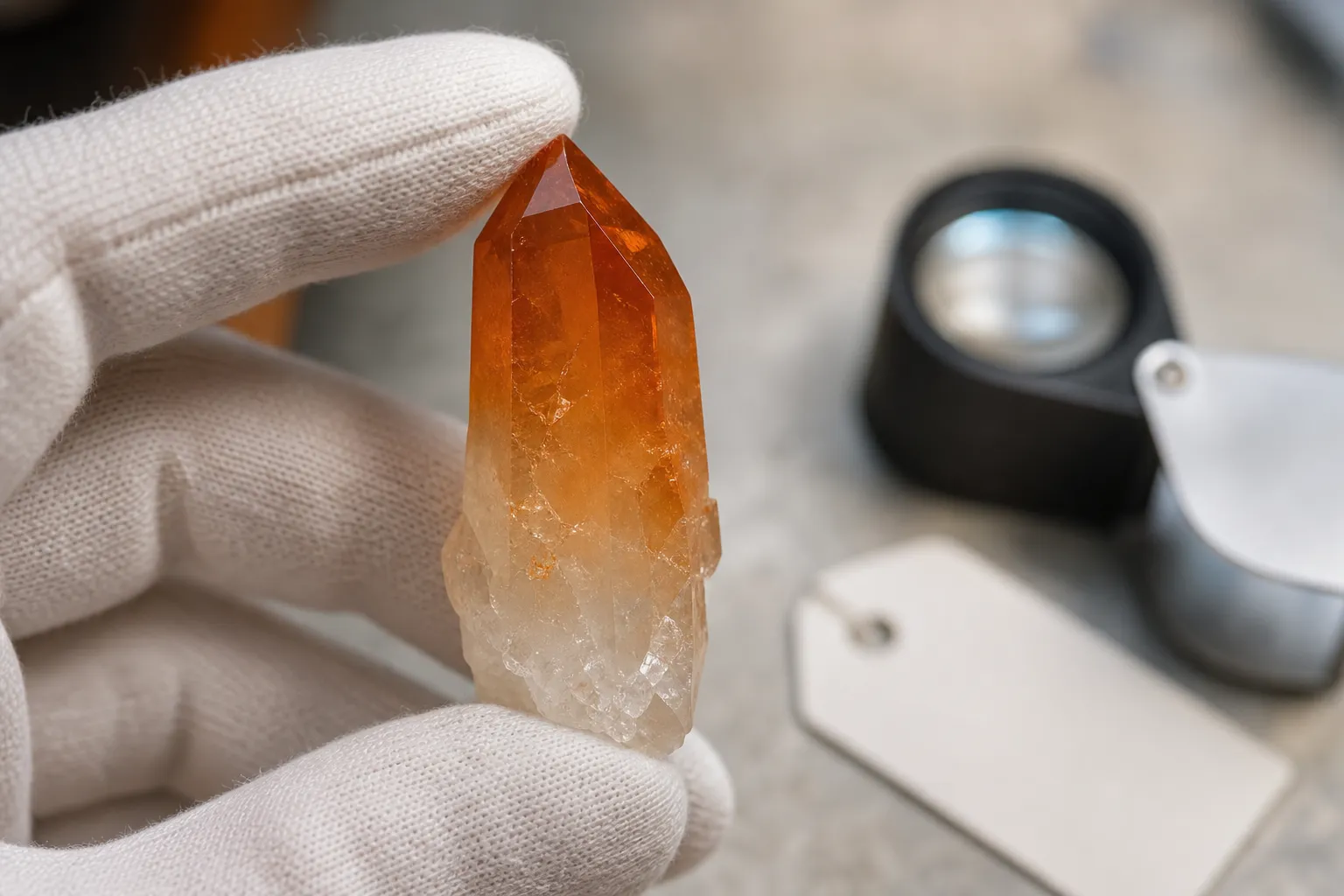
A deep orange “citrine” point with a pale or white base usually raises a naming question before it raises a value question. The careful answer is this: ferruginous quartz can be a more precise descriptive lane when quartz is being discussed for iron-related staining, inclusions, or rusty color influence. It is not an automatic replacement name for every piece of heat-treated amethyst sold as citrine.
That distinction matters because “citrine” often works as a gem-market name, while “ferruginous” is mineralogical language for iron-bearing or iron-stained material in a broad sense. A seller label alone cannot prove which wording is correct.
broader context
Citrine verification note
This narrower page works best after the broader citrine reference page.
The Short Answer
The claim that mineralogists are “renaming heat-treated amethyst” needs a tighter frame. The available material for this page does not support saying that mineralogists, as a whole, have adopted a new official naming standard for heat-treated amethyst.
A cleaner reading is that the conversation separates four kinds of wording:
- Commercial gem naming: a market label such as “citrine.”
- Mineralogical language: a description of the material and what may influence its color or inclusions.
- Treatment disclosure: a statement that amethyst or quartz was heated to produce or intensify yellow, orange, or brown color.
- Ferruginous quartz terminology: a descriptive phrase only when iron-related features are actually relevant and supported.
So the answer is not “heat-treated amethyst is now officially ferruginous quartz.” It is: some writers, sellers, or collectors may prefer ferruginous quartz when they are trying to describe iron-influenced quartz rather than present the material as natural citrine. That wording can reduce confusion, but only when it is backed by evidence instead of used as a more technical sales shortcut.
A shopper does not need to reject every stone called citrine. They do need to ask what kind of citrine claim is being made.
Why Heat-Treated Amethyst Gets Pulled Into This
Quartz varieties are often discussed through color first. In retail settings, yellow to orange quartz may be presented as citrine even when the color was produced or intensified by heating. That market habit is easy to understand, but it can blur the difference between natural citrine, treated material, and broader quartz descriptions.
For citrine authenticity, the question is not whether the stone looks warm, golden, or attractive. The question is what the label is claiming.
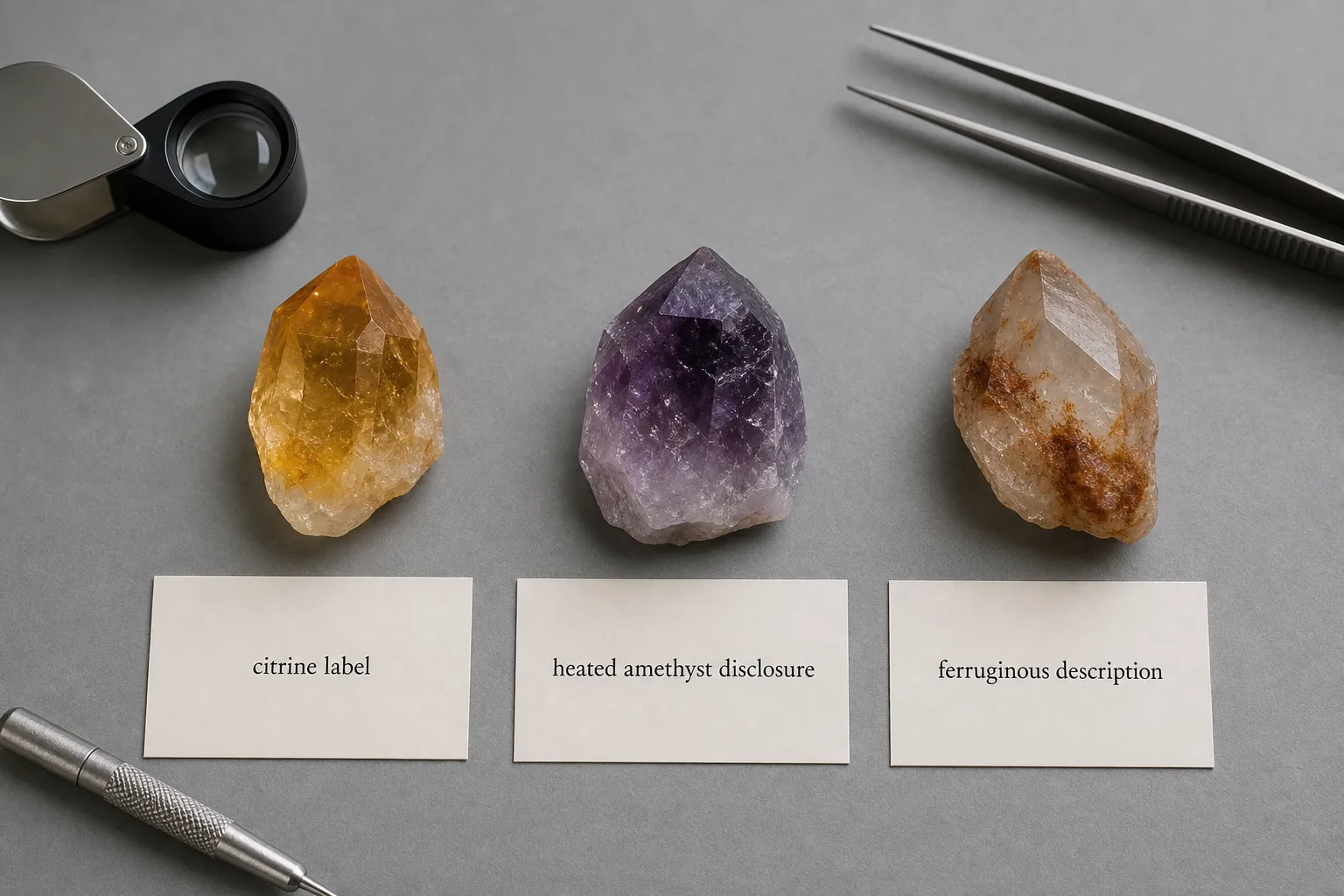
If a seller says only “citrine,” that may be commercial naming. If the description says “heat-treated amethyst sold as citrine,” the treatment pathway is at least being acknowledged. If a description says “ferruginous quartz,” the wording points toward iron-related features, but it still needs support from a qualified identification, mineralogical reference, or careful trade documentation.
The confusion starts when these labels are stacked as if they mean the same thing. They do not. A retail name can place a stone in the gem market; it does not settle mineral identity, treatment history, or value context by itself.
What “Ferruginous Quartz” Can and Cannot Say
“Ferruginous” is useful because it gives language for iron-related color or surface character without forcing every yellow-orange quartz into the same citrine box. In plain terms, it can describe quartz associated with iron oxides, iron staining, or iron-bearing material. Hematite may appear in some discussions of iron-related mineral color, but this page cannot claim that hematite is present in all orange quartz, all heat-treated amethyst, or all material sold as citrine.
That is the limit. Ferruginous quartz is not a universal rescue label.
Used carefully, the term can say: this quartz is being discussed with attention to iron-related features. Used carelessly, it becomes another vague market phrase, just as confusing as “natural citrine” when no proof is offered. A technical-sounding word is not the same thing as verified identification.
For buyers, the cleaner wording is often more specific rather than more impressive:
This table does not identify a stone by sight. It separates claim types, which is where many citrine misunderstandings begin.
Where Market Language and Mineralogical Language Split
Commercial gem naming is built for recognition. It helps shoppers, dealers, and collectors talk about stones in familiar categories. Mineralogical naming is built for material description. It tries to say what the substance is, what features are present, and what evidence supports the wording.
Those systems can overlap, but they are not identical. A quartz specimen may be sold in the citrine market because of its yellow-orange color. The same specimen may require more cautious mineralogical wording if its color, inclusions, or treatment history do not support a simple natural-citrine claim.
This is also where market segmentation gets tricky. Natural citrine, heat-treated amethyst, iron-stained quartz, and synthetic material may carry different disclosure needs. Without current, citable market documentation, this page should not rank them by price, rarity, or desirability. It can only name the disclosure problem: the reader needs to know whether the label is a retail category, a treatment statement, or a mineralogical description.
A seller can call a stone attractive without proving it is natural citrine. A buyer can like the color while still asking for clearer wording. A collector can prefer a specimen for its treatment disclosure, source story, or mineral features, but those preferences should not rest on unsupported labels.
Common Confusion: “If It Is Not Natural Citrine, Is It Ferruginous Quartz?”
Not necessarily.
Heat-treated amethyst sold as citrine is not automatically ferruginous quartz just because that word sounds more mineralogical. The material may need several separate questions answered:
- Was the quartz originally amethyst?
- Was heat used to change or intensify the color?
- Is the current yellow, orange, or brown appearance tied to heating, iron-related staining, inclusions, or another cause?
- Is “citrine” being used as a trade name, a color category, or a verified gem identity?
- Is “ferruginous quartz” supported by an actual mineralogical observation?
A listing photo cannot settle all of that. Strong orange color, uneven zoning, or a pale base may invite a disclosure question, but visual cues are not a substitute for qualified testing or documentation.
The cleaner approach is to separate the label from the claim. “Sold as citrine” tells you how the market is presenting it. “Heat-treated amethyst” tells you a treatment history if the disclosure is reliable. “Ferruginous quartz” should tell you something about iron-related material, but only when that description is supported.
What Would Make the Answer Stronger?
Better documentation changes the answer. A loose retail label gives the weakest support. A clear treatment disclosure is better. A qualified gemological report, mineralogical reference, museum-style specimen description, or careful trade document would do more to justify a specific name.
Context also matters.
For a casual decorative stone, the practical issue may be honest wording: does “citrine” mean natural citrine, or treated quartz sold under the citrine name? For a collector specimen, the exact mineralogical language may matter more. For resale, appraisal, or cataloging, the label should stay conservative unless stronger evidence supports it.
There is a real difference between saying “this term may be useful” and saying “this term is the accepted standard.” This page can support the first statement as a cautious language distinction. It cannot support the second without visible mineralogical references or naming standards.
The restrained answer is more useful than the dramatic one: the naming shift is best understood as a push toward clearer disclosure, not as a proven universal renaming campaign.
A Practical Wording Check
When reading a label, listing, or discussion thread, look for the role each word is playing.
Start with the noun. Is the stone called citrine, quartz, amethyst, or something else? Then look for the modifier. Does the description say natural, treated, heat-treated, ferruginous, iron-stained, or iron-bearing? Finally, ask whether the description gives a reason.
A careful listing might say the material is heat-treated amethyst sold in the citrine market. That is clearer than simply calling it natural citrine. A mineralogical description might use ferruginous quartz, but it should explain what iron-related feature supports that language. A vague listing that uses both “natural citrine” and “treated amethyst” without clarification is asking the reader to accept conflicting signals.
For a higher-stakes purchase, the next step is not to argue terminology online. Ask for treatment disclosure, the basis of the naming claim, and any gemological or mineralogical documentation the seller can provide. If those details are unavailable, treat the label as commercial language rather than verified identity.
That does not make the stone worthless or unattractive. It keeps the claim in the right lane.
Bottom Line
Ferruginous quartz is best understood here as a cautious mineralogical descriptor, not a blanket new name for all heat-treated amethyst sold as citrine. It may help separate iron-related quartz language from commercial gem naming, but it does not prove citrine identity, treatment history, hematite content, or market value by itself.
Use “citrine” carefully. Use “heat-treated amethyst” when treatment is known. Use “ferruginous quartz” only when iron-related evidence supports it. When the label matters, ask for qualified confirmation rather than accepting a more technical word as proof.