Bounded energy comparison
Vibrational Frequencies: Exploring Energy Shifts in Heated vs. Natural Stones
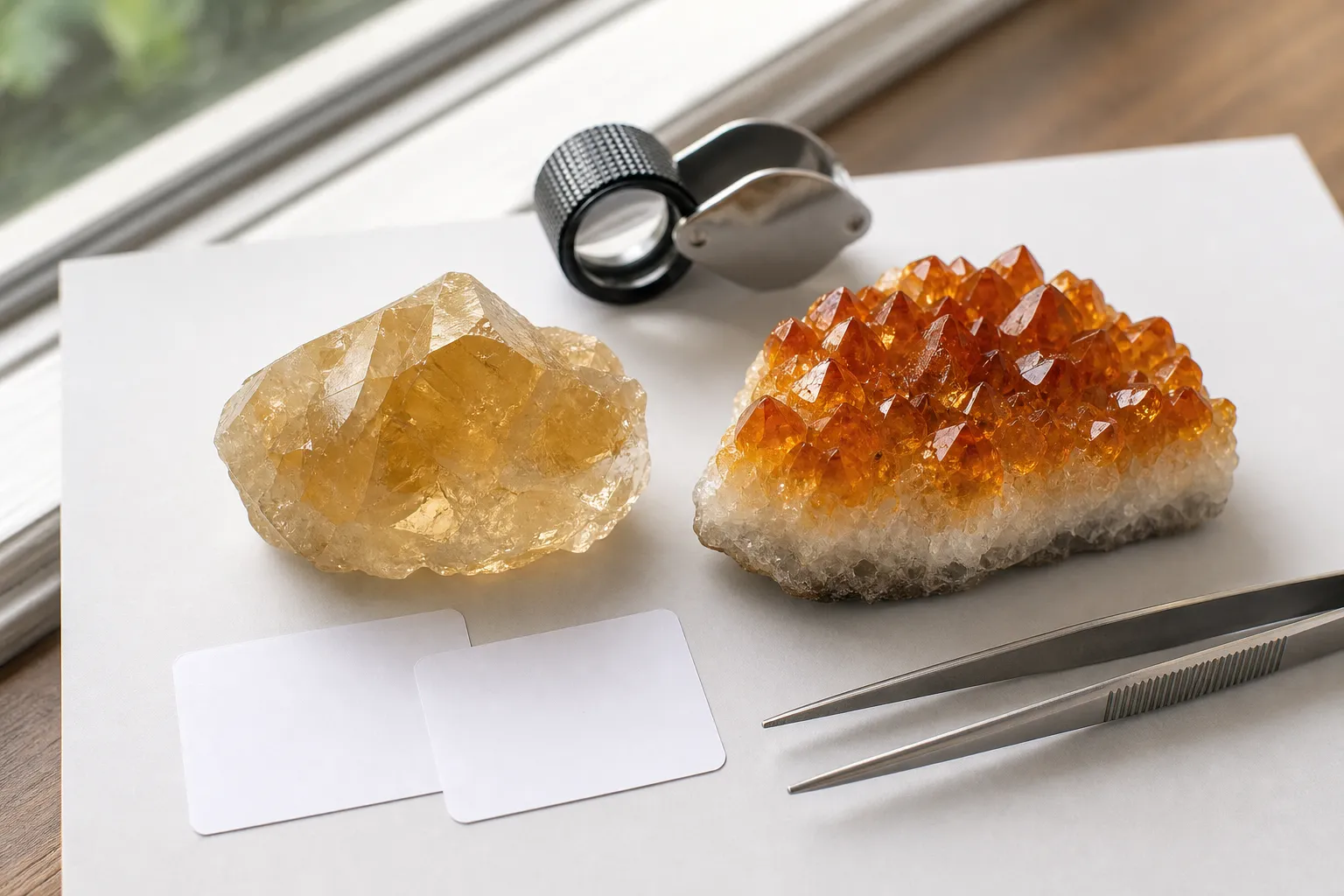
A pale honey citrine and a vivid orange “citrine” cluster may share a label, but they do not carry the same evidence. Heat treatment can change color, disclosure language, and market identity; it does not establish a different measurable spiritual frequency.
So the short answer is this: Citrine energy vibrational frequency is mainly metaphysical practice language, not a gemological measurement. Some crystal practitioners describe natural citrine as softer or more refined and heated citrine as brighter, louder, or more fiery. Those descriptions can be meaningful inside personal practice, but they should be treated as subjective energy perception rather than verified frequency data.
broader context
Citrine verification note
This narrower page works best after the broader citrine reference page.
What Heating Changes
Citrine is a yellow to brownish orange variety of quartz. GIA describes citrine within that color range and notes a market reality that matters here: natural yellow quartz colors are rare, and much faceted citrine is produced by heating amethyst.
That does not make every heated stone “fake.” It does mean the label should be clear.
A cleaner distinction looks like this:
- Natural citrine: quartz with naturally occurring yellow to brownish color.
- Heat-treated material: quartz, often amethyst, whose color has been changed by heating.
- Energy language: a personal, symbolic, or practitioner interpretation layered onto the stone.
This separation prevents two common overstatements. Heated material is not automatically worthless, and natural citrine is not automatically stronger in a spiritual sense. Gemology can address material identity, color, and treatment; metaphysical meaning stays in a more personal lane.
Why Natural and Heated Citrine May Feel Different to Some People
When readers ask about natural vs heated energy, they usually are not asking for a physics lecture. They want to know whether the stone they chose may feel different in meditation, altar work, journaling, abundance rituals, or spiritual manifestation practice.
In crystal-practice language, natural citrine is often described as soft, subtle, steady, or refined. Heated citrine, especially vivid orange or reddish material, is often described as bright, fiery, warm, or more immediately noticeable.
Those impressions may come from more than the stone itself. Color changes expectation. A pale champagne crystal can invite a quieter response than a burnt-orange cluster with a white base. Treatment history, seller wording, price, shape, and the buyer’s own belief system can all affect citrine energy perception.
That is the safest reading: heated citrine energy is often described differently because the stone looks different, is marketed differently, and carries a different treatment story. The perceived shift may be real to the person using it, but it is not the same as a measured energetic difference.
Appearance Clues Are Not Proof
Appearance often pulls the energy conversation into citrine authenticity. Natural citrine is commonly described as pale yellow, smoky yellow, honey, champagne, tea-colored, or slightly greenish. Heat-treated amethyst sold as citrine is often described as vivid orange, orange-brown, reddish near the tips, or clustered with a pale base.
These are clues, not final answers.
Possible natural-citrine descriptions
Pale yellow, smoky yellow, honey, champagne, tea-colored, or slightly greenish.
Possible heated-material descriptions
Vivid orange, orange-brown, reddish near the tips, or clustered with a pale base.
A bright orange stone is not automatically misrepresented, and a pale stone is not automatically natural citrine. Lighting, photography, saturation, cutting style, specimen type, and seller wording can all complicate the picture. The stronger point is narrower: natural yellow quartz is relatively uncommon, and heat-treated amethyst is common enough in the citrine market that disclosure matters.
For a spiritually curious buyer, the better question is not only “Which has better energy?” It is: “Do I know what material I am working with, and does the label match the meaning I am giving it?”
If a vivid orange amethyst cluster is sold as “natural citrine” with no treatment disclosure, that is a market literacy issue. If it is clearly labeled as heat-treated amethyst or heat-treated citrine, the buyer can decide whether that treated material still fits their practice.
The Frequency Problem
“Vibration” has two different meanings in this topic. Crystals can be discussed as physical materials with structure, composition, and optical properties. Metaphysical vibration is different; it is symbolic language used in crystal practice, manifestation culture, and personal ritual.
The problem begins when those meanings are blended. “Citrine vibrational frequency” can sound technical, but the available source support does not establish exact spiritual frequency numbers for citrine. It also does not support the claim that natural citrine produces a stronger manifestation result than heated citrine.
Citrine metaphysical properties are often discussed through ideas such as optimism, confidence, abundance, warmth, or solar symbolism. Those associations can be described as beliefs, traditions, or subjective impressions. They should not be presented as gemological facts.
A grounded sentence sounds like this: “I prefer natural citrine because its color and origin story feel quieter to me,” or “I use heat-treated citrine because its bright color supports the symbolism I want.” Both are honest. Neither needs a claim about measurable frequency.
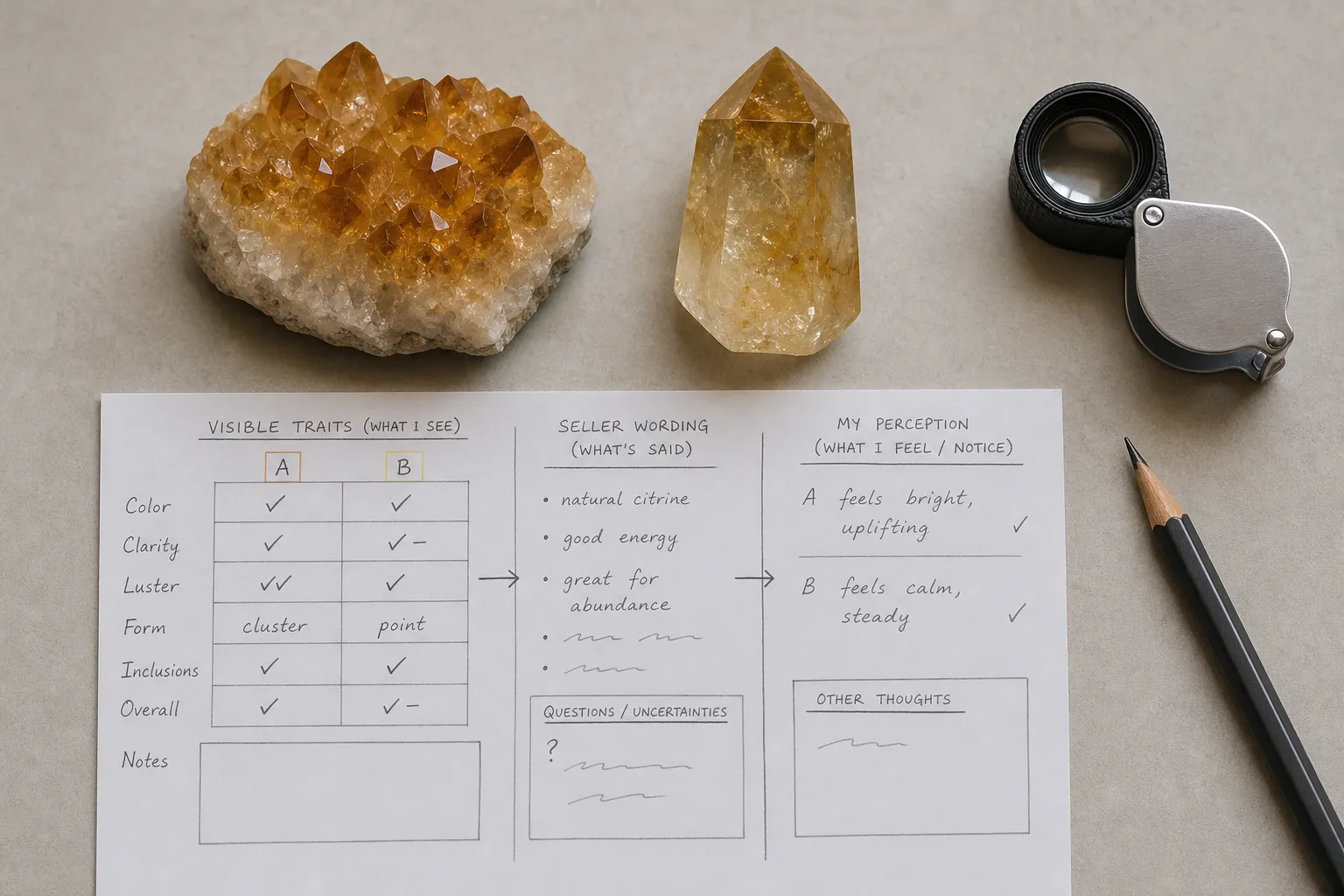
A Cleaner Way to Compare Your Own Stones
Start with the material, then move into meaning.
- First, note the visible traits. Is the stone pale honey, smoky, champagne, or slightly greenish? Is it vivid orange, orange-brown, reddish, or part of a white-base cluster? These details may suggest possibilities, but they do not replace gemological identification.
- Second, check the seller’s wording. “Natural citrine,” “heat-treated citrine,” and “heat-treated amethyst” do not give a buyer the same disclosure experience. Clear labeling matters more than mystical reassurance.
- Third, write your own response as perception. “This piece feels brighter to me” is cleaner than “this piece has a higher frequency.” The first sentence records experience; the second turns experience into an unsupported measurement.
- Fourth, keep value and symbolism separate. Natural citrine rarity can affect market context, collector interest, and disclosure expectations. It does not decide what a person may find meaningful in spiritual practice.
This approach leaves room for preference without overclaiming. Some practitioners use both natural and heated material. Others strongly prefer natural citrine. The difference is a practice preference unless stronger evidence is being claimed.
Common Misunderstandings
“Natural” does not automatically mean spiritually superior
Natural origin may matter deeply to some readers. It may feel cleaner, quieter, or more aligned with their practice. That is not the same as a universal rule about citrine spiritual manifestation.
Heated material is not automatically without value
Heat-treated amethyst can still be visually appealing quartz, and many people use it symbolically as citrine. The issue is not whether someone may work with it; the issue is whether the material is described honestly.
Commercial language does not prove an effect
Seller pages may describe citrine through prosperity, confidence, or manifestation themes. Those phrases show how citrine is marketed and used in some crystal communities. They do not prove an effect.
A more reliable sentence is: “Citrine is commonly associated with abundance and confidence in metaphysical crystal practice, while gemological sources support its quartz identity and the market relevance of heat treatment.” Each claim stays in its lane.
Direct Answer for Spiritual Readers
If the question is whether natural and heated citrine have different measurable vibrational frequencies, the current answer is no supported public basis for saying that. If the question is whether people perceive them differently in crystal practice, yes, some do.
Natural citrine may appeal to readers who value unheated origin, subtler color, rarity, and a quieter symbolic presence. Heated citrine may appeal to readers who respond to bright orange color, warmth, intensity, and transformation imagery. Neither preference needs to become a claim about measurable frequency, guaranteed manifestation, or objective spiritual rank.
The bounded answer is simple: heat treatment changes color and market identity; spiritual energy perception remains personal. For buying, ask for clear treatment disclosure. For practice, use language that names your experience without overstating what the evidence can show.