Quartz jewelry care
Why You Should Never Dry-Wipe Quartz Jewelry (And What to Do Instead)
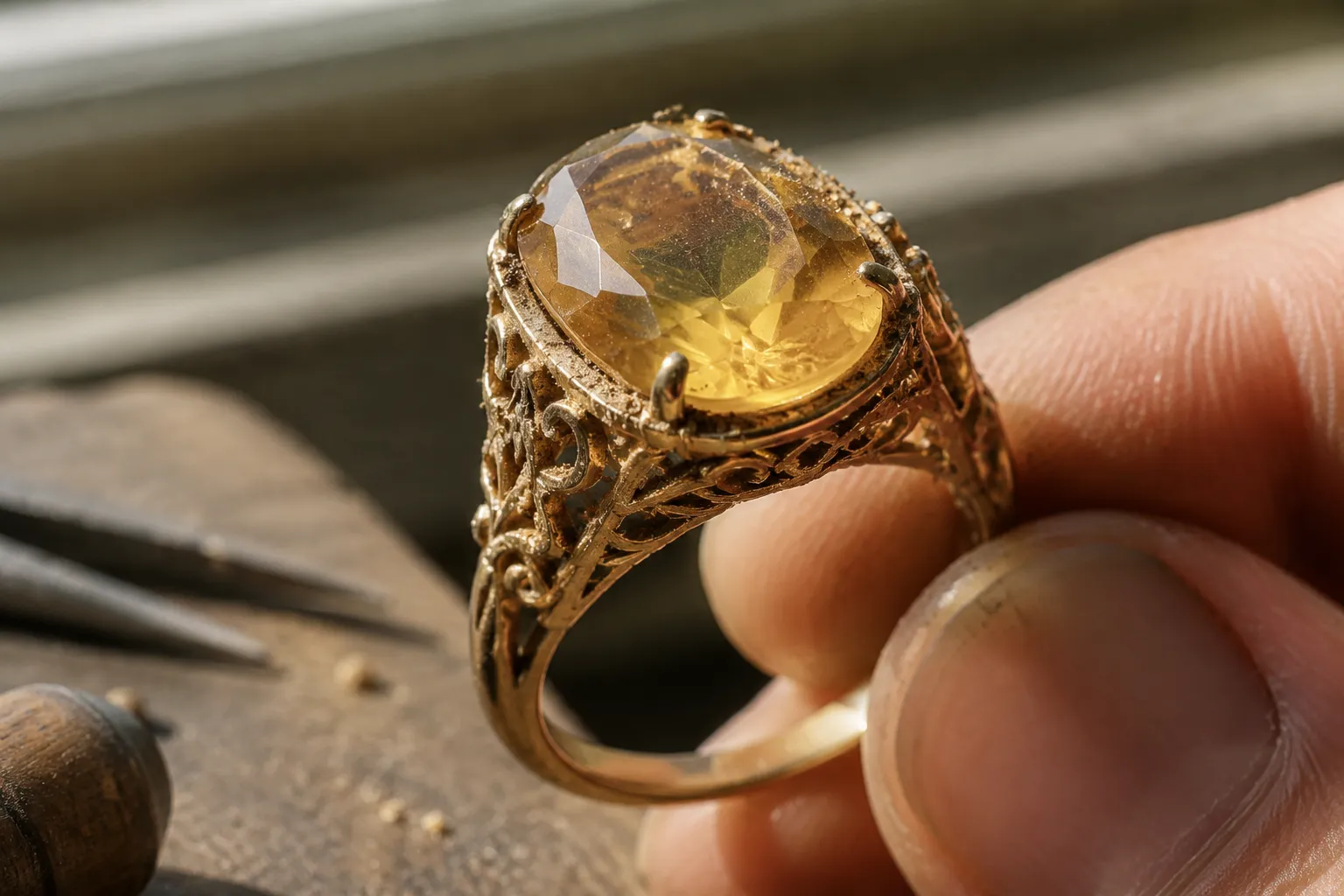
A citrine ring that looks only lightly dusty can still carry loose particles on the surface, especially around prongs, engraving, or the back of the stone. The practical answer is simple: do not make dry wiping your default habit for quartz jewelry. Dry Wiping Citrine with a dry cloth can pull dust or grit across the polish, and that may contribute to fine cosmetic wear, dullness, or streaky-looking luster over time.
That does not mean every dry touch instantly scratches quartz. The better boundary is more useful: quartz may be durable in ordinary wear, but jewelry surfaces are still finished surfaces. Dirt, pressure, repeated rubbing, coatings, and setting materials all matter.
broader context
Citrine verification note
This narrower page works best after the broader citrine reference page.
Why dry wiping is the wrong default
Dry wiping feels harmless because it looks gentle. A soft cloth, a small motion, a stone known for everyday wear: the shortcut makes sense at first glance. The problem is not only the cloth. It is what may be trapped between the cloth and the polished surface.
Dust on quartz jewelry is not always soft household lint. It can include skin residue, dried lotion, outdoor grit, powder, or particles caught near the setting. When those particles are rubbed across the face of a polished citrine, smoky quartz, rock crystal, or amethyst, the action becomes less like dusting and more like dragging a thin abrasive layer over a finished surface.
The likely result is not dramatic damage after one careless wipe. A more realistic concern is cosmetic wear from dry wiping: small changes in how the surface catches light, dull-looking patches, or fine marks that become easier to notice under direct light. With citrine jewelry, surface luster is part of the visual appeal; anything that makes the polish look tired can make the stone seem less crisp even when the quartz itself remains intact.
This is also where seller language can mislead. Quartz is often described as tough, durable, or low-maintenance. Those words can be reasonable in a broad jewelry context, but they do not erase the practical issue of friction plus loose particles. “Quartz is tough enough” is not the same as “any dry rubbing habit is good care.”
What to do instead: a gentler routine
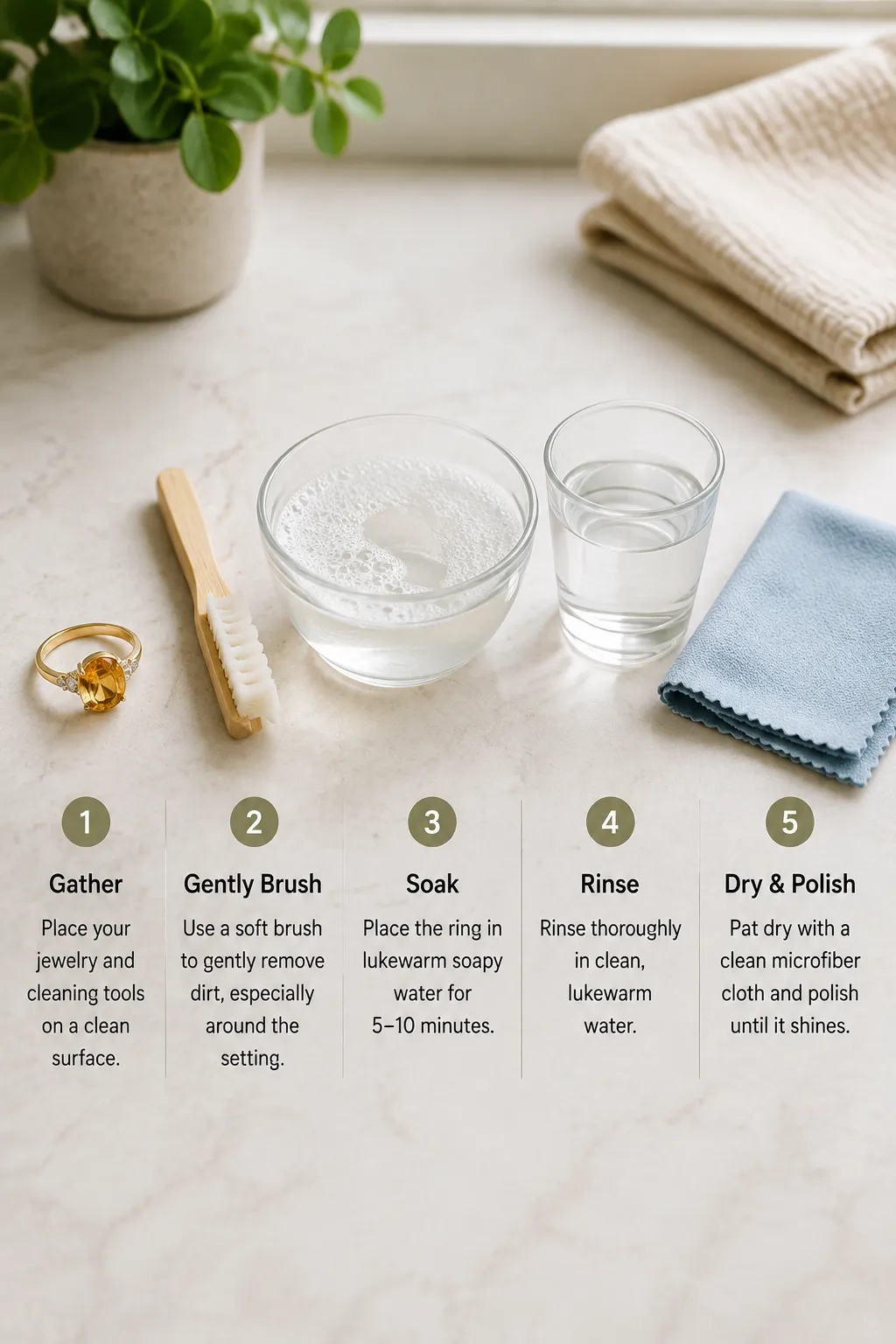
For everyday quartz jewelry care, the cleaner habit is to remove loose dirt before polishing. Keep the routine simple:
- Check the piece first. Look for visible grit, dried lotion, makeup, soil near prongs, or residue under the setting.
- If the jewelry is only lightly dusty, use a gentle puff of air or a very soft brush to lift loose particles before touching the stone with a cloth.
- If there is residue, use a small amount of lukewarm water and mild soap, then rinse carefully.
- Pat dry with a clean, soft cloth instead of rubbing hard.
- Use a clean microfiber cloth for jewelry only after the surface is free of grit, and keep pressure light.
The important shift is sequence. Do not start by buffing a dirty surface. First loosen or rinse away what could scrape. Then dry. Then lightly polish if needed.
A microfiber cloth can be a useful part of citrine jewelry care because it is soft and good at picking up smudges. It is not a shield. A dirty microfiber cloth, or a clean cloth pressed over gritty jewelry, can still move particles across the surface. Store jewelry cloths away from dust, wash or replace them when they feel loaded with residue, and avoid using the same cloth for metal polish, household surfaces, and gemstones.
For rings and bracelets, be more careful than you would be with a pendant. Pieces worn on hands and wrists usually collect more soap film, lotion, sunscreen, and fine debris. A quick dry buff after a day of wear may make the surface look shinier for a moment, but it can also rub that residue around instead of removing it.
When one dry wipe is less concerning
There are ordinary situations where a single gentle dry touch is not the main thing to worry about. If the jewelry is clean, the cloth is clean, and the motion is light, a brief final polish is different from scrubbing a dusty stone. The warning is about dry wiping as a first step and repeated habit, not about panic over every accidental contact.
Pressure changes the answer. A light pass over a clean surface is one thing; firm rubbing to chase a stubborn streak is another. If a mark does not lift easily with a clean cloth, treat it as residue rather than a polishing challenge. Add water and mild soap instead of more force.
The setting also changes the answer. Quartz may be the stone in the center, but the jewelry may include softer accent stones, plating, coatings, glued elements, pearls, opals, dyed materials, or delicate finishes. This page does not establish the treatment history or full material makeup of a piece. If the jewelry combines citrine with other materials, the care routine should fit the most vulnerable part, not only the quartz.
Treatment history matters too, but the material here does not support lab-level statements about every treated or coated quartz surface. A cautious owner should avoid harsh friction when a piece has unclear disclosure, unusual surface effects, foil backing, visible coating, glued parts, or unknown repairs. That is a practical care boundary, not a gemological identification claim.
Common misunderstandings about citrine and quartz care
Hardness is not total immunity
Hardness is relevant to scratch resistance, but jewelry care is not only about the mineral name on a chart. Surface finish, trapped grit, repeated pressure, and surrounding materials all shape how a piece ages in normal use.
Shine is not proof of cleanliness
A dry cloth can spread oils thinly enough to create a temporary gloss, while residue remains around the stone or under the setting. That can leave jewelry looking streaky again soon after wiping. If the shine fades quickly, the piece may need actual cleaning rather than more buffing.
Soft cloth still has to be clean
“Soft” is not the same as “clean.” A microfiber cloth for jewelry should be kept separate from cloths used for counters, eyeglasses with unknown coatings, silver polish, or general household dusting. Once a cloth holds grit or polishing compound, it is no longer just a soft surface.
Marketing language is not a care routine
Citrine is sometimes sold with broad claims about easy care, everyday strength, or effortless sparkle. Those phrases can be useful as sales shorthand, but they do not answer the small practical question in front of the owner: what happens when dust is rubbed across a polished gemstone surface? For that question, the conservative habit is better than the shortcut.
A quick care check before you touch the stone
Before wiping citrine or other quartz jewelry, ask three small questions:
- Is there visible dust, grit, dried lotion, makeup, or soil on the stone or setting?
- Is the cloth clean, soft, and reserved for jewelry use?
- Am I trying to remove a stubborn mark with pressure instead of cleaning it properly?
If the answer to the first question is yes, do not dry-wipe first. Loosen or rinse the debris before polishing. If the cloth is questionable, replace it with a clean one. If the mark needs pressure, stop and use gentle cleaning steps instead.
For everyday gemstone maintenance, this is enough for most ordinary situations: remove particles, use mild cleaning, pat dry, and polish lightly only after the surface is clean. The routine is not dramatic, but it respects the difference between a durable mineral and a finished piece of jewelry.
What this page can and cannot claim
The available research packet for this article did not include visible external source links, verifiable excerpts, or confirmed firsthand testing. That limits the strength of the claim. This page should not be read as proof that every dry wipe scratches every quartz stone, or as a technical measurement of abrasion rates.
What the material does support is a cautious practical rule: dry wiping can drag dust or grit across jewelry, and that may contribute to visible dulling or fine cosmetic wear, especially when the piece is dirty, rubbed with pressure, coated, treatment-sensitive, or combined with more vulnerable setting materials.
That boundary is enough for a better habit. Do not start with a dry buff. Remove loose particles first, clean gently when residue is present, and use a clean microfiber cloth only as the final light step. For citrine, the evidence can support careful handling of surface luster; it cannot turn a quick care tip into a lab judgment about authenticity, treatment, or long-term wear for every piece.