Citrine appraisal note
When Flaws Add Value: The Role of Phantom Growths in Citrine Appraisal
Phantom growths can matter in citrine appraisal when they make a specimen more visually distinctive and more appealing to a specific collector. They do not, by themselves, prove rarity, natural origin, treatment status, quality, or higher value.
In practical phantom quartz valuation, the phantom is one visual feature inside a broader judgment. Color, clarity, size, condition, termination, provenance, treatment disclosure, documentation, and current buyer demand still shape the value conversation. A well-placed phantom may help a citrine specimen stand out; a faint or distracting one may add little.
broader context
Start with the main citrine page
This narrower page works best after the broader citrine reference page.
The Short Answer: A Phantom Is a Feature, Not a Verdict
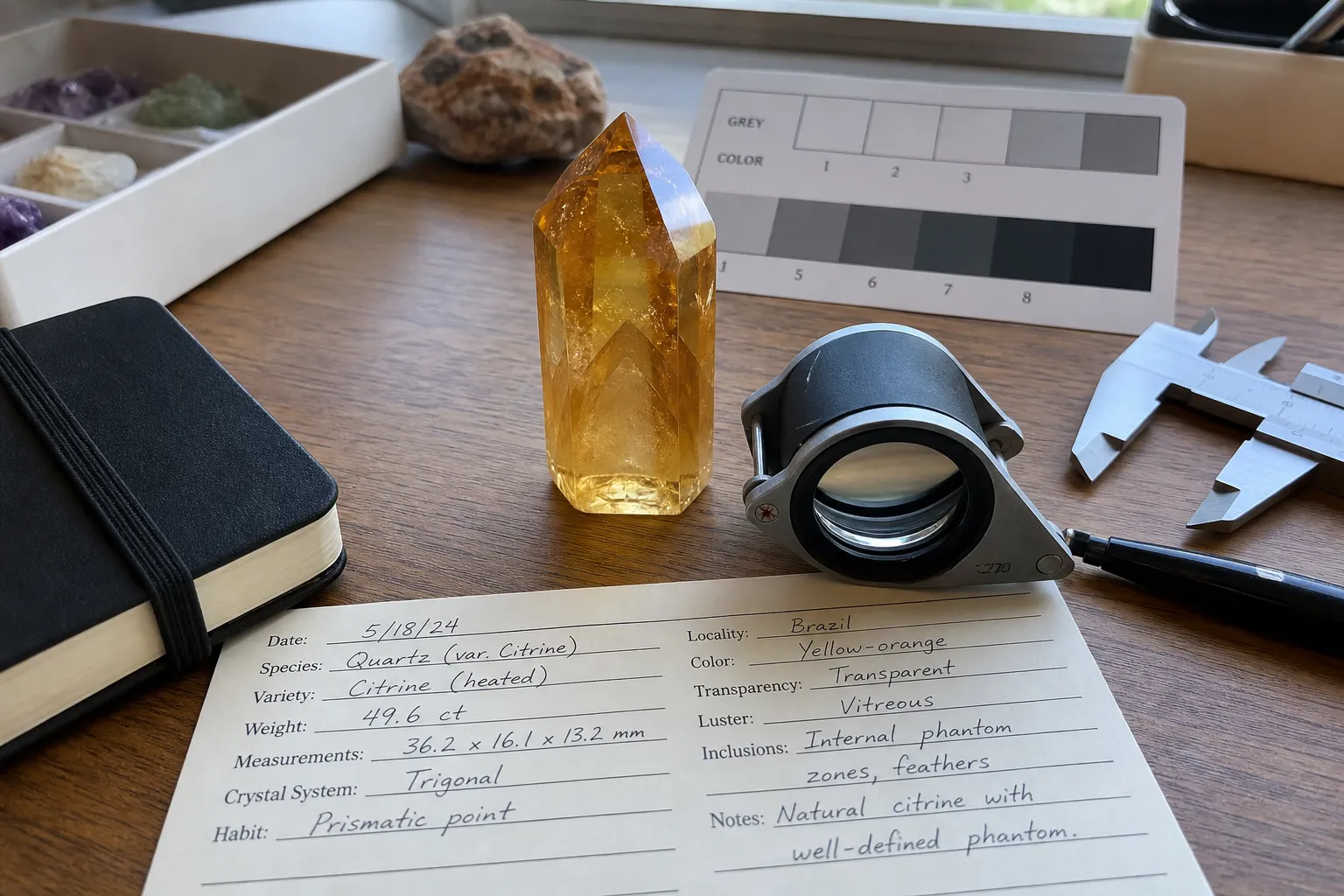
A phantom growth is usually described as an internal growth pattern that appears to preserve an earlier stage of crystal development inside a later crystal body. In citrine, this can create layered, ghost-like zoning or internal contrast. For some collectors, that visual history is part of the appeal.
The appraisal error is treating the feature as a shortcut. A visible phantom does not automatically move a citrine specimen into a higher value category. It may support collector interest when the rest of the crystal is strong, but it does not replace the basic questions:
- Is the color attractive for the intended market?
- Is the crystal in good condition?
- Is the form balanced and well presented?
- Is the phantom easy to see without forced lighting?
- Is the origin, treatment status, or ownership history documented?
- Are comparable buyers actually interested in this type of specimen?
That is the core boundary for appraising phantom growths: the feature can influence attention, but the whole specimen still carries the valuation.
When Phantom Growths May Add Collector Interest
Phantom inclusions and collector interest usually connect through visibility, placement, and the overall look of the crystal. A faint internal mark buried in a cloudy or damaged specimen will not carry the same appeal as a clear, centered, sharply visible phantom inside an otherwise attractive crystal.
A phantom may add interest when:
- It is visible without requiring perfect lighting or magnification.
- It creates a clear internal outline, layer, or contrast.
- It works with the citrine’s color instead of dulling it.
- It appears in a specimen with good form, balance, and condition.
- It is supported by credible documentation, provenance, or a clear descriptive record.
This is why inclusions and specimen value are conditional. The same kind of feature may be desirable in one crystal and unimportant in another. In collector specimen grading, the question is not just whether an unusual internal feature exists. The question is whether that feature improves the specimen as a whole.
For a citrine buyer, a phantom is a reason to look more closely, not a reason to stop asking questions.
What Can Change the Value Conversation
Phantom growths in citrine appraisal sit among whole-specimen appraisal factors. Some are visual, some are documentary, and some depend on market context.
Color
Citrine value often depends on attractive, consistent color. A phantom may be more appealing if it enhances the color rather than dulling it.
Clarity
Visibility affects how easily internal features can be appreciated. A phantom hidden by heavy cloudiness may carry less visual weight.
Size
Larger specimens can attract attention, but size alone is not enough. A large crystal with a weak phantom is not automatically stronger than a smaller crystal with a clearer feature.
Condition
Chips, bruising, broken terminations, and wear affect presentation. Damage can reduce the impact of an otherwise interesting phantom.
Provenance
Locality and ownership history can help frame market context. A documented specimen is easier to evaluate than one supported only by seller language.
Treatment Disclosure
Citrine may be natural, treated, or misrepresented in the market. A phantom does not settle treatment status or authenticity.
Buyer Preference
Collectors value different features differently. A phantom may matter more in a collector setting than in a clarity-focused jewelry context.
A visually unusual internal feature can help explain why someone likes a specimen, but it does not create a stable pricing rule. Without transparent market evidence, any premium should be treated cautiously.
The more defensible phrasing is not “phantoms make citrine more valuable.” It is: “A well-presented phantom may increase collector interest when the rest of the specimen supports that interest.”
Common Confusion Around Rare Crystal Inclusions
The word “rare” can make appraisal language unstable. Rare crystal inclusions may be interesting, but rarity needs evidence. A seller may call a feature rare because it looks unusual, because similar pieces are hard to source, or because the word makes the listing sound stronger. Those are not the same as documented rarity.
A careful appraisal separates four ideas:
- A feature can look uncommon to a casual buyer.
- A feature can be geologically interesting.
- A feature can be desirable to a specific collector.
- A feature can be shown to carry market value through transparent records.
These categories can overlap, but they are not identical. Geological anomalies value needs the same caution. A specimen may show an unusual growth story, while the collector market may still reward beauty, condition, provenance, or current demand more than technical novelty.
Authenticity is another common confusion. A phantom-like internal feature does not prove that a citrine is natural, untreated, or correctly represented. It also does not rule out treatment, mislabeling, or ordinary market overstatement. Appraisal and identification are related, but they are not the same task.
If authenticity or treatment status matters, the next step is documentation, consistent gemological description, and, where appropriate, examination by a qualified gemological service or professional appraiser. The phantom can be part of the description; it should not be treated as proof.
How to Describe a Phantom Without Overclaiming
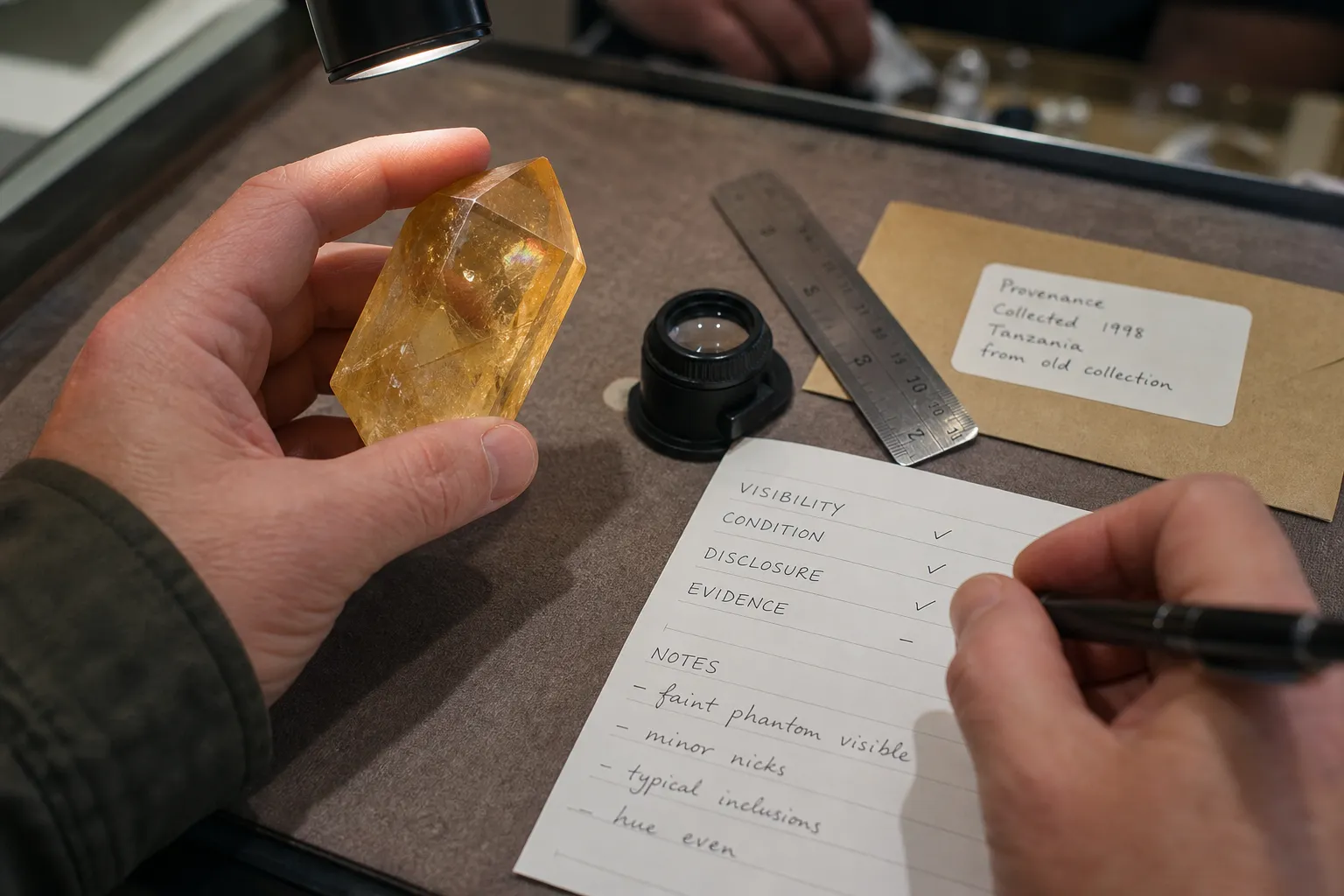
Good appraisal language is specific without becoming promotional. Instead of saying that a phantom growth guarantees rarity or creates a premium, describe what can actually be observed.
A grounded description may include:
- The phantom’s visibility.
- Its location inside the crystal.
- Whether it is sharp, faint, layered, or diffuse.
- How it interacts with color and clarity.
- Whether the crystal has chips, repairs, abrasions, or broken points.
- What documentation, locality information, or treatment disclosure accompanies the specimen.
That kind of description helps readers and buyers understand the specimen without asking the inclusion to carry more meaning than it can support.
Commercial descriptions sometimes turn any internal feature into a selling point. That does not mean the feature has no value. It means the claim should be brought back to evidence and visible quality. A phantom growth visual factor is strongest when the viewer can see it clearly and when the rest of the specimen is strong enough to make the feature matter.
“This citrine specimen shows a visible internal phantom-like growth pattern that may appeal to collectors of included quartz; value would still depend on color, condition, size, provenance, treatment disclosure, and comparable market demand.”
That sentence does not pretend to be a grading formula. It gives the feature its place without letting it take over the appraisal.
The Limits of Phantom Quartz Valuation
The main limit is evidence. In the research material available for this page, there were no citation-ready public sources, confirmed firsthand inspection reports, transparent auction records, or appraisal-grade references specific to phantom growths in citrine. That means this page can explain cautious appraisal logic, but it should not present a sourced pricing rule.
This matters because phantom quartz valuation can drift into confident-sounding claims: fixed premiums, rarity rankings, investment language, or claims that a phantom confirms natural origin. Those claims would require stronger support than visual reasoning alone.
A phantom growth may add value when:
- The feature is visually strong.
- The specimen is otherwise attractive.
- Condition problems do not overpower the feature.
- Provenance and documentation improve confidence.
- Comparable buyers are interested in that type of specimen.
A phantom growth may add little or no value when:
- The feature is faint or poorly placed.
- The crystal has distracting damage.
- The color is weak for the intended market.
- The piece lacks credible description or documentation.
- The asking price depends mostly on unsupported rarity language.
The practical boundary is simple: appraising phantom growths conditionally is reasonable; treating them as automatic proof of higher worth is not.
A Simple Check Before Paying More
Before paying more for a citrine specimen because of a phantom, pause on three questions.
First, can you see the feature clearly enough that it improves the specimen? If the value claim depends on magnified photos, perfect lighting, or seller emphasis more than visible appeal, the phantom may be less important than the listing suggests.
Second, is the rest of the crystal strong? A phantom inside a damaged, poorly colored, or poorly documented specimen may still be interesting, but it may not support a stronger valuation. Whole specimen appraisal factors matter more than a single talking point.
Third, what is the claim based on? “Attractive to collectors” is softer and more defensible than “rare” or “premium.” “Documented provenance” is stronger than “old collection style.” “Visible internal phantom” is clearer than a vague claim about special value.
For a collector, the best reason to value a phantom citrine is that the feature makes the specimen more compelling within a well-described object. For an appraiser or careful buyer, the reason to stay cautious is just as clear: no inclusion can carry the entire value argument alone.
Phantom growths can add character. Sometimes character adds demand. But in citrine appraisal, the value still has to be earned by the whole specimen, the documentation around it, and the market context in which someone is actually willing to buy it.