Citrine color check
Natural Citrine vs. Sunlight: The Real Reason Your Crystal Is Losing Color
A citrine left on a sunny windowsill is not automatically ruined because it caught daylight. The more accurate answer is narrower: natural citrine color stability depends on color centers, impurities, charge states, and treatment history inside the quartz, not on a simple surface color that sunlight always removes.
Available gemological and scientific sources do not support a blanket claim that ordinary UV exposure always fades verified natural citrine. They also do not prove that every stone sold as citrine will stay unchanged in every sunny room. Brief exposure is usually not a crisis. Long-term direct sun, heat buildup, and unknown treatment history are the parts worth taking seriously.
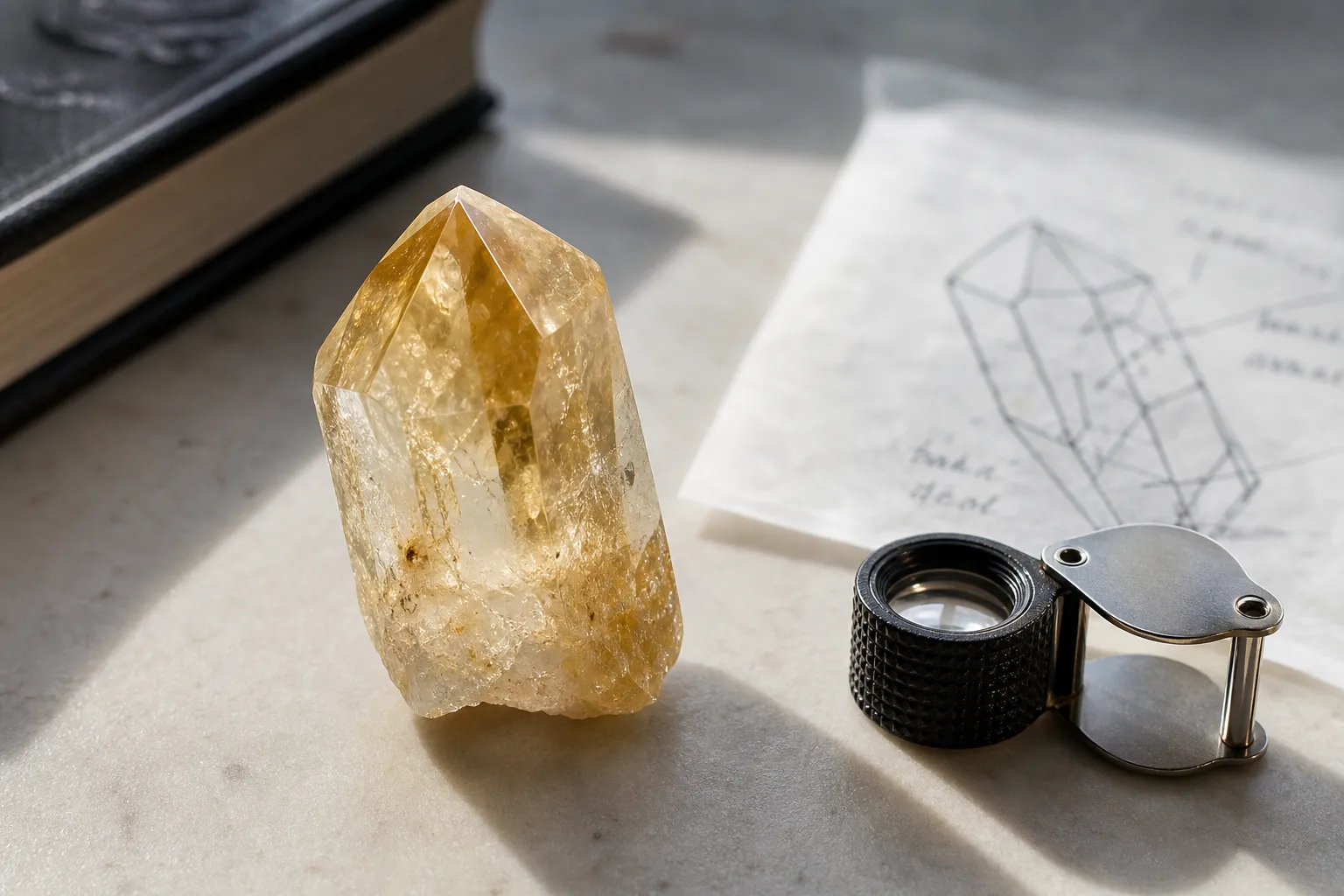
broader context
Citrine verification note
This narrower page works best after the broader citrine reference page.
Why Sunlight Is Not the Whole Story
Citrine is quartz. Its yellow to orange appearance is not a coating on the outside of the crystal; it comes from features inside the quartz lattice. In natural citrine, gemological sources commonly discuss trace impurities, irradiation history, and color centers. More technical quartz color research also discusses charge states, oxygen vacancies, and iron-related mechanisms.
That matters because “sunlight made it fade” is often too simple. If a crystal looks paler after months near a window, several things may be involved: changing daylight, dust or surface film, heat, phone-camera correction, or a specimen that was never documented as natural citrine. The appearance change may be real, but the cause is not automatically settled.
One useful boundary from the available research is that UV radiation did not affect citrine coloration in the studied natural quartz samples. That is not a universal guarantee for every stone, window, climate, or treatment history. It does, however, push back against the careless claim that citrine UV sensitivity always means natural citrine fades in sunlight.
A better answer is cautious: verified natural citrine is not shown by the available evidence to be universally UV-bleached by ordinary sunlight, but prolonged direct exposure is still avoidable when color preservation matters.
The Color Comes From the Quartz, Not a Surface Dye
“Citrine color centers” sounds technical, but the practical idea is simple. A color center is a defect or structural feature in a crystal that changes how it absorbs light. In quartz, those features can involve impurities, missing atoms, trapped charges, or changes in oxidation state. The result is the yellow, golden, smoky, or orange color the eye sees.
Citrine coloration can be described through more than one mechanism. Gemological education often points to trace impurities and irradiation as part of natural citrine’s formation story. Mineralogical references allow for different quartz color centers with different stability. Recent color research also discusses charge transfer involving oxygen vacancies and Fe3+/Fe2+ states.
This is where many crystal-care summaries flatten the issue. They may place citrine on a general list of stones that fade in sunlight, often beside amethyst or other light-sensitive materials. Those lists can be useful as conservative care reminders, but they rarely separate verified natural citrine, heat-treated amethyst sold as citrine, and unknown commercial quartz. They also rarely document exposure time, window glass, temperature, specimen identity, or controlled before-and-after comparison.
Natural citrine color stability is therefore a material question before it is a display question. The internal quartz structure matters. So does whether the stone is actually natural citrine.
Treatment History Changes the Risk Conversation
Much of the anxiety around natural citrine sunlight fading comes from the market. Professional gemology sources commonly note that natural yellow citrine is uncommon, while many stones sold as citrine are heat-treated amethyst. That does not make every orange crystal deceptive, and color alone is not enough to identify treatment. It does mean a tag that says “citrine” is not the same as documented material history.
Heat-treated amethyst and natural citrine can both be quartz, but their color origin and stability should not be treated as automatically identical. Amethyst color-center research helps with quartz vocabulary; it is not direct proof of how verified natural citrine will behave in a sunny room. Likewise, a stone that fades, darkens, or looks uneven after exposure cannot be labeled natural, treated, synthetic, imitation, or valuable from sunlight behavior alone.
Verified natural citrine
Sunlight behavior alone still does not prove the full cause of any color change.
Heat-treated amethyst sold as citrine
Color stability may not follow the same assumptions as natural citrine.
Uncertain commercial “citrine”
Conservative display is sensible because the treatment history is unknown.
A deeply orange market specimen
Color intensity alone is not reliable identification.
The clean conclusion is not “all citrine fades” or “natural citrine never fades.” It is this: do not use sunlight as an identification test. Use seller disclosure, gemological documentation when available, and modest language about uncertainty.
What Actually Affects a Citrine Near a Window
A sunny window is not one condition. It combines direct rays, filtered daylight, UV transmission through glass, heat buildup, season, daily duration, and where the stone sits. A shaded shelf across the room is different from a pendant or point left in a west-facing window every afternoon.
Duration
Minutes or occasional hours are different from months of daily exposure. The available material does not support panic over brief sunlight, but repeated direct exposure gives light and heat more time to matter.
Heat
A windowsill, display case, or closed room can warm up even when the light looks gentle. Heat is one reason conservative care advice often recommends avoiding prolonged direct sun, especially for unknown or treated material.
Treatment history
A verified natural citrine and an undocumented market specimen should not be given the same certainty. If the stone was sold without disclosure, assume less about its color origin.
Starting color
Pale yellow, smoky yellow, golden, orange, and reddish-orange quartz may not share the same formation or treatment story. A change may be easier to notice in a pale stone, but visibility is not proof of mechanism.
Viewing conditions
Citrine can look different under daylight, warm bulbs, cool LEDs, and phone cameras. Before assuming fading, compare it in the same lighting, against the same background, after removing dust with a dry soft cloth if the setting allows.
The practical display choice follows naturally: enjoy the stone where you can see it, but do not make direct sun its permanent storage condition.
Common Confusions
The first confusion is importing amethyst behavior into citrine. Amethyst belongs in the conversation because heat-treated amethyst is common in the citrine market. But amethyst’s color-center behavior is not a direct sunlight rule for verified natural citrine.
The second confusion is treating UV as the only actor. UV is part of sunlight, but window display also involves heat and time. If a stone changes after a summer on a windowsill, “UV did it” may be a guess, not a verified conclusion.
The third confusion is thinking color change proves authenticity. It does not. A fading or darkening report may reflect treatment, lighting, cleaning, photography, heat, or a different quartz material sold under a loose name. Casual observation can start a question; it cannot finish gemological verification.
The fourth confusion is imagining citrine color as something washed off the surface. Citrine’s yellow appearance is tied to internal quartz structure and impurities. That does not make it invulnerable, but it does make the answer more careful than “sunlight removes the color.”
A Conservative Display Rule
If you want one rule for daily use, use this: keep citrine out of long-term direct sunlight when preserving color matters, especially if the stone’s treatment history is uncertain.
That rule is conservative, not alarmist. It does not say a short time in sunlight has damaged the crystal. It does not say sunlight behavior identifies the stone. It simply respects the evidence limit and the market reality: many pieces sold as citrine are not documented as verified natural citrine, and many practical fading stories lack controlled conditions.
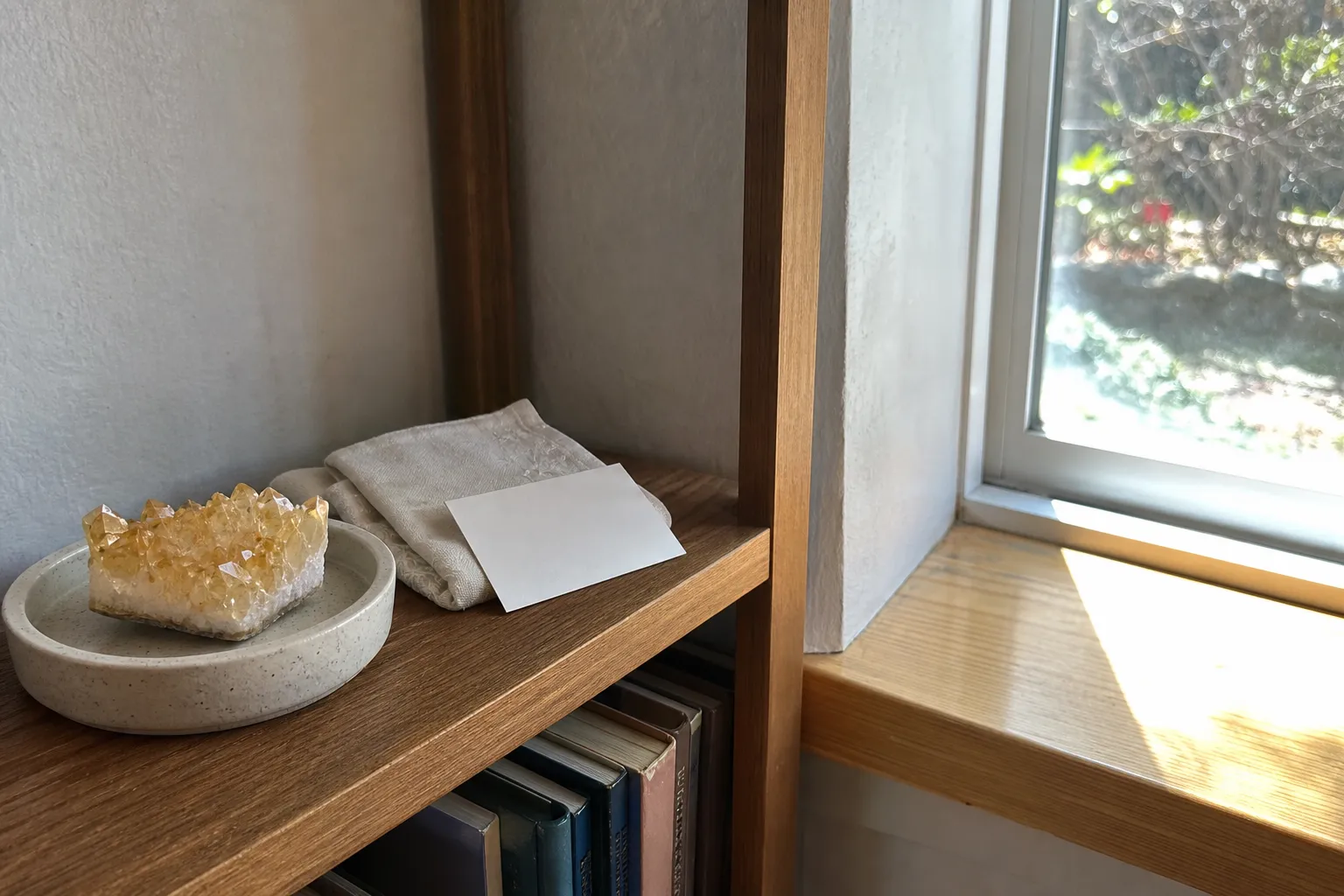
For a shelf, altar, jewelry stand, or display case, choose bright indirect light instead of a hot windowsill. If the stone is jewelry, do not store it for months in a sunlit tray. If it is a specimen, rotate it away from direct afternoon sun. If you are tracking color over time, photograph it under the same lamp with the same background rather than relying on memory.
Those small choices are enough for most collectors. They preserve the object without turning care into fear.
What To Do If Your Citrine Already Looks Paler
Start with observation, not diagnosis. Move the stone out of direct sun, clean the surface gently if appropriate, and compare it under stable indoor light. Older photos can help only if they were taken under similar lighting; phone auto-correction can make color comparisons unreliable.
Next, check the purchase language. Did the seller say “natural citrine,” “heated citrine,” “Madeira citrine,” “heated amethyst,” “quartz,” or simply “citrine crystal”? Was any gemological report or treatment disclosure included? Vague seller language does not prove a problem, but it changes how much certainty you should claim.
If the stone has financial or identification importance, sunlight behavior is not enough. A qualified gemological assessment may be useful for mounted jewelry or higher-value material. For an ordinary display crystal, the proportionate response is simpler: stop the long direct exposure, document the color calmly, and avoid treating the change as proof of origin.
The page evidence supports a bounded answer: natural citrine is not shown here to be universally bleached by UV sunlight, and citrine color comes from internal quartz mechanisms rather than surface dye. It cannot identify your individual crystal from a windowsill story alone. Keep it in bright indirect light. Keep the claim modest.
FAQ
Does natural citrine fade in sunlight?
The available evidence does not support saying verified natural citrine always fades in ordinary sunlight. Still, long-term direct sunlight is an avoidable display risk, especially when the stone’s treatment history is unknown.
Is UV the real reason citrine loses color?
Not necessarily. UV may be part of the environment, but heat, exposure time, lighting conditions, treatment history, and misidentification can all affect what the owner sees. UV alone should not be treated as the proven cause for every color change.
Can sunlight prove my citrine is natural or treated?
No. Sunlight behavior is not a reliable identification test. Use seller disclosure, gemological documentation when available, and professional assessment for material that has financial or identification importance.
Where should I keep citrine?
Bright indirect light is the safer everyday choice. Avoid leaving citrine for months in a hot, sunlit window or tray if preserving color matters.