Display boundary
Citrine Display Ideas Near Water Features
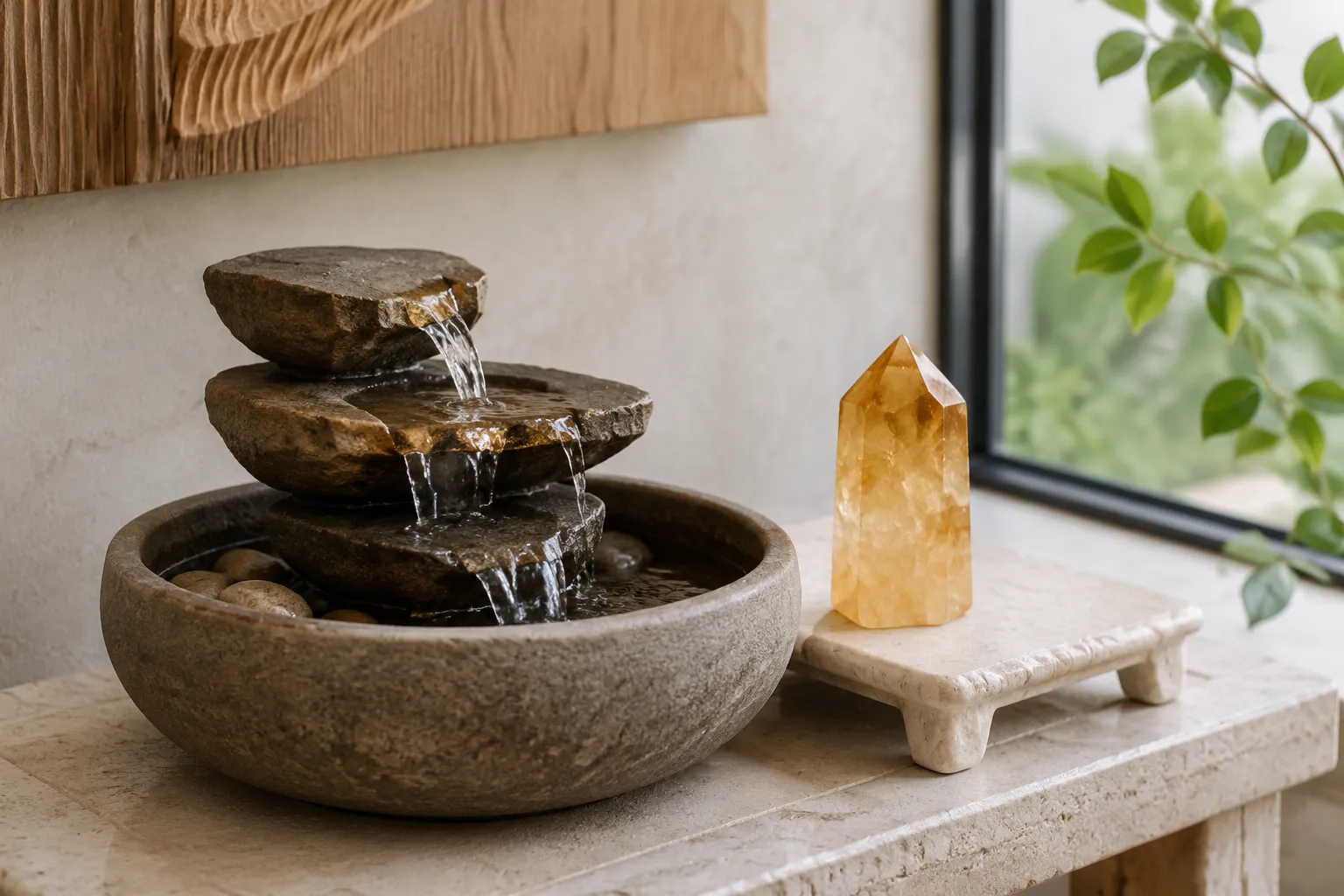
A citrine water feature display works best when the stone is close enough to catch the eye, but far enough from the water to stay dry. Place citrine on a dry ledge, raised tray, pedestal, side shelf, stone base, protected windowsill, or covered garden shelf near the fountain. Do not put it in the basin, pump path, bottle, pitcher, or moving water.
That boundary keeps the warm quartz color connected to the water feature without turning the display into a claim about crystal-infused water, energy transfer, drinking water, health outcomes, or prosperity results. Citrine can be used as a decorative or symbolic accent; the water should remain ordinary fountain water.
broader context
Broader citrine reference
This narrower page works best after the broader citrine reference page.
The Cleanest Arrangement: Near Water, Out of Water
The strongest layout separates the two jobs. Water moves in one zone. Citrine sits in another. The display still reads as one arrangement because the stone is near the fountain, but height, distance, glass, stone, or a dry surface keeps it outside the wet system.
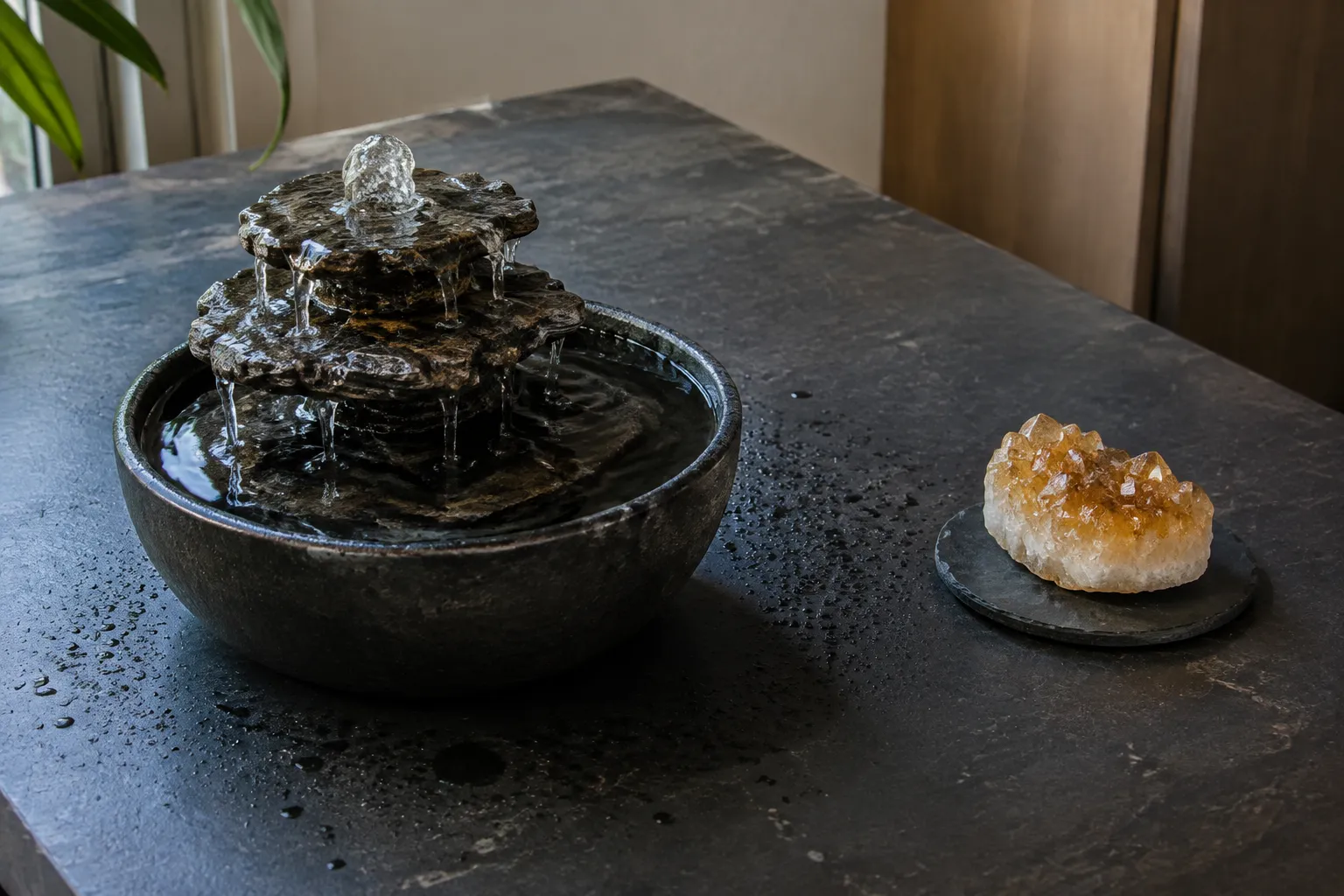
For an indoor tabletop fountain, place a polished citrine point, small cluster, or tumbled piece on a shallow ceramic tray beside the fountain base. Leave enough room for normal splash. If the fountain has a rounded basin or bubbling center, use a side table, narrow shelf, or raised coaster rather than balancing citrine on the rim. A rim looks convenient, but it is often where a loose stone slides into water.
For a larger indoor water wall or sheet-flow feature, citrine can sit on a console below or beside the structure. The better visual move is contrast: warm yellow-orange citrine against darker stone, matte ceramic, clear glass, or pale wood. Let the water feature carry movement. Let the citrine carry color.
For an outdoor fountain, use the same rule with more caution. Put citrine on a dry ledge outside the splash radius, on a covered patio shelf, under a glass cloche, or on a raised rock border that does not drain toward the basin. Outdoor settings add wind, debris, heat, sun exposure, pets, children, and seasonal cleaning. Those variables make direct placement in or over the water harder to control.
Physical test: run the fountain at its normal flow, watch where droplets land, and keep citrine beyond that splash boundary. If the stone would need to be wiped dry after ordinary use, it is too close.
Display Ideas That Keep Citrine Dry
Dry ledge
A dry ledge is the simplest option. Place one citrine piece on a stable ledge beside the water feature, with a felt pad or shallow dish underneath if the surface is slick. This works best when the ledge is wide enough that the stone cannot be bumped into the basin.
Raised tray
A raised tray gives the display a deliberate frame. Use a small stone, ceramic, glass, or metal tray next to the fountain, then place citrine with one or two non-porous objects such as a plain pebble, small plant pot, or simple candle holder. Keep the tray outside the pump cord path and away from any overflow line. The tray should not collect fountain spray.
Short pedestal
A short pedestal works well when the water feature is low. A plinth, block, or plant stand lifts citrine above the wet zone and makes the separation visible. This is useful for small fountains where the tabletop already feels crowded.
Wall shelf
A wall shelf is cleaner for narrow rooms. If the fountain sits on a console or floor base, a nearby floating shelf can hold citrine at eye level while the water remains below. This avoids the common habit of crowding loose stones onto a fountain edge.
Glass cloche or clear display box
A glass cloche or clear display box can help outdoors or in busy rooms. It keeps the stone visible while reducing dust, handling, and stray splash. The cover should still sit away from direct water movement; glass is a display barrier, not a reason to move citrine into a wet zone.
Raised rock border
A raised rock border can work around garden fountains if it is stable and dry. Choose a spot where water does not run over the border and where the citrine cannot roll into the basin. This looks more natural than placing a gemstone directly in the water, while keeping a decorative mineral separate from fountain parts.
A windowsill near a water feature can also work, but only if the sill stays dry and avoids harsh light and heat. Citrine is generally discussed as a durable gemstone, yet care guidance still favors avoiding harsh chemicals, unnecessary heat, and rough conditions. A bright sill may look good briefly and become less sensible as a long-term placement.
What “Indirect Transfer” Should Mean Here
Some crystal-culture language uses phrases such as “indirect transfer,” “crystal-infused water,” “citrine energy water,” or “water-safe crystals.” Those phrases often blur three different ideas: visual placement, belief-based ritual language, and actual water contact.
For this page, indirect transfer should mean display separation. Citrine remains outside the water while the viewer reads the stone and fountain as one arrangement. That is a reasonable decor choice. It does not show that the water changes, that an effect is guaranteed, or that the display creates a financial or wellness result.
The distinction matters because “quartz-based” is sometimes shortened into “fine in water.” Citrine is a quartz variety, and quartz is relatively stable under ordinary surface conditions. That does not answer whether a specific citrine object belongs in a fountain or drinking vessel. A stone may have coatings, residues, adhesives, metal settings, fracture filling, surface dirt, or unknown treatment history. Fountain water may also contain algae, debris, cleaning products, chlorine, salt, stagnant water, or pump residue. Those are separate questions from mineral classification.
This is also where citrine authenticity and treatment language belongs. Not every yellow stone sold as citrine is untreated natural citrine; market material can include treated quartz varieties. That does not stop a stone from being decorative, but it does affect how carefully seller language should be read. For a water feature display, the practical answer stays the same: use citrine as a dry accent, not as a water-contact object.
Placement Conditions That Change the Answer
The fountain’s movement comes first. A low, quiet bowl creates a smaller splash zone than a tall cascading feature. A bubbling sphere may throw droplets farther than it appears to at first glance. Sheet-flow water can look controlled, but water may still collect at the base or mist nearby surfaces.
Pump paths matter. Loose stones should not sit where they can fall into an intake, block water flow, scratch a basin, or complicate cleaning. Even if citrine is not discussed like softer water-soluble minerals, a loose gemstone inside a pump system is still a practical problem.
Cleaning routines change the answer too. If the fountain uses descaling products, algae-control products, chlorine, salt, or other additives, keep citrine well away from the wet system. Gemstone care guidance is more conservative around harsh chemicals than casual decor advice tends to be.
Light and heat deserve attention. Citrine is often chosen for its warm color, so people naturally place it where light catches it. Near a water feature, that may mean windows, sunrooms, patios, or garden corners. Avoid locations where the stone sits in intense sun, heat buildup, or abrupt temperature change. A shaded dry ledge is usually better than a dramatic sunny spot that stresses the stone and the display surface.
Household traffic is the final condition. If children, pets, guests, or cleaning staff pass close to the fountain, avoid small loose citrine pieces near basin edges. A heavier base, enclosed display, or higher shelf is more reliable than a small tumble stone sitting at water level.
Common Confusion Around Citrine and Water Features
“Can citrine go in water?”
This is too broad for a useful display decision. A brief rinse during appropriate cleaning is not the same as leaving citrine in a fountain, placing it in a bottle, or making crystal-infused water. The display question is narrower: can citrine be placed attractively near water while staying dry? Yes.
“Water-safe crystals”
This is also a slippery label. Some discussions use it to compare minerals that dissolve, flake, rust, or react badly with water. That comparison does not decide whether a specific citrine object belongs in a fountain or drinking vessel. Settings, glued bases, coatings, dyed surfaces, inclusions, and unknown residues can matter as much as the mineral name.
“Energy water” and “crystal elixir”
This language should be treated as cultural or market vocabulary, not as a factual standard for this display. If someone likes the symbolism of citrine near water, the cleanest expression is visual and bounded: citrine can sit beside a fountain as a golden accent associated with warmth, brightness, or personal meaning. The water remains fountain water.
“Prosperity placement”
This needs the same restraint. Citrine is often marketed with abundance language, and some feng shui-oriented decor pairs water features with prosperity symbolism. Those traditions may explain why a reader is drawn to the arrangement. They do not establish a guaranteed financial or well-being outcome. The page evidence supports decor placement and care boundaries, not promised results.
A Simple Setup Checklist
Before placing citrine near a fountain, judge the display as a physical object.
- Keep citrine out of direct water, splash, mist, and overflow paths.
- Do not place citrine in a fountain basin, pump intake, bottle, pitcher, or drinking water.
- Use a dry ledge, tray, pedestal, shelf, cloche, side table, or raised rock border.
- Check that the stone cannot roll, slide, or be knocked into the water.
- Avoid harsh sun, heat buildup, cleaning chemicals, salt, chlorine, and stagnant water.
- Treat symbolic language as personal or cultural context, not as proof of transfer or results.
- If the stone is sold as natural citrine, read seller disclosure carefully; appearance alone does not verify untreated natural material.
The best citrine fountain display is not complicated. Keep the water moving where the fountain is designed to move water. Keep the citrine dry, stable, and visible. That gives the arrangement its visual link without asking the stone, the water, or the evidence to carry more than they can support.